How to follow up on a job application
Key takeaways
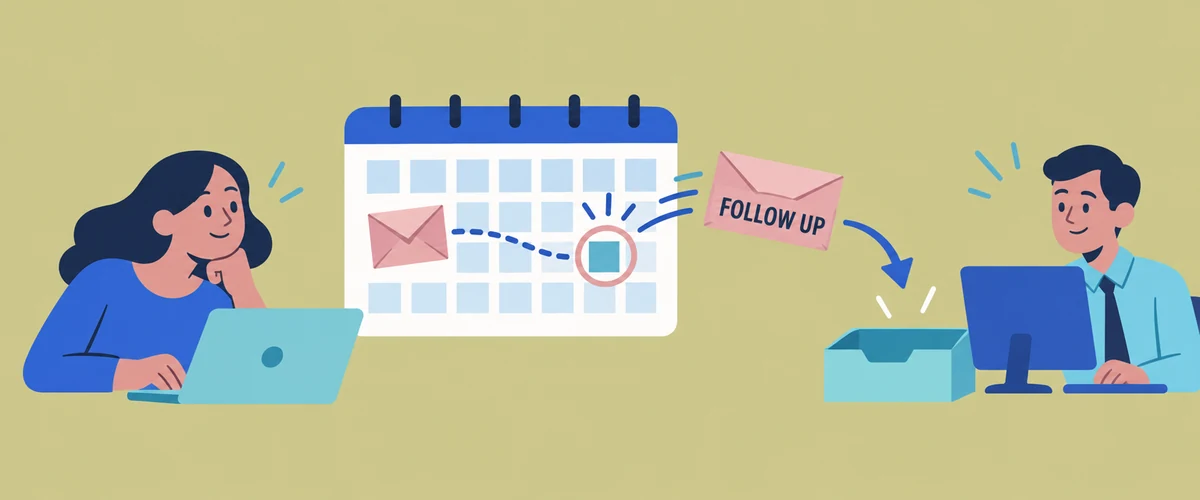
- Wait until the closing date or the timeframe you were given has passed, then allow a week or two before sending one short, polite follow-up.
- Email suits most follow-ups, but a quick phone call often works better with small businesses, which are more likely to hire informally.
- Two follow-ups is generally enough. Some employers don't notify unsuccessful applicants, so silence after that is usually an answer.
Once the closing date has passed, it's reasonable to wait a week or two and then send one short, polite email asking where the process is up to. After an interview, wait until the date the interviewer gave you has passed, allow a couple of extra working days, and then follow up the same way.
Those timings are a guide rather than a rule, and anything the employer has told you about its process should come first. Below you'll find how to judge the timing, who to contact, what to say by email or phone, and when it makes sense to stop waiting and put your energy into other applications.
When to follow up after you apply
Most employers can't start assessing applications until the ad has closed, so a follow-up sent while the job is still open usually can't get a useful answer. Start from the closing date, not the day you applied. If the ad didn't have a closing date, a week or so after you applied is a reasonable point to check in.
Read the ad again before you write. Some ads say when the employer expects to hold interviews, and some say that only shortlisted applicants will be contacted. If the ad gives an interview date and that date hasn't arrived, there's little to ask yet. If the date has passed and you haven't heard anything, a short email is still fine, but it's sensible to be prepared for an answer that confirms you weren't shortlisted.
As a rough guide:
- The ad had a closing date: about one to two weeks after it closed
- There was no closing date: about a week after you applied
- The employer or recruiter gave you a timeframe: a couple of working days after that timeframe has passed
- You've already followed up once: wait another week or so, and treat a second message as the last
Government jobs often take longer. The Australian Public Service Commission explains that APS candidates are compared against each other on merit, which is one reason the process can run longer. APS job information usually names a contact officer, and you can ask them about expected timeframes.
Who to contact, and whether to email or call
If the ad names a contact person, that's who to approach. For a role advertised through a recruitment agency, contact the recruiter rather than going around them to the employer. Where no one is named, the person you sent the application to, or the general careers or HR address, is the next best option.
Email suits most follow-ups because the reader can reply when they have a moment, and your message sits in the same place as the rest of your application. A phone call can work better for smaller businesses, where the person hiring may also be running the shop floor or the job site and is easier to catch in a short conversation. In a 2022 Jobs and Skills Australia survey of recruiting employers, 26% of small businesses (5 to 19 employees) had filled their latest vacancy through only an informal chat or interview, compared with 5% of large businesses.
What to say in a follow-up email
A follow-up email only needs to do three things: remind the reader who you are and which job you applied for, ask about the timing of the process, and confirm that you're still interested. A sentence connecting your experience to the role is optional. There's no need to restate your application or attach your resume again unless they ask for it.
Use a subject line that includes the job title, so the reader can find your application without searching. If the ad listed a reference number, include that too.
What to say in a follow-up email
Subject: Application for [job title], [reference number if there is one]
Hi [name],
I applied for the [job title] position on [date] and wanted to check in on how the process is going. I'm still very interested in the role, particularly the chance to [one specific part of the job that appeals to you].
Could you let me know when you expect to be contacting applicants about the next stage?
Thanks for your time,
[Your name]
[Phone number]
Following up by phone
A phone call is best kept short. Ring during business hours, avoid obviously busy times such as a café's lunch rush or a shop's opening hour, and have the job title and the date you applied in front of you. If the person sounds rushed, ask whether there's a better time to call back, or whether an email would be easier for them.
If your call goes to voicemail, leave your name, the job and your number once, clearly, and then wait. Calling repeatedly on the same day tends to leave a worse impression than a single message.
Following up by phone
Hi, my name is [your name]. I applied for the [job title] role last [week / on date], and I was calling to see where the process is up to.
[If they're not the right person:] Is there someone else I should speak to about it, or an email address I could use?
[If they ask about you:] I've been working as [current or recent role] for [time], and the part of the job I'm most interested in is [specific duty].
Thanks very much. I'll keep an eye out for your email.
Following up after an interview
A short thank-you email on the day of the interview or the next morning is a courtesy rather than a requirement. It gives you a chance to mention something specific from the conversation and, if you forgot to ask, to find out what happens next. The questions worth asking before you leave the room, including when the employer expects to decide, are covered in questions to ask the interviewer.
After that, the waiting often has a reason. In the same Jobs and Skills Australia survey, 44% of recruiting employers required a reference, rising to 54% among large businesses, and reference checks can add days to a decision, especially if a referee is hard to reach. If you gave referees, it helps to let them know a call might be coming. Asking someone to be a referee covers how to prepare them.
If the date you were given passes, wait two or three working days, then follow up. The Australian Public Service Commission's guidance for applicants suggests a similar approach for APS roles: if you haven't heard anything in the weeks after the interview, call the contact officer and ask when a decision is expected.
Following up after an interview
Subject: [Job title] interview on [date]
Hi [name],
Thank you again for meeting with me on [day] about the [job title] role. I enjoyed hearing about [something specific from the interview], and it confirmed my interest in the position.
You mentioned you were hoping to make a decision by [date], so I thought I'd check whether there's any update, or anything else you need from me.
Kind regards,
[Your name]
[Phone number]
If you have another offer while you wait
If you receive an offer from one employer while you're still waiting to hear from another, it's fair to tell the employer you'd prefer. You don't need to name the other organisation or what it's offering. Say that you've received an offer, that this role is your first choice, and when you need to give the other employer an answer.
The employer may speed up its decision, tell you it can't meet your timeframe, or let you know you're no longer being considered. Each of those answers helps you decide what to do with the offer in hand. If you end up turning one down, how to decline a job offer has wording for that message.
Only send this email if the offer is real, because a claimed offer that doesn't exist is hard to explain later.
If you have another offer while you wait
Subject: [Job title] application, timing question
Hi [name],
I interviewed for the [job title] position on [date]. I've since received another job offer, and I need to respond to it by [date].
This role is still my first preference, so I wanted to ask whether you expect to have a decision before then. I understand if that isn't possible, and I appreciate you letting me know either way.
Kind regards,
[Your name]
[Phone number]
When to stop following up
Two follow-ups for the same application is generally enough. If neither has had a reply, it's reasonable to treat the silence as an answer and focus on other applications. Some employers don't contact every unsuccessful applicant, and the Australian Public Service Commission says plainly that APS agencies may not notify you if your application isn't successful, so no reply doesn't necessarily mean your message was ignored.
Moving on doesn't have to close the door. In the APS, applicants found suitable can be placed on a merit list, which agencies can use to fill similar jobs for 18 months from when the vacancy was advertised in the Public Service Gazette. In the private sector, a brief, polite reply to a rejection can mean the recruiter or manager remembers you when a similar role comes up.
If you do hear that you were unsuccessful, particularly after an interview, you can ask for feedback. Keep the request short, make it easy to decline, and accept whatever response comes back, because not every employer is able or willing to give it.
When to stop following up
Hi [name],
Thank you for letting me know, and for the time you and the panel spent with me.
If you're able to share any feedback on my application or interview, I'd find it really useful for future roles. I understand if that isn't possible.
I'd also be glad to be considered if a similar position comes up.
Kind regards,
[Your name]
Common questions
- Can following up hurt my chances?
- One or two polite, well-timed messages are unlikely to count against you, and they can remind a busy hiring manager that your application is there. What tends to create a poor impression is contacting an employer before the job has closed, sending several messages in a short time, or writing in a way that sounds impatient.
- The ad says only shortlisted applicants will be contacted. Should I still follow up?
- You can, but keep your expectations realistic. Wait until the interview period the ad mentions has passed, or a couple of weeks after closing if it doesn't say, then send one short email. If there's no reply, it's usually safe to assume you weren't shortlisted this time.
- I applied through a recruitment agency. Who do I follow up with?
- Follow up with the recruiter. They manage the process with the employer and are usually the ones who pass on updates and feedback. Contacting the employer directly can cut across that arrangement.
Related articles

How to ask someone to be your referee (with examples)
Four short messages to copy when you ask someone to be your referee, how to check they can give you a strong reference, and what to do if they say no or sound unsure.

How to decline a job offer, even one you've accepted
Four templates: the standard decline, declining for a better offer, declining over salary, and the harder case of backing out after you've already said yes.
How to write a job application email (with examples)
What to write in a job application email, how to word the subject line, whether to attach your cover letter, and how to name and format your files.