HomeCoursesBiology and biotechnologyBachelor degree
Bachelor degree · university
Bachelor of Biotechnology
This degree combines biology, chemistry and technology to develop products such as medicines, vaccines and food and agricultural solutions.
- How long it takes
- 3 to 4 years
- full time
- Entry ATAR
- From 64.65
- Lowest offered at The University of Adelaide, 2024
- How you can study
- Online or on campus
- Includes a work placement
- Taught by
- 6 providers
- 5 states and territories
Is this course right for you?
What the Bachelor of Biotechnology asks of you, and what you might want to check first.
It helps to have
- an interest in how living things work
- a methodical approach to lab work
- patience for repeated experiments
- good written and spoken communication skills
Before you start
Each provider sets its own entry requirements, so check the ones you are considering.
Where this course can take you
No job needs this course on its own, but it can help with the work below.
Jobs a degree can help with
None of these jobs needs a set qualification.

Brewer
Brewers turn malt, hops, yeast and water into beer, controlling the temperature, timing and cleanliness that decide whether a batch turns out right.
Median pay$85,600
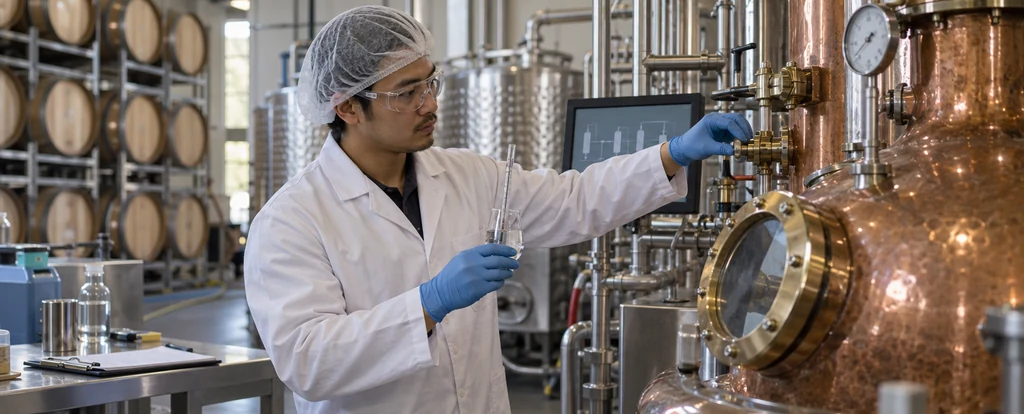
Distiller
Distillers make spirits such as whisky, gin and rum, controlling fermentation and distillation to shape the flavour and quality of every bottle a distillery sells.
Median pay$70,200 (estimate)
Pay is the median for everyone in the job, and “In demand” means the job is on the national shortage list. Pay marked as an estimate is our own analysis, not a published figure.
Where you can study this course
There are 6 places you can study this course. When you compare them, check they teach it the way you want to study, how far you'd be from a campus, what it will cost you and what past students say about the teaching and support. They're listed by how often people search for them, and none of them pays to be here or to move up.
- Website for University of New South Wales (opens in a new tab)

University of New South Wales
Sydney - Kensington, NSW
4.4from 1,572 Google reviews
- ATAR
- 68.3 lowest
- (80 median, 2024)
- How you study
- On campus
- Course page for The University of Queensland (opens in a new tab)
The University of Queensland
St Lucia, QLD
4.5from 1,654 Google reviews
- ATAR
- 79 lowest
- (83 median, 2026)
- How you study
- On campus
- (full or part time)
- Next intake
- Feb 2027
- Fee
- $9,157 a year
- (Government-supported place)
- Website for The University of Newcastle (opens in a new tab)
The University of Newcastle
Newcastle - Callaghan, NSW
4.2from 494 Google reviews
- How you study
- On campus
- (full or part time)
What students like
- Friendly and supportive staff and students
- Welcoming and diverse community
What to weigh up
- Replies can be slow
- Admin processes can be slow
- Support services can be hard to access
- Course page for The University of Adelaide (opens in a new tab)

The University of Adelaide
Adelaide, SA
4.4from 869 Google reviews
- ATAR
- 64.65 lowest
- (74.05 median, 2024)
- How you study
- On campus
- (full or part time)

Federation University Australia
Gippsland, Mount Helen (Ballarat), Off-campus, VIC
4.2from 562 Google reviews
- How you study
- Online or on campus
- (full or part time)
- Website for The Australian National University (opens in a new tab)
The Australian National University
Canberra, ACT
4.4from 702 Google reviews
- ATAR
- 71.15 lowest
- (80.9 median, 2025)
- How you study
- On campus
- (full or part time)
- Next intake
- Feb 2027
What students like
- People are friendly and supportive
What you’ll learn
The main topics covered in the Bachelor of Biotechnology.
- Molecular biology and genetics
- Biochemistry and cell biology
- Microbial biotechnology
- Bioprocessing
- Laboratory research skills
- Commercial and ethical issues
Questions to ask before you enrol
Providers run this course differently, so the answers change from one to the next.
- When is the next intake, and how many are there each year?
- What is the total cost, including materials, checks and any placement costs?
- Can I study part time or online, and how does that change the length?
- Who arranges the work placement, and how many hours does it involve?
- Do the units count towards a higher qualification if I go on to study further?