HomeCoursesBuilding and constructionCertificate III
Certificate III · national qualification
Certificate III in Fire Protection
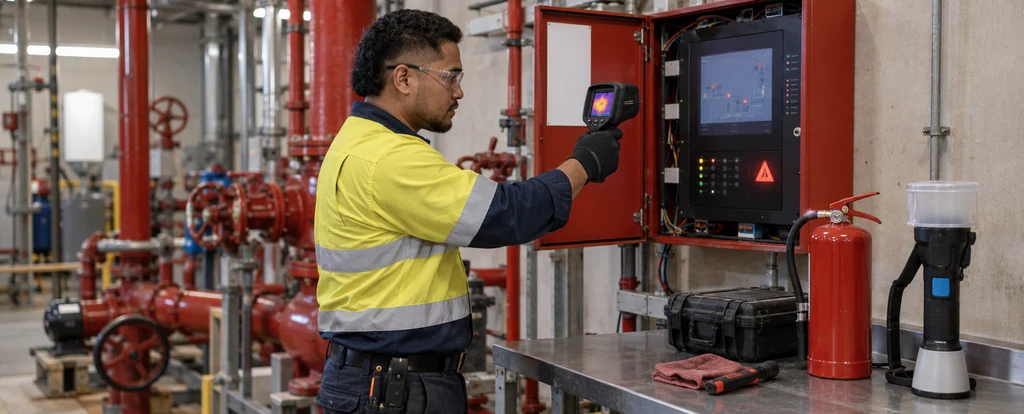
You train to install and look after the systems that put out fires in buildings, including sprinklers, hydrants, hose reels and special hazard setups.
- How long it takes
- 3 years
- full time at TAFE NSW
- How you can study
- On campus
- Main job
- Fire Protection Technician
- $83,200 (estimate) median pay
- Taught by
- 2 providers
- NSW, QLD
Is this course right for you?
What the Certificate III in Fire Protection asks of you, and what you might want to check first.
It helps to have
- an interest in keeping buildings and people safe from fire
- confidence with hand and power tools
- an eye for detail when following plans and measurements
- patience for testing and servicing systems
Before you start
There are no entry requirements for this qualification.
Where this course can take you
Jobs this qualification is a recognised route into, and the study that can follow it.
Jobs you can do with it
Fire Protection Technician
Fire protection technicians install, test and maintain the systems that detect fires and hold them back, from alarm panels to sprinkler pipework.
What else you need
This is a licensed occupation, so a state licence is needed as well as the trade certificate, and requirements vary by state. It is usually done as an apprenticeship with an employer. The award alone confers no licence.
Median pay$83,200 (estimate)
If you study further
Diploma of Building and Construction (Building)
Leads to work as a, median pay $195,100.
Bachelor of Construction Management
Pay is the median for everyone in the job, and “In demand” means the job is on the national shortage list. Pay marked as an estimate is our own analysis, not a published figure.
Where you can study this course
There are 2 places you can study this course. When you compare them, check they teach it the way you want to study, how far you'd be from a campus, what it will cost you and what past students say about the teaching and support. They're listed by how often people search for them, and none of them pays to be here or to move up.
- Course page for TAFE NSW (opens in a new tab)

TAFE NSW
Randwick Campus (Apprenticeship), NSW
4.0from 2,410 Google reviews
- How you study
- On campus
- How long
- 3 years
What students like
- Teachers are supportive and ready to help
- Staff are helpful and friendly
- Course content is practical and industry relevant
What to weigh up
- Enrolment and admin can be slow
- Some find front desk staff less helpful
- Website for Firefox Training Pty Ltd (opens in a new tab)

Firefox Training Pty Ltd
Firefox Training, QLD
4.6from 11 Google reviews
What you’ll learn
37 units: 32 that everyone takes and 5 you choose.
- Reading plans and marking out
- Plumbing tools and materials
- Welding and pressure piping
- Designing fire sprinklers
- Hydrants and hose reels
- Testing pumps and systems
See all 32 core units
Core units
Everyone completes these. Select a unit to see what it covers.
Loading the details for CPCPCM2045…
Loading the details for CPCPCM2045…
Questions to ask before you enrol
Providers run this course differently, so the answers change from one to the next.
- When is the next intake, and how many are there each year?
- What is the total cost, including materials, checks and any placement costs?
- Can I study part time or online, and how does that change the length?
- Do the units count towards a higher qualification if I go on to study further?
Questions people ask
Who is this qualification for?
It prepares you for the trade qualified role of installing, testing, maintaining, servicing and repairing fire protection systems. You learn to fit sprinklers, hydrants, hose reels and special hazard setups, with a lot of the work being plumbing.
Do I need experience or other qualifications first?
There are no entry requirements for this qualification. Individual providers can set their own conditions, so check with the provider you choose.
Is a licence, registration or check required to work in this area?
Yes. This is a licensed trade, and licensing, legislative, regulatory and certification requirements may vary between states and territories. Consult the relevant state and territory regulatory authority to confirm what applies to you.