HomeCoursesBuilding and constructionCertificate III
Certificate III · national qualification
Certificate III in Solid Plastering
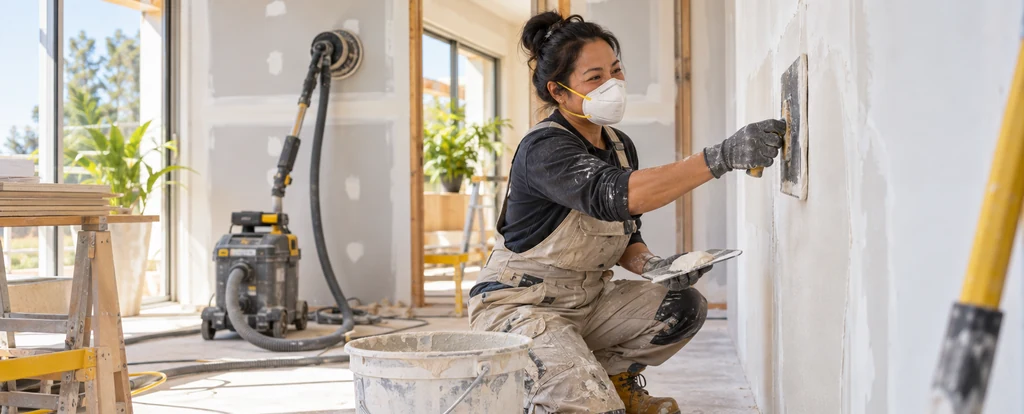
You learn to mix plaster, cement and render and put them onto walls and ceilings so the surface ends up flat, straight and finished the way the client wants it.
- How long it takes
- 3 years
- full time at TAFE NSW
- How you can study
- On campus
- Main job
- Plasterer
- $95,700 median pay, In demand
- Taught by
- 10 providers
- 4 states and territories
Is this course right for you?
What the Certificate III in Solid Plastering asks of you, and what you might want to check first.
It helps to have
- an interest in working with your hands
- patience to get a smooth, even finish
- an eye for straight lines and level surfaces
- willingness to work safely and follow site rules
Before you start
There are no entry requirements for this qualification.
Where this course can take you
Jobs this qualification is a recognised route into, and the study that can follow it.
Jobs you can do with it
Plasterer
Plasterers line and finish the inside walls and ceilings of a building, giving painters and other trades a smooth surface to work over.
What else you need
Trade entry is normally as an apprentice employed in the industry, so you need an employer and a training contract. Completion gives eligibility to apply for a tradesperson certificate or licence with your state regulator, but the award alone does not confer one. Check that the training provider is registered for this qualification. This catalogue groups awards: verify the chosen provider, programme and intake; the family-level link is not confirmation that every offering is approved.
Median pay$95,700
In demand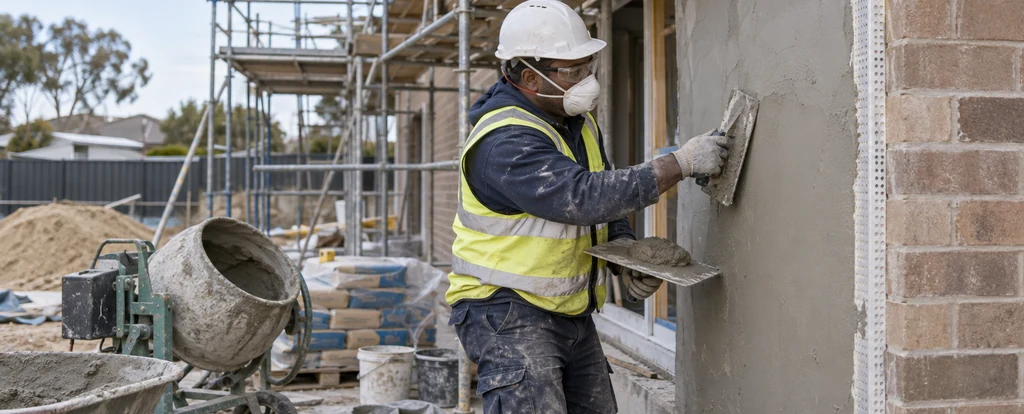
Solid Plasterer
Solid plasterers apply and finish render, plaster and cement coatings to walls, ceilings and other building surfaces, giving a structure its weather protection and its final look.
What else you need
Trade entry is normally as an apprentice employed in the industry, so you need an employer and a training contract. Completion gives eligibility to apply for a tradesperson certificate or licence with your state regulator, but the award alone does not confer one. Check that the training provider is registered for this qualification. This catalogue groups awards: verify the chosen provider, programme and intake; the family-level link is not confirmation that every offering is approved.
Median pay$75,400 (estimate)
In demand
If you study further
Diploma of Building and Construction (Building)
Leads to work as a, median pay $195,100.
Bachelor of Construction Management
Pay is the median for everyone in the job, and “In demand” means the job is on the national shortage list. Pay marked as an estimate is our own analysis, not a published figure.
Where you can study this course
There are 10 places you can study this course. When you compare them, check they teach it the way you want to study, how far you'd be from a campus, what it will cost you and what past students say about the teaching and support. They're listed by how often people search for them, and none of them pays to be here or to move up.
- Course page for TAFE NSW (opens in a new tab)

TAFE NSW
Lidcombe Campus (Apprenticeship), NSW
4.0from 2,410 Google reviews
- How you study
- On campus
- How long
- 3 years
What students like
- Teachers are supportive and ready to help
- Staff are helpful and friendly
- Course content is practical and industry relevant
What to weigh up
- Enrolment and admin can be slow
- Some find front desk staff less helpful
- Website for TAFE Queensland (opens in a new tab)

TAFE Queensland
30 campuses, QLD
4.1from 2,040 Google reviews
What students like
- Teachers are helpful and supportive
What to weigh up
- Poor communication from admin
- Website for TAFE SA (opens in a new tab)

TAFE SA
26 campuses, SA
4.4from 1,339 Google reviews
What students like
- Lecturers are nice and helpful
What to weigh up
- Enrolment and admin can be slow
- Course information can be unclear
- Website for Trinity Institute (Australia) (opens in a new tab)

Trinity Institute (Australia)
2 campuses, NSW
4.8from 646 Google reviews
What students like
- Trainers are supportive and explain things clearly
- Training is practical and hands-on
- Staff are friendly and helpful
- Course page for North Metropolitan TAFE (opens in a new tab)
North Metropolitan TAFE
Balga, WA
4.1from 903 Google reviews
What students like
- Lecturers are helpful and knowledgeable
- Courses provide strong practical skills
- Website for Salford College (opens in a new tab)

Salford College
3 campuses, NSW, SA
4.6from 294 Google reviews
What students like
- Staff are helpful, friendly and supportive
- Trainers explain clearly and help students improve
- Enrolment and applications are smooth and well supported
- Website for Austra College (opens in a new tab)

Austra College
AUSTRA COLLEGE, SA
4.5from 43 Google reviews
What students like
- Trainers are knowledgeable, qualified and ready to help
- Staff and management are friendly and helpful
- Practical classes prepare you for real work
- Course page for South Metropolitan TAFE (opens in a new tab)
South Metropolitan TAFE
Rockingham, WA
3.9from 617 Google reviews
What students like
- Lecturers are friendly and genuinely care about students
- Courses help students learn new skills
What to weigh up
- Phone calls and enquiries can go unanswered
What you’ll learn
20 units: 15 that everyone takes and 5 you choose.
- Reading plans and specifications
- Working safely on site
- Preparing surfaces for plastering
- Rendering straight and curved walls
- Applying set coats and textures
- Restoring existing plasterwork
See all 15 core units
Core units
Everyone completes these. Select a unit to see what it covers.
Loading the details for CPCCCM2006…
Loading the details for CPCCCM2006…
Questions to ask before you enrol
Providers run this course differently, so the answers change from one to the next.
- When is the next intake, and how many are there each year?
- What is the total cost, including materials, checks and any placement costs?
- Can I study part time or online, and how does that change the length?
- Do the units count towards a higher qualification if I go on to study further?
Questions people ask
Who is this qualification for?
It prepares you for a trade in solid plastering, applying plaster, cement and other mixtures to walls for smooth or decorative interior finishes and render to exterior walls. You learn to mix and apply materials, work flat and straight, read plans, measure, set up low scaffolding and work safely on site.
Do I need experience or other qualifications first?
There are no entry requirements for this qualification. Individual providers can set their own conditions, so check with the provider you choose.