Auto Glazier
Auto glaziers fit, seal and repair the glass in cars, trucks and buses, which keeps vehicles weathertight, roadworthy and safe to drive.
- Median salary*
- $65,000
4.2%vs last year, before tax
- People employed
- 2,100
0.0%vs last year
- Projected growth
- +4.6%
to 2035
- AI exposure*
- Moderate
- automation risk
- Average hours
- 41/wk
+1h vs all jobs
- Shortage status
- Not in shortage
national
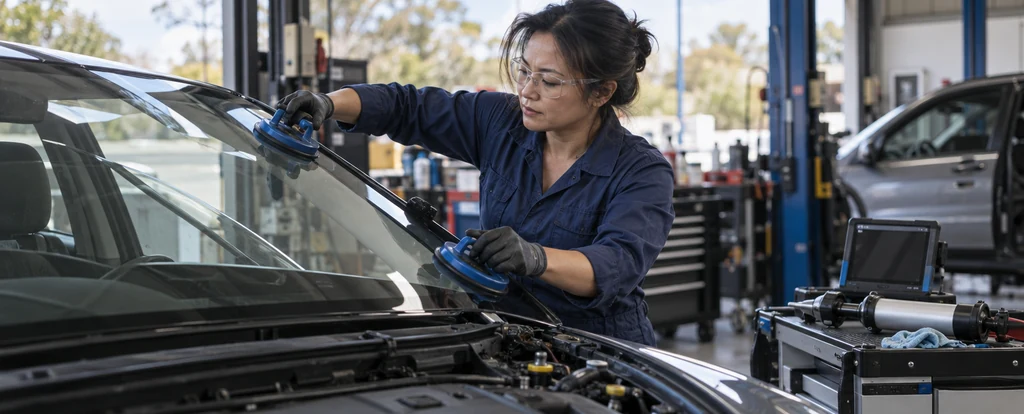
Auto glaziers remove and replace windscreens, side windows and rear glass, working in automotive repair workshops or from mobile vans that travel to the customer. The job sits close to building glazing but the glass is bonded into a vehicle body with urethane adhesive and has to hold in a crash, so the cameras and sensors behind the screen matter as much as the glass itself. Most now recalibrate those systems as a routine part of the job.
How much do auto glaziers earn?
The median full-time salary for an auto glazier is $65,000 per annum, before tax, up $13,600 since 2018.
Pay depends heavily on where you work: an insurer-approved shop with a steady volume of claims usually pays more than a small independent, and mobile glazing adds overtime and after-hours callouts. Being able to carry out ADAS recalibration lifts what you can earn, because fewer people in the trade have the equipment and training. Most workshops pay according to the award or an enterprise agreement, with piece rates at some high-volume sites.
What does an auto glazier do day to day?
The list below is what fills most weeks; the exact mix shifts with seniority and whatever stage the current work is at.
- Removing damaged windscreens and side glass, cutting through the old urethane bond without damaging paint or trim
- Preparing the frame and mouldings, priming the surface so the new adhesive bonds properly
- Applying urethane adhesive and lifting the replacement glass into position with suction lifters
- Refitting mouldings, wipers and sensors, then checking the seal for leaks and wind noise
- Recalibrating driver assistance cameras and radar with scanning equipment once the glass is in
What skills do auto glaziers need?
Employers look for installation and maintenance, hand and power tool work, driving and transport operations, backed by Windscreen removal tools fluency and strong attention to detail.
Specialist skills
- Installation and maintenance
- Hand and power tool work
- Driving and transport operations
Software and tools
- Windscreen removal tools
- Urethane adhesive applicators
- Suction cup lifters
- ADAS calibration equipment
- Glass cutting tools
General skills
- Attention to detail
- Problem solving
- Customer service
- Safety and compliance awareness
Is the job growing?
About 2,100 people work as auto glaziers in Australia, and employment is projected to grow 4.6% over the decade to 2035. That's modest growth: demand is steady rather than booming.
How do you become an auto glazier?
Here's the path most auto glaziers take, step by step.
- 1Finish school or a pre-vocational course
Year 12 is useful but not the only way in, and 54% of people working as auto glaziers hold that level as their highest qualification. A pre-apprenticeship or introductory automotive certificate can help you get picked up by an employer.
- 2Start an apprenticeship or traineeship in automotive glazing
A Certificate III in automotive glazing technology is the standard qualification, combining paid workshop work with TAFE study, and it usually takes around three years. Some people come across from vehicle body repair or another automotive trade and pick up glazing on the job.
- 3Get your driver's licence
Mobile fitting is a large part of the work, so a full car licence is effectively required, and heavy vehicle glass work may call for a light rigid licence. You will often be driving a company van between jobs.
- 4Learn ADAS recalibration
Short courses from equipment makers and training providers cover camera and radar calibration, and insurers increasingly expect it after every screen replacement. It is the skill that separates a basic fitter from a technician who can handle late-model cars.
- 5Move into mobile fitting or heavy vehicle glass
Experienced auto glaziers often shift to a mobile van, which brings more independence and callout pay, or into truck and bus glass, which uses different handling and lifting equipment. Some go on to run their own mobile business.
Ready to apply as an auto glazier?
Whether you're working toward becoming an auto glazier or already are one and want a hand with the next step (sharpening your resume for ATS screening, tightening your cover letter, or knowing what you'll actually be asked at interview), here are examples grounded in this specific role, not generic templates.
What jobs can an auto glazier move to?
Moving into Sales Representative typically comes with the biggest pay rise, worth $23,000 a year more on average.
| Move to | Typical pay change | Overlap | Retraining |
|---|---|---|---|
| Sales Representative Auto glaziers bring product knowledge of vehicle glass and fitment; sales representative work adds quoting, customer advice and account management. | +$23,000 | 9% | reskill |
| Vehicle Accessories Fitter Auto glaziers bring trim removal, sealing and vehicle fitment skills; accessory fitting adds aftermarket parts installation and electrical connections. | +$0 | 71% | minimal |
| Glazier Auto glaziers bring vehicle glass fitting and sealing skills; glazier work adds architectural glass installation and building site practice.Known move | −$500 | 36% | requalify |
Moves are chosen from Jobs and Skills Australia's Data on Occupation Mobility, which follows income tax records between 2011-12 and 2020-21, together with entry requirements and skill overlap. A known move is one people were seen making in that data. Pay change compares median full-time pay for the two roles.
Who works as an auto glazier?
The typical auto glazier is 39 years old; 96% are men, 78% work full-time, and full-timers average 41 hours a week.
- 39
- Median age
- 4%
- Female share
- 78%
- Full-time
- +1h
- vs all-jobs avg
What's it like being an auto glazier?
Auto glazing is a run of short, separate jobs rather than one long project: most screens take an hour or two, and the day moves from vehicle to vehicle. The pace is set by bookings and insurers, so a quiet morning can turn into a rush when a fleet or a hail event lands. It suits people who like working with their hands, solving fit and leak problems, and finishing something they can see.
What people like
- The result is visible. A car leaves with a clean screen, no wind noise and no leaks, and you usually know within a few minutes whether the job is right.
- Every vehicle is different. Mouldings, clips and sensor brackets change from model to model, so there is real figuring out in how this one comes apart and goes back together.
- Time on the road. Mobile glazing means driveways, car parks and depots instead of the same bay every day, and you work on your own for much of it.
- Repairing rather than replacing. A chip or short crack can be filled with resin in about twenty minutes, which is quick, tidy work and cheaper for the customer.
What people find hard
- Windscreens are heavy and awkward. Even with suction lifters, holding a large curved screen steady while it seats on the adhesive is hard on shoulders and backs, and awkward angles in vans and utes make it worse.
- Weather and cure times. Urethane needs the right temperature and time to set, so a cold, wet day can stall a mobile job or push it back into the workshop.
- Clips and trim break. Old plastic clips, mouldings and sensor brackets can snap during removal, which adds time to a job that was quoted at a fixed price.
- Insurer-set pricing. Much of the work is billed through insurers at set rates, which limits what a workshop can charge and puts pressure on how long each job is allowed to take.
Based on our synthesis of professional-body surveys and public accounts of the role, not first-person verified reviews.
Which industries employ auto glaziers?
Other Services employs the largest share of auto glaziers, followed by Construction.
Top employing industries
- 1Other Services
- 2Construction
Ranked by employment share; the source doesn't publish an exact percentage per industry.
| Year 12 or below | 53.7% | |
|---|---|---|
| Certificate III/IV | 37.5% | |
| Diploma / Advanced Diploma | 3.3% | |
| Bachelor degree | 2% | |
| Postgraduate | 0.4% |
Will AI replace auto glaziers?
This is a moderate-exposure job: the fitting side stays in human hands, but the diagnostic and paperwork around it is steadily automated. Windscreens still have to be cut out, bonded and sealed on the vehicle, and no tool does that reliably, yet ADAS calibration now runs through scanning equipment and software, and online quoting and insurer portals have taken over much of the administration. Newer vehicles also bring more sensors, which raises the technical content of the job rather than removing it.
Share of typical working time by exposure level
- Cutting out and refitting windscreens and side glassTrimming back old urethane, handling a curved screen and seating it squarely on fresh adhesive still depends on hands, eyes and feel for the vehicle.45%low
- Calibrating driver assistance cameras and radarCalibration targets, cameras and software do much of the measuring now, though a technician still sets up the rig, drives the test cycle and confirms the result.20%high
- Sealing, leak testing and finishingWater testing, wind noise checks and refitting trim are judged by ear and eye on the finished vehicle.20%low
- Quoting jobs and processing insurance claimsOnline quoting tools and insurer portals already generate much of this from a registration number and photos.15%high
Moves least exposed to AI
These career moves from auto glazier work are rated low for AI exposure:
- Glazier
Some skill overlap (36%), requalify to get there, and a low automation-risk profile.
- Vehicle Accessories Fitter
High skill overlap (71%), little retraining to get there, and a low automation-risk profile.
Common questions about becoming an auto glazier
Straight answers to the questions people ask most.
How much do auto glaziers earn?
Auto glaziers earn a median of $65,000 per annum, before tax, based on full-time workers. Treat that as a guide rather than a fixed rate, because pay moves with your award or enterprise agreement, how much overtime and after-hours callout you take on, and whether the workshop handles insurer work or premium and heavy vehicle glass.
How do you become an auto glazier?
The usual route is an apprenticeship or traineeship in automotive glazing, which combines paid workshop work with study towards a Certificate III and takes around three years. A full driver's licence is effectively required for mobile work, and most employers will train you on ADAS calibration once you can fit screens unsupervised.
Are auto glaziers in demand?
Auto glaziers are currently not in shortage, and employment is projected to grow 4.6% over the decade to 2035. Demand follows the number of vehicles on the road and the rate of windscreen damage, which makes it steadier than trades tied to new construction, though it is a small trade and openings depend on workshops hiring.
Will AI replace auto glaziers?
Not the physical work. Cutting out a bonded screen, lifting a new one into place and refitting trim all need hands on the vehicle, and the bond has to hold in a crash. The diagnostic side is changing, though: ADAS calibration runs through scanning equipment and software, and quoting and insurance claims are handled more and more through automated portals, so technicians who understand the calibration and scanning side are the ones workshops hold on to.
What can auto glaziers move into?
Vehicle accessory fitting uses very similar trim removal and fitment skills, and pays about the same, so it is a common sideways move. Building glazing is another option, where pay is $500 less, but architectural glass work usually means requalifying. A move into sales, for instance selling glass or workshop equipment, pays $23,000 more and leans on your product knowledge, though the customer and quoting side has to be learned. Some experienced glaziers set up their own mobile van, which is often where earnings grow.
What is the difference between an auto glazier and a glazier?
Auto glaziers work on vehicles, cutting and bonding glass into car, truck and bus bodies, while glaziers cut and install flat glass for windows, shopfronts, showers and balustrades in buildings. The two trades share cutting, handling and sealing skills, which is why people move between them, but the adhesives, safety standards and daily sites are quite different.
Related roles
- Glazier
- Vehicle Accessories Fitter
- Sales Representative
- Glazier
- Vehicle Accessories Fitter
- Radiator Repairer
Not sure this is you? Take the career quiz and get a ranked shortlist of roles that fit how you like to work.