Betting Agency Manager
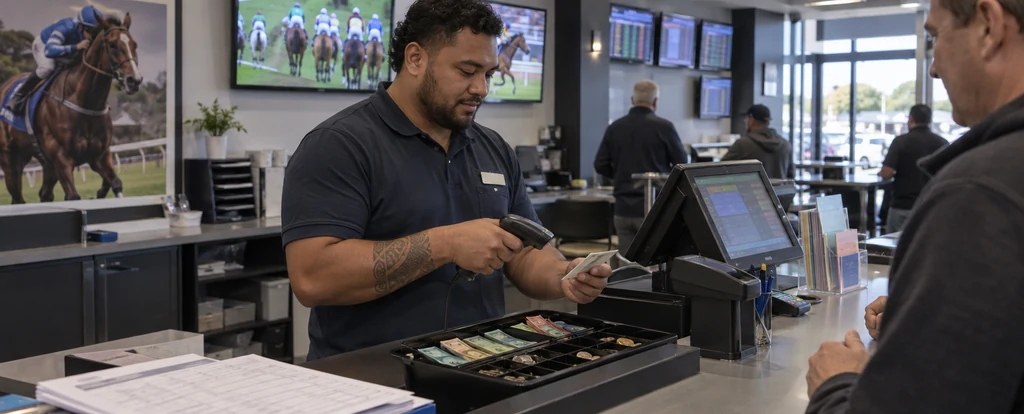
A betting agency manager runs a wagering outlet, supervising the counter staff and making sure every bet is taken, paid and recorded within the rules.
- Median salary*
- $75,400
3.9%vs last year, before tax
- People employed
- 390
2.5%vs last year
- Projected growth
- +6.8%
to 2035
- AI exposure*
- Moderate
- automation risk
- Average hours
- 48/wk
+8h vs all jobs
- Shortage status
- Not in shortage
national
Betting agency managers run the wagering outlets found in shopping strips, hotels and clubs, and sometimes at a racecourse. They sit between the wagering operator and the punter, supervising counter staff, sorting out customer disputes and keeping the outlet compliant with gambling and identity rules. The work is part retail management and part compliance, and it is different from the betting clerks they supervise, who take bets across the counter.
How much do betting agency managers earn?
The median full-time salary for a betting agency manager is $75,400 per annum, before tax, up $15,700 since 2018.
Pay usually follows the award or enterprise agreement covering the venue, and penalty rates for nights, weekends and public holidays account for much of the difference between one manager's take-home pay and another's. Larger outlets and those offering a turnover-based bonus pay more, and holding the state licence for a standalone agency carries more responsibility than supervising a small hotel counter.
What does a betting agency manager do day to day?
The list below is what fills most weeks; the exact mix shifts with seniority and whatever stage the current work is at.
- Rostering and supervising counter staff across race meetings, Saturday sport and evening trading
- Reconciling tills, betting ledgers and end-of-day settlement reports
- Checking identification and applying responsible gambling and self-exclusion requirements at the counter
- Setting up odds displays, promotions and in-store signage for feature race days
- Managing cash handling, banking, security and incident reporting
What skills do betting agency managers need?
Employers look for operations management, regulatory compliance, rostering and venue operations, backed by Tabcorp wagering terminal system fluency and strong customer service.
Specialist skills
- Operations management
- Regulatory compliance
- Rostering and venue operations
Software and tools
- Tabcorp wagering terminal system
- Point of sale software
- Deputy
- Microsoft Excel
- Self-exclusion and customer verification registers
General skills
- Customer service
- People leadership
- Attention to detail
- Safety and compliance awareness
Is the job growing?
About 390 people work as betting agency managers in Australia, and employment is projected to grow 6.8% over the decade to 2035. That's modest growth: demand is steady rather than booming.
How do you become a betting agency manager?
Here's the path most betting agency managers take, step by step.
- 1Start behind the counter
Most managers begin as a betting clerk, gaming attendant or customer service officer in a wagering outlet. It is paid work and the quickest way to learn the products, the terminal system and the responsible gambling rules.
- 2Complete the responsible gambling and licensing requirements for your state
Each state and territory has its own gambling regulator and its own responsible service of gambling training, so check the requirements where you intend to work. A manager usually needs a current state licence or registration.
- 3Take on supervising shifts
Rostering, cash reconciliation and identity verification checks are the usual first step up, and they are where an employer works out whether you can run an outlet on your own.
- 4Add a venue management qualification
A Certificate III or IV in hospitality, retail or leadership and management is the common credential for venue management roles. Formal study is optional rather than standard: about 60% of betting agency managers hold Year 12 or below as their highest qualification.
Ready to apply as a betting agency manager?
Whether you're working toward becoming a betting agency manager or already are one and want a hand with the next step (sharpening your resume for ATS screening, tightening your cover letter, or knowing what you'll actually be asked at interview), here are examples grounded in this specific role, not generic templates.
What jobs can a betting agency manager move to?
Moving into Club Manager typically comes with the biggest pay rise, worth $16,400 a year more on average.
| Move to | Typical pay change | Overlap | Retraining |
|---|---|---|---|
| Club Manager Managing a club builds on licensed venue operations, gaming compliance, cash handling and staff supervision, with a short course in club operations. | +$16,400 | 58% | short course |
| Post Office Manager Managing a post office draws on the same retail outlet supervision, cash handling, compliance and customer service experience, with minimal extra training. | +$0 | 71% | minimal |
| Hotel Service Manager Managing hotel services uses the same hospitality supervision, customer service, cash handling and venue operations skills, with minimal extra training. | −$2,100 | 61% | minimal |
| Amusement Centre Manager Managing an amusement centre applies the same venue supervision, cash handling and compliance skills, with a short course in entertainment operations. | −$3,600 | 47% | short course |
Moves are chosen from Jobs and Skills Australia's Data on Occupation Mobility, which follows income tax records between 2011-12 and 2020-21, together with entry requirements and skill overlap. A known move is one people were seen making in that data. Pay change compares median full-time pay for the two roles.
Who works as a betting agency manager?
The typical betting agency manager is 54 years old; 54% are women, 45% work full-time, and full-timers average 48 hours a week.
- 54
- Median age
- 54%
- Female share
- 45%
- Full-time
- +8h
- vs all-jobs avg
What's it like being a betting agency manager?
The job runs on the racing and sport calendar. Feature race days and Saturday afternoons are the busiest trading periods, so the week is built around them, with quieter mornings given to rosters, cash, stock and compliance paperwork. It suits someone who enjoys a regulated product, is comfortable handling cash and disputes, and would rather be on the floor of a small venue than in an office.
What people like
- Big race days. Cup week and Saturday sport bring a rush that few retail or hospitality venues see, and the whole outlet works to the same schedule.
- You run the whole outlet. In a small agency you control rosters, promotions, displays and how the day is organised, without a head office layer watching every decision.
- The product is worth knowing. Learning the odds, bet types and settlement rules builds expertise that carries across wagering, gaming and venue management.
- Time on the floor and at the desk. Part of the week is spent serving customers and part on cash, compliance and reporting, so the role is not one task all day.
What people find hard
- Nights, weekends and public holidays. Outlets trade when people bet, so shifts run late and the racing calendar decides your Saturdays. Full-time managers average 48 hours a week.
- Cash and security risk. Holding and moving cash makes an outlet a target, and the manager carries the procedures, banking and incident reporting that go with it.
- Problem gambling is part of the job. You will have to refuse service, enforce self-exclusion and deal with customers who are upset or struggling, which is uncomfortable even when the rules are clear.
- A small field of management roles. Agencies are concentrated in a limited number of outlets, so a step up often means waiting for a vacancy or moving to a larger venue.
Based on our synthesis of professional-body surveys and public accounts of the role, not first-person verified reviews.
Which industries employ betting agency managers?
Arts and Recreation Services employs the largest share of betting agency managers, followed by Accommodation and Food Services.
Top employing industries
- 1Arts and Recreation Services
- 2Accommodation and Food Services
Ranked by employment share; the source doesn't publish an exact percentage per industry.
| Year 12 or below | 60.4% | |
|---|---|---|
| Certificate III/IV | 13.9% | |
| Bachelor degree | 11.3% | |
| Diploma / Advanced Diploma | 9.3% | |
| Postgraduate | 2.8% |
Will AI replace betting agency managers?
Wagering is a screen-based, data-heavy product, so automation already sits inside the counter systems: terminals price bets and settle them, and operator reporting can reconcile a day's trading. What keeps the exposure moderate rather than high is that the job is still about running a licensed venue, which means supervising staff, handling cash and disputes, and making judgement calls on responsible gambling that a system cannot make.
Share of typical working time by exposure level
- Applying responsible gambling and identity checksThe rules and the self-exclusion register can be digitised, but refusing service, reading a situation and handling a distressed customer stay with the person at the counter.30%low
- Operating the wagering terminal and settling betsThe terminal prices most bets and works out payouts, but a manager still takes the bet, checks the details and corrects errors when they happen.25%moderate
- Building rosters around race and sport schedulesRostering software proposes coverage from past trading patterns, but the racing calendar, staff availability and local events still need a manager's judgement.25%moderate
- Reconciling tills and end-of-day betting reportsPoint of sale software and operator reporting already match most figures automatically, so the manager is checking exceptions rather than adding up columns.20%high
Common questions about becoming a betting agency manager
Straight answers to the questions people ask most.
How much does a betting agency manager earn?
$75,400 per annum, before tax, for a full-time betting agency manager. Pay depends heavily on the venue and the agreement it sits under, and penalty rates for nights and weekends plus any turnover bonus often matter more than the base rate.
How do you become a betting agency manager?
Most managers start on the counter as a betting clerk or gaming attendant and move up through supervising shifts, because the product knowledge and counter experience are hard to pick up from outside the industry. You will also need the responsible gambling training and the state licence or registration that applies where you work.
Are betting agency managers in demand?
Betting agency managers are currently not in shortage, and employment is projected to grow 6.8% over the decade to 2035 over the decade to 2035. Openings tend to come from turnover and internal promotion rather than new outlets, so experience on a wagering counter is the strongest thing you can bring to an application.
Will AI replace betting agency managers?
Not the whole job, but parts of it are already automated. Terminals and point of sale software price bets, calculate payouts and reconcile figures that managers once worked out by hand, and roster forecasting keeps improving, while supervising staff, settling disputes and applying responsible gambling rules stay with the manager.
What can a betting agency manager move into?
Club management is a common move, since licensed venue operations, gaming compliance and staff supervision carry straight over, and it comes with $16,400 more. Managing a post office uses the same retail supervision and cash handling and pays about the same, while hotel service management is a smaller step that pays $2,100 less.
What hours do betting agency managers work?
Outlets trade into the evening and every weekend, so shifts are built around race and sport schedules. Full-time managers average 48 hours a week, and public holidays are usually the busiest trading days rather than days off.
Related roles
- Club Manager
- Hotel Service Manager
- Post Office Manager
- Amusement Centre Manager
- Betting Clerk
- Gaming Attendant
Not sure this is you? Take the career quiz and get a ranked shortlist of roles that fit how you like to work.