Body Piercer
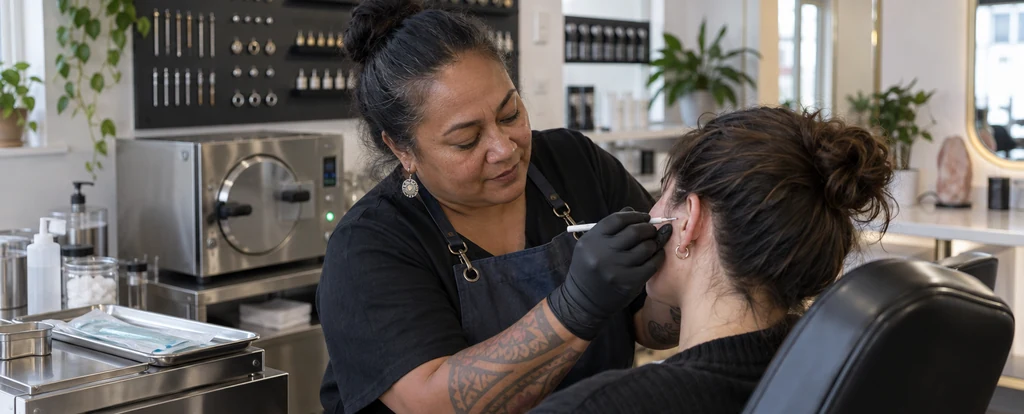
Body piercers pierce ears, noses, lips and other body parts and fit jewellery, working to strict hygiene rules so a piercing heals cleanly.
- Median salary*
- $52,000
4.4%vs last year, before tax
- People employed*
- 1,300
0.0%vs last year
- Projected growth*
- +4%
to 2035
- AI exposure*
- Low
- automation risk
- Average hours*
- 38/wk
−2h vs all jobs
- Shortage status*
- Not in shortage
national
Most body piercers work in piercing studios, tattoo shops or beauty salons, where the job sits closer to a small clinical procedure than to a haircut. It differs from tattoo artistry in that each piercing takes minutes rather than hours, but the two share the same sterile technique and skin penetration rules. Studios run on a mix of bookings and walk-ins, so evenings and weekends are the busiest trading hours.
How much do body piercers earn?
The median full-time salary for a body piercer is $52,000 per annum, before tax, up $11,000 since 2018.
Pay depends on the studio: some pay an hourly rate under an award, while others pay a lower base plus commission on piercings and jewellery. Piercers who build a returning clientele and sell higher-value jewellery tend to earn more, and those who contract to several studios or run their own space can earn more again. Foot traffic matters more than postcode, so a busy counter in a modest suburb can pay better than a quiet studio in the city.
What does a body piercer do day to day?
The list below is what fills most weeks; the exact mix shifts with seniority and whatever stage the current work is at.
- Consulting clients on placement, jewellery size and metal, and what healing will involve
- Cleaning and sterilising needles, tools and jewellery, and running and logging autoclave cycles
- Marking the site and piercing skin using single-use needles and aseptic technique
- Fitting, shortening or changing jewellery such as studs, rings and barbells
- Explaining aftercare, checking healing piercings and referring clients to a doctor when something looks wrong
What skills do body piercers need?
Employers look for personal care services, infection control and hygiene, hair and beauty services, backed by Fresha fluency and strong customer service.
Specialist skills
- Personal care services
- Infection control and hygiene
- Hair and beauty services
- Cleaning and grounds maintenance
Software and tools
- Fresha
- Timely
- Square Appointments
- Autoclave steriliser
- Single-use piercing needles
General skills
- Customer service
- Attention to detail
- Written communication
Is the job growing?
About 1,300 people work as body piercers in Australia, and employment is projected to grow 4% over the decade to 2035. That's modest growth: demand is steady rather than booming.
How do you become a body piercer?
Here's the path most body piercers take, step by step.
- 1Get the hygiene basics
Start with infection control and first aid training, which every studio expects and which TAFE and private providers deliver as short courses. This is where you learn how blood-borne viruses spread, how skin penetration rules work and how sterilising is meant to be done.
- 2Complete a piercing course
Body piercing courses run from a few days to several weeks and cover anatomy, placement, jewellery sizing and aseptic technique. They give you a certificate to show a studio, but they are not a licence to pierce clients on your own.
- 3Learn inside a studio
Most piercers spend months as an assistant or counter hand before they pierce anyone, sterilising tools, watching technique and building up supervised piercings. This stage is usually paid at junior or casual rates, and finding a studio willing to train you is the hardest part of the path.
- 4Meet your state's skin penetration rules
Requirements differ by state and territory: some councils license the operator or premises for personal appearance services, while others require a skin penetration business to register or notify. A studio normally handles this for its staff, but you need to check with your local council if you go out on your own.
- 5Build a portfolio of healed work
Photograph healed piercings with the client's permission and keep notes on placement and jewellery. This is what convinces the next studio to hire you, and it is also how clients find you once you start working independently.
Ready to apply as a body piercer?
Whether you're working toward becoming a body piercer or already are one and want a hand with the next step (sharpening your resume for ATS screening, tightening your cover letter, or knowing what you'll actually be asked at interview), here are examples grounded in this specific role, not generic templates.
What jobs can a body piercer move to?
Moving into Beauty Therapist typically comes with the biggest pay rise, worth $9,300 a year more on average.
| Move to | Typical pay change | Overlap | Retraining |
|---|---|---|---|
| Beauty Therapist Body piercers bring hygiene and consultation skills, then study beauty therapy to offer broader skin and salon treatments. | +$9,300 | 53% | reskill |
| Tattoo Artist Body piercers bring sterile technique, skin knowledge and client care, then train in tattoo artistry and licensing. | −$2,600 | 19% | reskill |
Moves are chosen from Jobs and Skills Australia's Data on Occupation Mobility, which follows income tax records between 2011-12 and 2020-21, together with entry requirements and skill overlap. A known move is one people were seen making in that data. Pay change compares median full-time pay for the two roles.
Who works as a body piercer?
The typical body piercer is 30 years old; 52% are women, 45% work full-time, and full-timers average 38 hours a week.
- 30
- Median age
- 52%
- Female share
- 45%
- Full-time
- −2h
- vs all-jobs avg
What's it like being a body piercer?
The work has a steady rhythm: a consultation, a procedure that takes a few minutes, aftercare advice, then cleaning down and setting up again. The pressure sits in never cutting corners on hygiene, because an infection is both a health problem and a reputation problem for the studio. It suits people who stay calm with nervous clients, are comfortable around needles and blood, and do not mind working when everyone else is out.
What people like
- Quick, visible results. A piercing takes minutes, and the client usually leaves pleased and comes back to show you how it healed.
- Real conversations with clients. Consultations cover anatomy, jewellery and healing, and clients often arrive with a story about why they want it and who they brought along.
- A craft you keep learning. Difficult anatomy, new jewellery styles and different healing patterns mean the work does not become the same piercing over and over.
- Studio work without a long degree. You can be working with clients within months rather than years, through a short course and supervised practice.
What people find hard
- Quiet weekday shifts. Weekday trade can be slow, and studios often run on skeleton staff until the weekend rush arrives.
- Hard to get a start without a mentor. The trade is learned under an experienced piercer, and not every studio is willing or able to take on a trainee.
- Hygiene discipline never relaxes. Every shift includes cleaning, sterilising and logging, even on days when nobody comes through the door.
- Clients who feel faint. People sometimes go pale or dizzy during or after a piercing, and you have to manage that calmly while keeping the procedure sterile.
Based on our synthesis of professional-body surveys and public accounts of the role, not first-person verified reviews.
Which industries employ body piercers?
Other personal services employs the largest share of body piercers, followed by Beauty services.
Top employing industries
- 1Other personal services
- 2Beauty services
- 3Retail trade
- 4Arts and recreation services
Ranked by employment share; the source doesn't publish an exact percentage per industry.
| Certificate III/IV | 34% | |
|---|---|---|
| Diploma / Advanced Diploma | 26% | |
| Bachelor degree | 20% | |
| Year 12 or below | 20% |
Will AI replace body piercers?
Body piercing has low exposure to AI and automation, because the core of the job is a physical procedure performed on a living person with a needle. Software has taken over the booking, records and marketing side of running a studio, and digital jewellery sizing tools help with selection, but neither changes how a piercing is done or how a nervous client is looked after in the chair.
Share of typical working time by exposure level
- Performing the piercingThe needle work depends on steady hands, aseptic technique and talking someone through a moment they are nervous about.35%low
- Consulting on placement and jewelleryPhoto libraries and sizing apps help a client picture a stud or ring, but judging how a piercing will sit on a particular ear or nose still happens face to face.25%moderate
- Sterilising tools and keeping recordsDigital intake forms and record systems cut the paperwork, while the autoclave itself still has to be loaded, run and logged by hand.20%moderate
- Booking, marketing and stockOnline booking, automated reminders and scheduling tools for social media cover much of what a counter assistant used to do between clients.20%high
Common questions about becoming a body piercer
Straight answers to the questions people ask most.
How much do body piercers earn?
Body piercers earn a median of $52,000 per year before tax. Studio pay varies more than that figure suggests, because commission on piercings and jewellery can make up a large part of take-home pay, and a busy counter pays differently from a quiet one.
How do you become a body piercer?
Most piercers learn through a short body piercing course plus supervised practice inside a studio, since there is no single national qualification for the trade. Infection control and first aid training are expected, and the studio you work in has to meet its state's skin penetration rules.
Are body piercers in demand?
Body piercers are currently not in shortage, and employment is projected to grow 4% over the decade to 2035. With about 1,300 people in the role, openings each year are limited, so most come from studios replacing staff or expanding their booking books. Being able to run a counter, sell jewellery and pierce confidently makes you far more useful to a studio than piercing skill alone.
Will AI replace body piercers?
No, the piercing itself is beyond what AI or robotics can do, because it depends on hand skill, sterile technique and reading how a client is coping. What has changed is the counter work, with online booking, digital consent forms and social media scheduling taking over tasks a junior once handled.
What can body piercers move into?
Beauty therapy builds on the hygiene and consultation skills you already use, and beauty therapists earn $9,300 more. Tattoo artistry uses the same sterile technique and studio setting but pays $2,600 less, and it takes time to build a portfolio before you can move across. Many piercers eventually run their own studio or work as a contractor with their own clientele, which is often where earnings grow.
Do you need a licence to work as a body piercer?
Rules vary by state and territory: some require the operator or the premises to hold a personal appearance services licence from the local council, while others require the business to register as a skin penetration premises. Check the requirements with your local council before you take clients, and keep your infection control training current.
Related roles
Not sure this is you? Take the career quiz and get a ranked shortlist of roles that fit how you like to work.