Forensic Scientist
Forensic scientists examine physical evidence from crime scenes and help police and courts establish what happened.
- Median salary*
- $95,700
4.0%vs last year, before tax
- People employed*
- 2,100
0.0%vs last year
- Projected growth*
- +3.2%
to 2035
- AI exposure*
- Moderate
- automation risk
- Average hours*
- 40/wk
matches all-jobs average
- Shortage status*
- Not in shortage
national
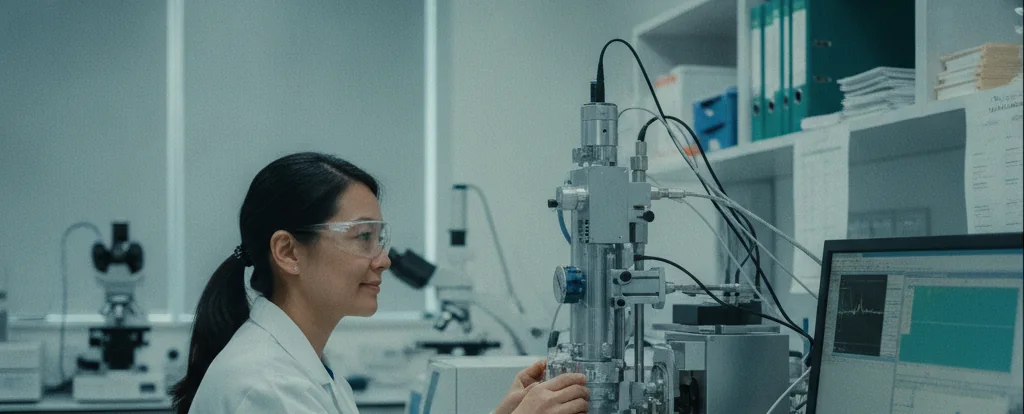
Forensic scientists collect, preserve and analyse evidence such as DNA, fibres, toxins and trace materials to establish facts for criminal investigations and court cases. Most work in a state or federal forensic laboratory rather than at the scene itself, since crime scene examiners and police collect and log evidence before it reaches the lab, and those laboratories are accredited to the ISO/IEC 17025 standard that sets how samples are handled and results recorded. The job draws on chemistry, biology, microscopy and statistics, all governed by chain-of-custody procedures strict enough that a single documentation error can cast doubt on a whole case.
How much do forensic scientists earn?
The median full-time salary for a forensic scientist is $95,700 per annum, before tax, up $20,000 since 2018.
Most forensic scientists work for a state or federal laboratory, so pay follows the public service classification scale rather than individual negotiation. Penalty rates for on-call and weekend work, and the level you are appointed at, both shift the total, and more senior reporting roles with regular court duties sit higher on the scale. Private consultancies and university-based laboratories vary more than the public sector does.
What does a forensic scientist do day to day?
The list below is what fills most weeks; the exact mix shifts with seniority and whatever stage the current work is at.
- Processing and examining evidence at the lab bench, long after the scene itself has been cleared and released
- Running samples through GC-MS or DNA sequencing equipment and checking results against reference standards
- Writing statements and reports precise enough to withstand cross-examination in court
- Giving expert testimony and defending a conclusion under a defence lawyer's questioning
- Working through a case backlog when a major investigation pushes everything else down the queue
What skills do forensic scientists need?
Employers look for laboratory analysis, data analysis, regulatory compliance, backed by Gas Chromatography-Mass Spectrometry (GC-MS) fluency and strong problem solving.
Specialist skills
- Laboratory analysis
- Data analysis
- Regulatory compliance
- Statistical modelling
- Field research and sampling
Software and tools
- Gas Chromatography-Mass Spectrometry (GC-MS)
- DNA sequencing equipment
- Optical microscopes
- Forensic imaging software
- Laboratory Information Management System (LIMS)
General skills
- Problem solving
- Attention to detail
- Written communication
Is the job growing?
About 2,100 people work as forensic scientists in Australia, and employment is projected to grow 3.2% over the decade to 2035. That's modest growth: demand is steady rather than booming.
How do you become a forensic scientist?
Here's the path most forensic scientists take, step by step.
- 1Complete a science degree
A bachelor's degree in forensic science, chemistry, biology or biochemistry takes three years full time, and the forensic-specific degrees include units on evidence law and courtroom presentation that a straight science degree will not. Check that the course is offered by a university with its own laboratory facilities or industry placements, because employers look for hands-on time at the bench.
- 2Add honours or a specialist postgraduate qualification
An honours year or a master's in forensic science, toxicology or DNA analysis is how many people move from general laboratory work into casework. About 26% of the people in this role hold a postgraduate qualification, and a research project in a relevant area gives you something concrete to discuss at interview.
- 3Get paid laboratory experience
Entry-level roles as a laboratory technician or assistant, in a forensic lab, a pathology service or a university research group, build the instrument time and sample-handling habits that employers ask about. These positions are competitive, and a placement during your degree is often the easiest way in.
- 4Apply for a recruitment round at a forensic laboratory
State and federal forensic services hire in scheduled rounds rather than continuously, and the process includes police checks, security clearance and, in some agencies, DNA database and vaccination requirements. It can take several months from application to start date, so apply to more than one jurisdiction if you are willing to move.
- 5Build towards expert evidence
New scientists usually work under supervision and sign off through a reporting officer, and court attendance grows with experience. Taking internal training in statement writing and witness preparation is what turns a competent analyst into someone the lab is willing to put in the witness box.
Ready to apply as a forensic scientist?
Whether you're working toward becoming a forensic scientist or already are one and want a hand with the next step (sharpening your resume for ATS screening, tightening your cover letter, or knowing what you'll actually be asked at interview), here are examples grounded in this specific role, not generic templates.
What jobs can a forensic scientist move to?
Moving into Chemist typically comes with the biggest pay rise, worth $18,400 a year more on average.
| Move to | Typical pay change | Overlap | Retraining |
|---|---|---|---|
| Chemist Forensic scientists bring analytical chemistry and evidence handling skills to bench chemistry roles. | +$18,400 | 57% | short course |
| Pharmacologist Forensic scientists bring drug analysis and laboratory skills to pharmacology research roles. | +$13,500 | 83% | minimal |
| Toxicologist Forensic scientists bring toxicology knowledge and analytical techniques to specialised toxicology positions. | +$7,300 | 54% | short course |
| Biologist Forensic scientists bring biological sample analysis and laboratory skills to general biology positions. | +$500 | 71% | minimal |
| Microbiologist Forensic scientists bring microbiology techniques and laboratory expertise to microbiological analysis roles. | −$15,400 | 100% | minimal |
Moves are chosen from Jobs and Skills Australia's Data on Occupation Mobility, which follows income tax records between 2011-12 and 2020-21, together with entry requirements and skill overlap. A known move is one people were seen making in that data. Pay change compares median full-time pay for the two roles.
Who works as a forensic scientist?
The typical forensic scientist is 38 years old; 52% are men, 92% work full-time, and full-timers average 40 hours a week.
- 38
- Median age
- 48%
- Female share
- 92%
- Full-time
- +0h
- vs all-jobs avg
What's it like being a forensic scientist?
The work has a steady laboratory rhythm broken up by deadlines that belong to someone else: an investigation, a committal hearing, a trial date. Much of the week is spent at an instrument or a keyboard, and the pressure comes from accuracy rather than speed, because a result that cannot be defended in court is worth nothing. People who enjoy it tend to like detail, tolerate repetition and want their work to matter to someone outside the building.
What people like
- Results that answer a real question. Someone is usually waiting on the other end of a sample, whether that is an investigator or a family, so the work rarely feels abstract even on a routine day.
- Court days break up the lab routine. Giving evidence is a small part of the job, but it is distinctive and demanding, and some forensic scientists build their careers around it.
- A specialty to go deep in. DNA, toxicology, trace evidence, fingerprints and digital forensics each have their own techniques and literature, so there is room to become the person the lab calls on.
- Predictable conditions in a public laboratory. Government labs generally offer regular hours, superannuation and leave entitlements that many private science jobs do not, and shift work is limited to on-call arrangements.
What people find hard
- Reporting takes as long as the testing. Every result has to be written up in terms a court will accept, so a day at the bench is often followed by a day at the keyboard.
- Backlogs set the pace. A major investigation can push routine cases back by months, and the queue is not something the laboratory controls.
- Small documentation errors carry weight. A labelling or transfer slip that would be trivial in another laboratory can raise doubt about an entire exhibit, so there is no such thing as a low-stakes form.
- Your conclusions get challenged publicly. Cross-examination puts your method and your wording under scrutiny from people with no scientific training, which some scientists find harder than the analysis itself.
Based on our synthesis of professional-body surveys and public accounts of the role, not first-person verified reviews.
Which industries employ forensic scientists?
Public Administration & Safety employs the largest share of forensic scientists, followed by Professional, Scientific & Technical Services.
Top employing industries
- 1Public Administration & Safety
- 2Professional, Scientific & Technical Services
- 3Justice & Law Enforcement
Ranked by employment share; the source doesn't publish an exact percentage per industry.
| Bachelor degree | 52% | |
|---|---|---|
| Postgraduate | 26% | |
| Diploma / Advanced Diploma | 13% | |
| Other | 9% |
Will AI replace forensic scientists?
Forensic science sits in the middle range for AI exposure. Instruments run largely automated sequences and laboratory information systems handle logging, calculation and comparison against databases, which removes a lot of routine bench work; what stays with the scientist is deciding which test answers the question, judging whether a result makes sense, and defending it under cross-examination.
Share of typical working time by exposure level
- Running samples on GC-MS and DNA sequencing equipmentModern instruments run their own sequences and software flags peaks and matches, but choosing the method and explaining an unusual chromatogram or profile is still the scientist's call.30%moderate
- Writing reports and statements for courtDrafting software and speech-to-text already speed up the standard sections, but the wording about what a result does and does not show is written by the reporting officer.25%high
- Giving expert evidence and consulting on casesCross-examination and the meetings with investigators beforehand turn on professional judgement and credibility, which no system can supply.25%low
- Handling evidence and maintaining chain of custodyBarcode scanning and laboratory information systems replace the old paper registers, but the physical transfer and the signature that goes with it remain a person's responsibility.20%low
Common questions about becoming a forensic scientist
Straight answers to the questions people ask most.
How much do forensic scientists earn?
Forensic scientists earn a median of $95,700 per year before tax. Public laboratories pay on a classification scale, so your level, your specialty and any on-call or weekend penalties affect the total more than negotiation does.
How do you become a forensic scientist?
You need a science degree, usually a bachelor's in forensic science, chemistry, biology or biochemistry, followed by laboratory experience. About 52% of forensic scientists hold a bachelor degree as their highest qualification and 26% have postgraduate study. Entry to a state or federal laboratory also involves police checks and a security clearance.
Are forensic scientists in demand?
Forensic scientists are currently not in shortage, and employment is projected to grow 3.2% over the decade to 2035 over the decade to 2035. The workforce is small and concentrated in government laboratories, so vacancies tend to appear in scheduled recruitment rounds rather than continuously.
Will AI replace forensic scientists?
Automation has already taken over much of the routine bench work: instruments run their own sequences and laboratory information systems handle logging and calculations. What stays with the scientist is deciding which test will answer the question, reading a result that does not fit the expected pattern, and defending the conclusion in court. The role is moderately exposed to AI overall.
What can forensic scientists move into?
Pharmacology and toxicology are close neighbours, where much of the analytical technique transfers; pharmacologists earn $13,500 more and toxicologists $7,300 more. Analytical chemistry roles for chemists use similar instrumentation and pay $18,400 more.
Do forensic scientists go to crime scenes?
Most do not. Crime scene examiners, who are usually police officers or civilian specialists, attend and document the scene and collect the evidence, while forensic scientists examine what arrives at the laboratory.
Related roles
Not sure this is you? Take the career quiz and get a ranked shortlist of roles that fit how you like to work.