Horse Riding Instructor
Horse riding instructors teach people to ride and handle horses safely, from a first lesson on a lead rein through to competition preparation.
- Median salary*
- $54,600
3.8%vs last year, before tax
- People employed
- 930
3.3%vs last year
- Projected growth
- +12.1%
to 2035
- AI exposure*
- Low
- automation risk
- Average hours
- 44/wk
+4h vs all jobs
- Shortage status
- Not in shortage
national
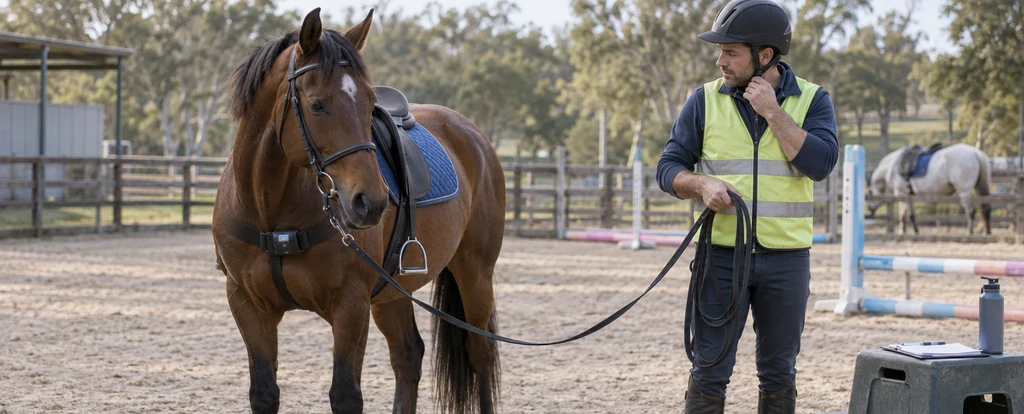
Most work at riding schools, pony clubs, agistment centres and holiday camps, teaching in arenas, paddocks and on trails. The role mixes coaching with horse care, because instructors usually catch, groom, tack up and warm up the horses they teach on, which is what separates it from coaching that happens entirely off the horse. Many work part time or casually, and the average full-time week runs to 44 hours.
How much do horse riding instructors earn?
The median full-time salary for a horse riding instructor is $54,600 per annum, before tax, up $11,300 since 2018.
How the work is arranged moves pay more than the job title does: many instructors are paid an hourly rate on casual or part-time hours, and weekend, evening and school holiday shifts often attract loadings. Accreditation to coach at higher levels, or combining teaching with stable management duties, tends to lift the hourly rate. Earnings also depend on how many lessons you can fill in a week and whether you are supplying your own horse.
What does a horse riding instructor do day to day?
The list below is what fills most weeks; the exact mix shifts with seniority and whatever stage the current work is at.
- Assessing a new rider's balance, confidence and previous experience before deciding what to teach
- Planning and running lessons for individuals or small groups, from lead-rein beginners to riders preparing for competition
- Demonstrating riding and handling techniques, then watching and correcting as riders try them
- Catching, grooming, tacking up and warming up horses before and after lessons
- Checking saddlery, helmets and arena footing, and keeping lesson records and bookings up to date
What skills do horse riding instructors need?
Employers look for teaching and instruction, fitness coaching and instruction, animal care and handling, backed by Saddlery and tack fluency and strong safety and compliance awareness.
Specialist skills
- Teaching and instruction
- Fitness coaching and instruction
- Animal care and handling
Software and tools
- Saddlery and tack
- Lunge rein
- Riding helmet and safety vest
- Equisense activity sensor
- Riding school booking software
General skills
- Safety and compliance awareness
- Physical stamina and dexterity
- Written communication
- Customer service
Is the job growing?
About 930 people work as horse riding instructors in Australia, and employment is projected to grow 12.1% over the decade to 2035. That's healthy, above-average growth, and the role should stay in solid demand.
How do you become a horse riding instructor?
Here's the path most horse riding instructors take, step by step.
- 1Build real hours around horses
Most people arrive through pony club, competition riding or years of their own lessons, and employers look for handling time rather than just riding ability. Volunteering at a riding school or stable gives you the grooming, tacking up and yard routine the job assumes you already know.
- 2Gain a qualification in equine studies or coaching
A Certificate III in Equine Studies (22647VIC) at TAFE covers horse care, handling and welfare, and sport coaching qualifications cover lesson planning and participant safety. Equestrian Australia's coaching accreditation levels are the recognised pathway for teaching a discipline, and many riding schools train assistants on the job.
- 3Add first aid and a Working with Children Check
Because most riders are children, a current first aid certificate and a Working with Children Check are expected before you take lessons unsupervised. The check is issued by your state or territory, so the process and its name vary depending on where you work.
- 4Start as an assistant or trainee instructor
Assistant roles are paid and supervised, and they build the lesson hours and safety habits that lead to running your own classes. This is also where you learn how to match riders to horses and how to manage a group in an arena.
- 5Specialise or take on your own students
Higher coaching accreditation in a discipline such as dressage, show jumping or eventing opens competition coaching, and some instructors go on to run their own riding school or take on agistment. Insurance and registration requirements for operating a riding establishment differ between states.
Ready to apply as a horse riding instructor?
Whether you're working toward becoming a horse riding instructor or already are one and want a hand with the next step (sharpening your resume for ATS screening, tightening your cover letter, or knowing what you'll actually be asked at interview), here are examples grounded in this specific role, not generic templates.
What jobs can a horse riding instructor move to?
Moving into Animal Attendant typically comes with the biggest pay rise, worth $11,800 a year more on average.
| Move to | Typical pay change | Overlap | Retraining |
|---|---|---|---|
| Animal Attendant Instructors move into animal care work, where horse handling and animal welfare knowledge transfer, though a certificate in animal care is needed.Known move | +$11,800 | 23% | reskill |
| Horse Breeder Horse husbandry and stable knowledge carry into breeding, with further study in equine breeding and stud management required. | +$10,400 | 10% | reskill |
| Martial Arts Instructor Coaching skills, participant safety and lesson planning carry across to martial arts teaching, with a short course in that discipline needed. | +$0 | 71% | short course |
| Gymnastics Coach Lesson planning, group management and athlete development transfer to gymnastics coaching, with a coaching certificate in that sport required. | +$0 | 56% | short course |
| Surfing Instructor Instruction and safety supervision transfer to surf teaching, needing a surf coaching qualification and water skills. | −$2,600 | 64% | short course |
Moves are chosen from Jobs and Skills Australia's Data on Occupation Mobility, which follows income tax records between 2011-12 and 2020-21, together with entry requirements and skill overlap. A known move is one people were seen making in that data. Pay change compares median full-time pay for the two roles.
Who works as a horse riding instructor?
The typical horse riding instructor is 42 years old; 88% are women, 39% work full-time, and full-timers average 44 hours a week.
- 42
- Median age
- 88%
- Female share
- 39%
- Full-time
- +4h
- vs all-jobs avg
What's it like being a horse riding instructor?
The week is shaped by whoever has booked lessons: early mornings, after school, weekends and school holidays are the busy times, and the weather can rewrite the day at short notice. Instructors carry safety responsibility for both the rider and the horse in every session, so attention stays on even when the lesson is the fifth repeat of the same exercise. People who enjoy the job tend to like visible progress and being outdoors with horses more than they mind irregular hours.
What people like
- Progress you can see. A nervous beginner trotting unaided or a rider jumping a first full course is a clear result, and it usually arrives within a few weeks rather than after months of work.
- Days outdoors with horses. The work happens in arenas, paddocks and on trails, and the horses themselves are part of the job rather than background to it.
- Teaching a skill you use. You draw on your own riding and handling every lesson, and explaining a aid or a seat position to someone else tends to sharpen your own riding.
- Riders of every age and level. A morning can hold a six-year-old on a lead rein, an adult returning to riding after years away and a teenager preparing for a pony club event.
What people find hard
- Weekends and holidays are the busy times. That is when lessons are booked, so the schedule rarely lines up with standard family or social hours.
- Weather and cancellations. Rain, extreme heat and hard ground cancel sessions or push them indoors, and casual instructors are usually not paid for a lesson that does not run.
- The same correction, all day. Teaching beginners means repeating the same handful of fixes across five or six lessons in a row, which some instructors find tedious.
- Physically demanding and safety-critical. You are on your feet for long stretches, lifting saddles and handling large animals, and a lapse in attention can put a rider or a horse at risk.
Based on our synthesis of professional-body surveys and public accounts of the role, not first-person verified reviews.
Which industries employ horse riding instructors?
Education and Training employs the largest share of horse riding instructors, followed by Arts and Recreation Services.
Top employing industries
- 1Education and Training
- 2Arts and Recreation Services
Ranked by employment share; the source doesn't publish an exact percentage per industry.
| Year 12 or below | 38% | |
|---|---|---|
| Bachelor degree | 16.5% | |
| Certificate III/IV | 16% | |
| Diploma / Advanced Diploma | 14.8% | |
| Postgraduate | 5.3% |
Will AI replace horse riding instructors?
This is a low-exposure job, because the work happens in real time between a person, a horse and a rider, and no current technology reads a horse's mood or corrects a rider's balance. Booking software now runs schedules and payments, and riding sensors such as Equisense log a horse's gait and workload, which takes some record keeping off the instructor. What remains is the teaching, the handling and the safety judgement on the ground.
Share of typical working time by exposure level
- Coaching riders in the arenaWatching a rider rise to the trot and calling the correction in the moment depends on eyes and voice in the arena, and a screen cannot feel whether a horse is about to spook.40%low
- Handling, grooming and tacking up horsesCatching a reluctant horse in a paddock, checking a girth and picking out hooves is physical work that has to be done by hand before every lesson.35%low
- Planning lesson programs and progressionsLesson plans and rider progressions can be drafted with software or drawn from coaching resources, but the sequence still has to fit the individual rider and the horses available.15%moderate
- Assessing riders and giving feedbackVideo review and activity sensors can show a rider their position or a horse's stride, which supports feedback, though the assessment and the way it is delivered stay with the instructor.10%moderate
Common questions about becoming a horse riding instructor
Straight answers to the questions people ask most.
How much do horse riding instructors earn?
Full-time horse riding instructors earn a median of $54,600 per year before tax. Many in the job work casual or part-time hours at an hourly rate, so actual weekly earnings vary with how many lessons are booked and whether weekend and holiday loadings apply. Higher coaching accreditation and stable management duties are the usual ways the rate increases.
How do I become a horse riding instructor?
You need solid riding and horse handling experience first, usually built through pony club, competition or years of lessons. From there, a Certificate III in Equine Studies (22647VIC) or a sport coaching qualification, plus Equestrian Australia coaching accreditation, gives you the teaching and safety grounding employers look for. A first aid certificate and a Working with Children Check are expected before you teach children unsupervised.
Are horse riding instructors in demand?
Horse riding instructors are currently not in shortage, and employment is projected to grow 12.1% over the decade to 2035. That growth sits on a small workforce, so openings mostly come up through riding schools, pony clubs, agistment centres and holiday programs rather than through large intakes. A coaching accreditation in a popular discipline helps you stand out when a position does open.
Will AI replace horse riding instructors?
AI exposure in this job is low, because the core of the work is physical and immediate: reading a horse's mood, spotting a rider's loss of balance and correcting it in the moment. Booking software now handles scheduling and payments, and activity sensors can log a horse's work, which saves some admin. Neither changes the teaching itself, which depends on a person standing in the arena.
What other jobs can horse riding instructors move into?
The coaching skills carry across to martial arts instruction, where the pay is about the same and the lesson planning and group management are much the same. Surfing instruction is a similar move for someone who likes supervising beginners in an outdoor setting, and animal attendant or horse breeding work suits those who would rather focus on the animals. Many instructors eventually run their own riding school or take on agistment, which is often where earnings grow.
Do you need your own horse to work as an instructor?
No, most instructors teach on the school's horses and are expected to know how to handle a range of them rather than one animal. Having your own horse helps if you want to coach competition riders or build a clientele you bring with you, but it also adds costs that a wage does not always cover. Riding schools differ in how they share lesson horses and whether instructors are paid extra for schooling them.
Related roles
Not sure this is you? Take the career quiz and get a ranked shortlist of roles that fit how you like to work.