Magistrate
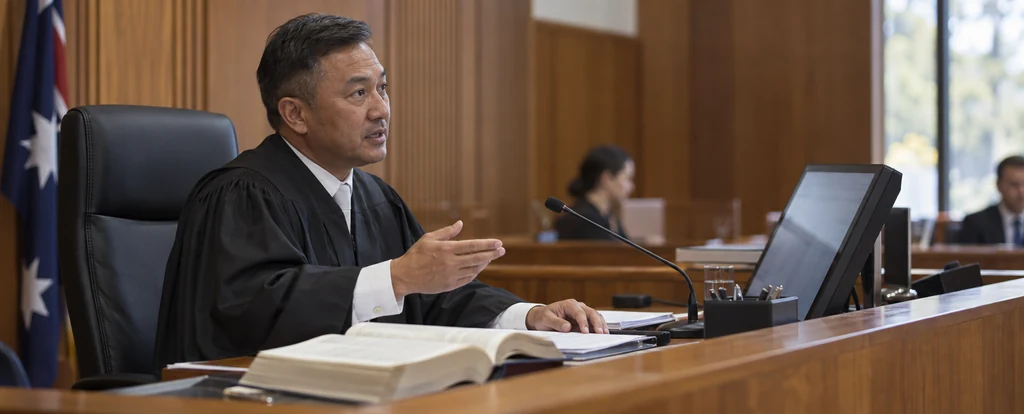
Magistrates hear and decide criminal and civil matters in the lower courts, where most cases that enter the Australian justice system are resolved.
- Median salary*
- $234,000
4.1%vs last year, before tax
- People employed
- 540
8.0%vs last year
- Projected growth
- +20.4%
to 2035
- AI exposure*
- Low
- automation risk
- Average hours
- 40/wk
matches all-jobs average
- Shortage status
- Not in shortage
national
Magistrates are judicial officers appointed to the lower courts of each state and territory, hearing the bulk of the criminal and civil matters that come before the courts. Their work runs from bail applications and pleas to civil claims and committal proceedings, and many sit in specialist lists such as family violence, children's or drug courts. The role sits below a judge: magistrates deal with less serious offences and smaller claims, while graver matters are committed to a higher court.
How much do magistrates earn?
The median full-time salary for a magistrate is $234,000 per annum, before tax, up $49,000 since 2018.
Magistrate pay is set by statute and adjusted by the remuneration tribunal in each state or territory, so there is no individual negotiation. The jurisdiction and the court you sit in make the difference, and some office holders receive allowances on top of the base figure. Appointment terms vary by state as well, with some magistrates appointed for a fixed term and others serving to a statutory retiring age.
What does a magistrate do day to day?
The list below is what fills most weeks; the exact mix shifts with seniority and whatever stage the current work is at.
- Presiding over criminal and civil hearings in the lower courts
- Hearing bail applications, taking pleas and sentencing offenders
- Ruling on the admissibility of evidence and on points of law argued in court
- Delivering oral decisions from the bench and written judgments with reasons
- Managing the daily court list and case flow so matters keep moving
What skills do magistrates need?
Employers look for legal research, litigation and dispute support, regulatory and administrative law, backed by Integrated Court Management System (ICMS) fluency and strong attention to detail.
Specialist skills
- Legal research
- Litigation and dispute support
- Regulatory and administrative law
- Regulatory compliance
- Policy analysis and advice
Software and tools
- Integrated Court Management System (ICMS)
- Judicial Information Research System (JIRS)
- Westlaw Australia
- LexisNexis
- Benchbook
General skills
- Attention to detail
- Written communication
- Problem solving
Is the job growing?
About 540 people work as magistrates in Australia, and employment is projected to grow 20.4% over the decade to 2035. That's very strong growth. Few roles in Australia are expanding this fast, and it points to solid demand for years to come.
How do you become a magistrate?
Here's the path most magistrates take, step by step.
- 1Earn a law degree
A Bachelor of Laws takes four to five years full time, or a Juris Doctor about three years if you already hold another degree. Both are accepted for admission, so the choice usually comes down to whether you are starting out or changing careers.
- 2Complete practical legal training and be admitted
Practical legal training or a supervised traineeship follows the degree, then admission to the Supreme Court of a state or territory and a practising certificate. You cannot practise, or later be considered for the bench, without admission.
- 3Practise as a lawyer and build court experience
Most appointees have at least five to seven years of practice behind them, often more. Criminal law, advocacy and regular appearances in the lower courts matter most, whether you come from the bar, a community legal centre or a government legal office.
- 4Go through the judicial selection process
Appointment is made by the Governor or Administrator on the recommendation of the Attorney-General, after a selection process that weighs your judgment, temperament and standing in the profession. Candidates are usually asked to declare interests, health matters and any conflicts.
- 5Complete judicial orientation
New magistrates attend induction run by state judicial colleges or the National Judicial College of Australia, and typically sit alongside an experienced colleague before taking a full list. Orientation covers sentencing practice, court administration and judicial conduct, which is where the move from advocate to decision maker is made.
Ready to apply as a magistrate?
Whether you're working toward becoming a magistrate or already are one and want a hand with the next step (sharpening your resume for ATS screening, tightening your cover letter, or knowing what you'll actually be asked at interview), here are examples grounded in this specific role, not generic templates.
What jobs can a magistrate move to?
None of the roles magistrates typically move into pay more than the role itself. Judge is the closest match. If a bigger salary is the goal, moving up into a senior or principal position within the role is usually the faster route than moving sideways.
| Move to | Typical pay change | Overlap | Retraining |
|---|---|---|---|
| Judge A magistrate brings judicial experience and courtroom decision making to the higher court, though appointment as a judge requires a separate commission.Known move | +$0 | 63% | requalify |
Moves are chosen from Jobs and Skills Australia's Data on Occupation Mobility, which follows income tax records between 2011-12 and 2020-21, together with entry requirements and skill overlap. A known move is one people were seen making in that data. Pay change compares median full-time pay for the two roles.
Who works as a magistrate?
The typical magistrate is 59 years old; 55% are men, 85% work full-time, and full-timers average 40 hours a week.
- 59
- Median age
- 45%
- Female share
- 85%
- Full-time
- +0h
- vs all-jobs avg
What's it like being a magistrate?
The day is built around a court list, so its shape comes from the number of matters set down rather than from a project you can carry over. That mix of volume and variety suits lawyers who like being in court and deciding matters rather than drafting advice. Most of the work happens in open court, with reading, judgment writing and sentence preparation fitted in around it.
What people like
- Deciding matters in real time. A bail application or a plea is argued and resolved in front of you, often the same day, and what you decide takes effect immediately.
- The whole range of the law in one week. A list can move between a contested civil claim, a family violence intervention order and a criminal plea, which stops the work narrowing to one area.
- The law where most people meet it. Lower courts handle the great majority of cases, so the role has more direct contact with the public than most legal jobs.
- Independence once appointed. There is no client, no partner and no billing target, and the decision on the evidence is yours to make and give reasons for.
What people find hard
- Long lists and short hearings. A list of forty matters leaves limited time for each one, and the pace is set by the court rather than by how much a case deserves.
- Sentencing is a heavy call. You fix the penalty knowing it affects an offender's liberty and a victim's sense of whether justice was done, and the reasons have to hold up on appeal.
- Decisions are public and criticised. Judgments are reported, and commentary often comes from people who were not in the courtroom for the evidence.
- Judicial independence is isolating. You cannot talk over a case with colleagues the way a solicitor would, and public comment on political issues is restricted while you hold office.
Based on our synthesis of professional-body surveys and public accounts of the role, not first-person verified reviews.
Which industries employ magistrates?
Public Administration and Safety employs the largest share of magistrates.
Top employing industries
- 1Public Administration and Safety
Ranked by employment share; the source doesn't publish an exact percentage per industry.
| Bachelor degree | 72.1% | |
|---|---|---|
| Postgraduate | 23.3% | |
| Diploma / Advanced Diploma | 0.7% | |
| Year 12 or below | 0.6% | |
| Certificate III/IV | 0% |
Will AI replace magistrates?
Magistrate work rates as low exposure to AI. The central task is deciding contested matters in a courtroom: hearing evidence, assessing credibility and exercising a discretion the law gives to a person rather than a system. Court technology such as the Integrated Court Management System, the Judicial Information Research System and transcription tools changes how lists, research and records are handled, but it does not decide anything.
Share of typical working time by exposure level
- Presiding over hearings and assessing evidenceWitnesses are questioned and their credibility weighed in real time, and no system reads a courtroom for a magistrate.40%low
- Sentencing and deciding outcomesThe penalty follows from legislation and precedent but turns on facts particular to the offender and the victim, which the magistrate weighs in person.25%low
- Drafting reasons and managing the court listDrafting assistance can give a written judgment structure, but the reasons must be the magistrate's own, and listing software handles scheduling rather than the running of the court.20%moderate
- Research on points of lawSearch tools such as JIRS and Westlaw Australia speed up finding authorities, though the magistrate still has to check that a case is current and actually applies.15%moderate
Common questions about becoming a magistrate
Straight answers to the questions people ask most.
How much does a magistrate earn?
Magistrates earn $234,000 per annum, before tax, as a base figure set by the remuneration tribunal in their state or territory. Because pay is statutory it moves with the annual determination rather than performance or negotiation, and the court level and jurisdiction change the amount. Treat it as a guide to the range rather than a rate that applies to every appointment.
How do you become a magistrate?
The path starts with a law degree, practical legal training and admission as a lawyer in a state or territory. Appointment follows years of practice and court experience, usually at the bar or in senior government, legal aid or community legal roles. Selection is run by the Attorney-General's department, and it weighs judgment and temperament as much as legal record.
Are magistrates in demand in Australia?
Magistrates are currently not in shortage, and employment is projected to grow 20.4% over the decade to 2035 over the decade to 2035. The workforce is small, so openings in any one year depend on retirements and on governments funding new court positions rather than on steady turnover. Anyone aiming for the bench should expect to build a strong practice first and wait for a vacancy in their state.
Will AI replace magistrates?
Little of the work is exposed to automation. Deciding a contested matter means hearing evidence, weighing credibility and exercising a discretion that legislation gives to a person, and a court record of reasons has to be the magistrate's own. Court systems and transcription tools change how lists and files are managed, not who decides.
What is the difference between a magistrate and a judge?
A magistrate sits in the lower court and hears less serious criminal charges, civil claims up to a jurisdictional limit, and committal proceedings. A judge sits in a higher court on more serious offences and larger claims, and is appointed through a separate commission. The two roles apply much the same law, but with different jurisdiction and sentencing powers.
What can a magistrate move on to?
Appointment as a judge is the usual step up, drawing on the same courtroom decision making and knowledge of the lower courts, though it needs a separate commission and pay is about the same. Solicitors and barristers move the other way, onto the bench, with advocacy and case preparation as the common ground. Most magistrates finish their career on the bench rather than returning to practice.
Related roles
Not sure this is you? Take the career quiz and get a ranked shortlist of roles that fit how you like to work.