Medical Device Sales Representative
Medical device sales representatives sell diagnostic, surgical and therapeutic equipment to hospitals, clinics and aged care providers, and support the clinicians who use it.
- Median salary
- $135,000
4.5%vs last year, before tax
- People employed
- 9,700
3.2%vs last year
- Projected growth
- +24.6%
to 2035
- AI exposure*
- Moderate
- automation risk
- Average hours
- 41/wk
+1h vs all jobs
- Shortage status
- Not in shortage
national
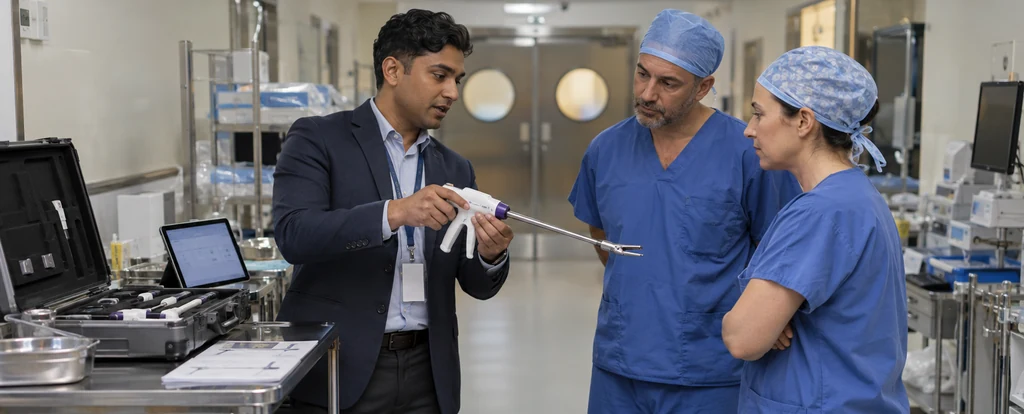
Medical device sales representatives work for equipment manufacturers and distributors, selling items such as imaging systems, surgical instruments and patient monitors into hospitals, private practices and aged care facilities. Much of the job is technical: a representative needs to understand how a device fits into a clinical procedure well enough to demonstrate it to a surgeon or ward manager and answer questions about safety and upkeep. The role differs from pharmaceutical sales because deals often involve trial periods, in-theatre demonstrations and sign-off from biomedical engineering or infection control staff, not just a single prescriber.
How much do medical device sales representatives earn?
The median full-time salary for a medical device sales representative is $135,000 per annum, before tax, up $28,600 since 2018.
Pay in this field is usually a base salary plus commission or a bonus tied to territory performance, so two people with the same job title can earn quite differently. Whether you sell capital equipment such as imaging systems or consumables that hospitals reorder matters more than seniority, and public hospital tenders often set pricing well before a representative is involved. Long sales cycles also mean a single large deal can land in one quarter and distort the next.
What does a medical device sales representative do day to day?
The list below is what fills most weeks; the exact mix shifts with seniority and whatever stage the current work is at.
- Consulting with clinicians and procurement teams to work out what a hospital or clinic needs
- Demonstrating device features, safety protocols and clinical outcomes to surgeons and ward staff
- Negotiating contracts and pricing with hospital purchasing departments, often through a formal tender
- Coordinating staff training and product rollout when a facility adopts a new device
- Maintaining territory accounts and reporting the sales pipeline to management
What skills do medical device sales representatives need?
Employers look for selling and negotiation, account and relationship management, product management, backed by Salesforce or similar CRM fluency and strong client relationships and advisory.
Specialist skills
- Selling and negotiation
- Account and relationship management
- Product management
Software and tools
- Salesforce or similar CRM
- Product specification sheets and technical documentation
- Device demonstration units
- Hospital procurement portals
- Presentation and video conferencing software
General skills
- Client relationships and advisory
- Written communication
- Problem solving
- Stakeholder management
Is the job growing?
About 9,700 people work as medical device sales representatives in Australia, and employment is projected to grow 24.6% over the decade to 2035. That's very strong growth. Few roles in Australia are expanding this fast, and it points to solid demand for years to come.
How do you become a medical device sales representative?
Here's the path most medical device sales representatives take, step by step.
- 1Choose a qualification with a clinical or commercial base
A bachelor degree in biomedical science, nursing, engineering, business or marketing is the usual starting point, held by 44% of people in the role. The degree matters less for its title than for what it lets you talk about with clinicians.
- 2Consider a clinical role first
Nurses and pharmacists move into device sales because they already understand procedures, products and hospital decision making. A few years on a ward or in a pharmacy builds credibility that a new graduate has to earn another way.
- 3Start in an adjacent sales or product support job
Many representatives enter through general sales, clinical specialist or product support roles inside a manufacturer or distributor. Those positions teach prospecting and territory habits before you carry your own quota.
- 4Complete manufacturer product training and hospital access requirements
Employers train you on the specific portfolio, and hospitals require credentialing, vaccination evidence and police checks before you can enter theatres or wards. Keep records current, because access can lapse between contracts.
- 5Build territory and account management skills
Learn the customer relationship management system, how tenders and budgets work in public and private hospitals, and how to plan a call cycle. These are the skills that decide whether you move into a larger territory or a management role.
Ready to apply as a medical device sales representative?
Whether you're working toward becoming a medical device sales representative or already are one and want a hand with the next step (sharpening your resume for ATS screening, tightening your cover letter, or knowing what you'll actually be asked at interview), here are examples grounded in this specific role, not generic templates.
What jobs can a medical device sales representative move to?
Moving into Sales Manager typically comes with the biggest pay rise, worth $4,200 a year more on average.
| Move to | Typical pay change | Overlap | Retraining |
|---|---|---|---|
| Sales Manager Medical device sales representatives can step up to lead sales teams, using their account and product knowledge with additional management study.Known move | +$4,200 | 29% | reskill |
| Pharmaceutical Sales Representative Selling to clinicians and health services translates directly to pharmaceutical sales, needing short product training rather than a new qualification. | +$0 | 53% | short course |
| Account Manager Account planning and client service with health providers transfer directly to managing commercial accounts, needing minimal extra training. | −$30,800 | 63% | minimal |
| Technology Sales Representative Consultative selling of complex technical products carries into technology sales, where account management skills apply with minimal retraining.Known move | −$35,200 | 71% | minimal |
| Key Account Manager Managing hospital and clinic accounts builds the relationship and contract skills needed for key account management, with little extra training. | −$47,600 | 71% | minimal |
Moves are chosen from Jobs and Skills Australia's Data on Occupation Mobility, which follows income tax records between 2011-12 and 2020-21, together with entry requirements and skill overlap. A known move is one people were seen making in that data. Pay change compares median full-time pay for the two roles.
Who works as a medical device sales representative?
The typical medical device sales representative is 44 years old; 57% are women, 87% work full-time, and full-timers average 41 hours a week.
- 44
- Median age
- 57%
- Female share
- 87%
- Full-time
- +1h
- vs all-jobs avg
What's it like being a medical device sales representative?
The week usually blends time on the road, in clinics and theatres, and at a desk writing quotes and updating a pipeline. Pressure arrives in two places: the sales quota, and the tender and budget cycles that decide when hospitals can actually buy. The job suits people who are comfortable in a clinical setting, can hold a technical conversation, and accept that months of work can end in a committee decision.
What people like
- You see the technology at work. Representatives often stand in theatre or a clinic while equipment they sold is in use, which makes the result of a long sales process visible.
- The conversation is clinical, not just commercial. Much of the discussion covers patient outcomes, technique and maintenance, so the role rewards people who enjoy the technical side of medicine.
- You control your own week. Outside scheduled cases and meetings, you set your own call cycle and decide which accounts need attention.
- Earnings move with performance. Base pay is steady while commission follows sales, which appeals to people who want a clear link between effort and income.
What people find hard
- Targets reset every quarter. Quotas are set ahead of the year and reviewed often, and a slow hospital budget cycle can leave a solid year of work looking flat on paper.
- Deals take months to close. Capital equipment purchases move through trials, committee reviews and budget approval, so a sale you began last summer may not be signed until the next financial year.
- Hospital access comes with rules. Credentialing, vaccination requirements and theatre protocols vary between health services, and a case can be cancelled on the day you travelled to attend it.
- The decision is rarely one person's. Procurement, biomedical engineering, infection control and finance all have a say, so winning over a supportive surgeon is only part of the job.
Based on our synthesis of professional-body surveys and public accounts of the role, not first-person verified reviews.
Which industries employ medical device sales representatives?
Wholesale Trade employs the largest share of medical device sales representatives, followed by Health Care and Social Assistance.
Top employing industries
- 1Wholesale Trade
- 2Health Care and Social Assistance
- 3Manufacturing
Ranked by employment share; the source doesn't publish an exact percentage per industry.
| Bachelor degree | 43.8% | |
|---|---|---|
| Year 12 or below | 16.3% | |
| Postgraduate | 16.1% | |
| Diploma / Advanced Diploma | 12.5% | |
| Certificate III/IV | 7.4% |
Will AI replace medical device sales representatives?
This is a moderately exposed role, because the administrative load around selling is being absorbed by customer relationship management platforms, quoting tools and procurement analytics. The clinical demonstration and the relationships with surgeons, ward staff and buyers remain human work. Representatives who mostly managed paperwork and order flow are the most exposed part of the occupation.
Share of typical working time by exposure level
- Demonstrating devices in theatre and clinicShowing a surgeon how a stapler or monitor behaves on a real case, and answering questions about tissue handling and maintenance, cannot be done from a screen.30%low
- Negotiating contracts with procurementBuyers arrive with benchmark pricing and usage analytics, so the representative argues from data rather than memory, while the agreement itself still turns on trust built over several contracts.30%moderate
- Pipeline admin and CRM reportingLogging calls, updating forecasts and pulling activity reports are largely automated inside platforms such as Salesforce, leaving the representative to interpret the numbers and decide where to spend the week.20%high
- Preparing quotes and tender documentsPricing templates and product configurators assemble standard tender responses quickly, though someone still has to check specifications and clinical claims before submission.20%high
Common questions about becoming a medical device sales representative
Straight answers to the questions people ask most.
How much do medical device sales representatives earn?
Medical device sales representatives earn a median of $135,000 per annum, before tax. The figure includes base salary and commission, so your own earnings will depend on territory, the products you carry and how the year tracks against target. Treat it as a guide rather than a fixed rate.
How do you become a medical device sales representative?
Most people arrive with either a clinical background or proven sales experience, and often both. A bachelor degree in biomedical science, nursing, engineering or business is common, while nurses, pharmacists and radiographers move across with product training rather than a new qualification. Starting in a general sales role or a clinical specialist position inside a manufacturer is the usual way to get a first territory.
Are medical device sales representatives in demand?
Medical device sales representatives are currently not in shortage, and employment is projected to grow 24.6% over the decade to 2035. Steady spending on surgical and diagnostic equipment keeps employers looking for people who can explain and support these products. Hiring still happens territory by territory, so vacancies depend on individual companies as much as the national trend.
Will AI replace medical device sales representatives?
Not the whole job. Customer relationship management systems, quoting tools and procurement analytics have taken over much of the record keeping and document preparation, and buyers now arrive at negotiations with benchmark pricing. Demonstrating a device in a live case and building trust with surgeons and hospital committees remain work that a person in the room does.
What can medical device sales representatives move into?
Sales management is a common step: sales managers earn $4,200 more, reflecting the move into leading a team, and it usually comes with some management study. Moving into pharmaceutical sales keeps pay about the same (about the same) and suits people who prefer a wide prescriber base to long equipment tenders. Technology sales uses similar consultative selling but typically pays less ($35,200 less).
What is the difference between medical device sales and pharmaceutical sales?
Pharmaceutical sales usually centres on one prescriber and a repeat prescription, while device sales involves equipment, a trial and sign-off from several departments. That means longer cycles, more technical detail and more people to convince.
Related roles
- Sales Manager
- Technology Sales Representative
- Pharmaceutical Sales Representative
- Key Account Manager
- Account Manager
- Sales Representative
Not sure this is you? Take the career quiz and get a ranked shortlist of roles that fit how you like to work.