Multimedia Designer
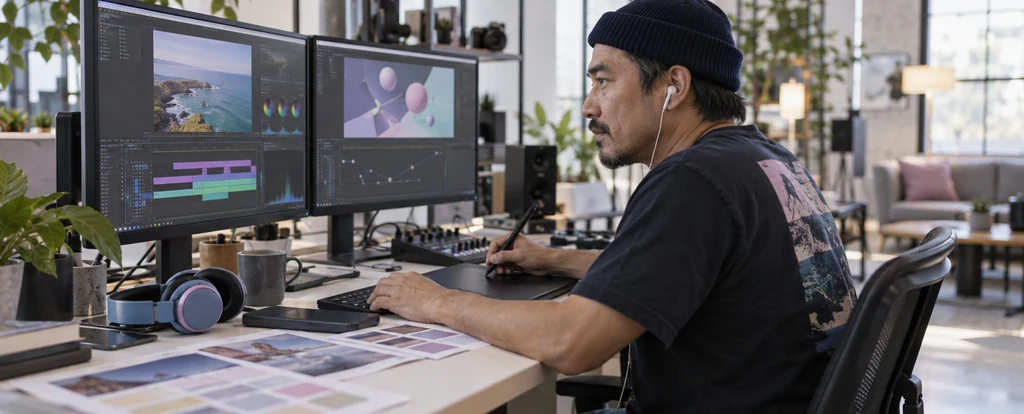
Multimedia designers turn briefs into visual work that moves across screens, video and interactive media.
- Median salary*
- $75,900
4.4%vs last year, before tax
- People employed
- 4,600
2.2%vs last year
- Projected growth
- +19%
to 2035
- AI exposure*
- High
- automation risk
- Average hours
- 41/wk
+1h vs all jobs
- Shortage status
- Not in shortage
national
Multimedia designers work across web, video, motion and interactive media, which is what separates them from graphic designers who concentrate on print, typography and brand systems. They usually sit alongside developers, marketers or producers, turning a brief into assets that are ready to publish. Most work in design studios, advertising agencies or in-house marketing and digital teams.
How much do multimedia designers earn?
The median full-time salary for a multimedia designer is $75,900 per annum, before tax, up $16,000 since 2018.
What you earn depends more on the kind of employer than on where you live, with in-house marketing teams, government departments and larger agencies generally paying more than small studios. Freelancers set their own rates but carry the gaps between projects. Motion, 3D and interaction design skills usually attract higher rates than general layout work.
What does a multimedia designer do day to day?
The list below is what fills most weeks; the exact mix shifts with seniority and whatever stage the current work is at.
- Designing interactive layouts and interfaces for websites and mobile apps
- Producing motion graphics and animation for video, social media and digital signage
- Editing and compositing video, audio and image assets into finished productions
- Preparing and resizing artwork to the formats each channel needs, from a social post to a print run
- Reviewing drafts with clients, developers and producers, then reworking them through several rounds
What skills do multimedia designers need?
Employers look for visual design, creative software production, uX and interaction design, backed by Adobe Photoshop fluency and strong attention to detail.
Specialist skills
- Visual design
- Creative software production
- UX and interaction design
- Content creation and writing
- Project management
Software and tools
- Adobe Photoshop
- Adobe Illustrator
- Adobe After Effects
- Figma
- Blender
General skills
- Attention to detail
- Stakeholder management
Is the job growing?
About 4,600 people work as multimedia designers in Australia, and employment is projected to grow 19% over the decade to 2035. That's healthy, above-average growth, and the role should stay in solid demand.
How do you become a multimedia designer?
Here's the path most multimedia designers take, step by step.
- 1Build the design foundation
A bachelor degree in design, multimedia or interactive media is the most common route, and around 48% of multimedia designers hold a Bachelor degree. TAFE diplomas in graphic design or digital media cover much of the same ground and can be faster and cheaper.
- 2Learn the software and build a portfolio
Employers look at portfolios before they look at transcripts. Aim for four to six projects that show range across screen layout, motion and video, using tools such as Adobe Photoshop, Illustrator and After Effects, Figma and Blender.
- 3Start in a junior or mid-weight role
Junior designers often begin on production work in a studio, agency or in-house team, resizing and preparing assets before they get their own projects. These roles are paid, which matters if you are weighing up an unpaid internship.
- 4Choose a specialisation
Motion design, 3D, video or interaction design each deepen your skills and shift the kind of briefs you get. Specialising is also the usual way designers move into senior and lead roles.
Ready to apply as a multimedia designer?
Whether you're working toward becoming a multimedia designer or already are one and want a hand with the next step (sharpening your resume for ATS screening, tightening your cover letter, or knowing what you'll actually be asked at interview), here are examples grounded in this specific role, not generic templates.
What jobs can a multimedia designer move to?
Moving into Art Director typically comes with the biggest pay rise, worth $26,800 a year more on average.
| Move to | Typical pay change | Overlap | Retraining |
|---|---|---|---|
| Art Director The art director role leads visual concepts and teams, a natural step up for multimedia designers with strong design portfolios. | +$26,800 | 65% | minimal |
| Graphic Designer The graphic designer role uses layout, typography and brand systems, so multimedia designers can shift into print and identity work.Known move | +$20,300 | 40% | reskill |
| Web Designer The web designer role builds on screen layout and visual hierarchy, adding web standards and responsive design to multimedia skills.Known move | +$20,300 | 58% | short course |
| UX Designer The ux designer role applies user research and interface design, extending interactive and visual skills into product experience work.Known move | +$20,300 | 18% | reskill |
| Video Producer The video producer role uses storytelling, motion and editing, letting multimedia designers take charge of video projects end to end. | +$17,700 | 68% | minimal |
Moves are chosen from Jobs and Skills Australia's Data on Occupation Mobility, which follows income tax records between 2011-12 and 2020-21, together with entry requirements and skill overlap. A known move is one people were seen making in that data. Pay change compares median full-time pay for the two roles.
Who works as a multimedia designer?
The typical multimedia designer is 36 years old; 50% are women, 74% work full-time, and full-timers average 41 hours a week.
- 36
- Median age
- 50%
- Female share
- 74%
- Full-time
- +1h
- vs all-jobs avg
What's it like being a multimedia designer?
Multimedia design runs on deadlines set by other people's launches, so the week can swing from quiet concept work to long production days when a campaign goes live. Most designers juggle several projects at once, moving between screen layouts, motion and video within the same week. The job tends to suit people who enjoy craft and variety and can take feedback on work they have spent days on.
What people like
- You see your work out in the world. A campaign you designed can appear on screens, in an app or on a bus shelter within weeks of finishing it, which is a short loop from idea to result.
- Every project uses a different mix of skills. One week might be app screens and a design system, the next a 30-second animation or a short video edit, so the work rarely settles into a single format.
- The tools keep moving. New software and techniques arrive often, so the job keeps teaching you something, though it also means time spent learning on your own.
- You work closely with other disciplines. Designers sit with developers, marketers and producers, so you see how a product or campaign fits together instead of working on one piece in isolation.
What people find hard
- Feedback rounds can drag. Clients sometimes cannot say what they do not like, so a design goes through several rounds before it settles, and some of that effort is never used.
- Launch periods stack up. Campaigns and product releases tend to cluster, so production weeks run long when a client signs off late.
- Some pitching is unpaid. Studios sometimes compete for work with free concept rounds, which is time spent on designs that may never go anywhere.
- A lot of the day is at a screen. The work is sedentary and detailed, and long stretches of resizing, checking and exporting sit alongside the creative parts.
Based on our synthesis of professional-body surveys and public accounts of the role, not first-person verified reviews.
Which industries employ multimedia designers?
Professional, Scientific and Technical Services employs the largest share of multimedia designers, followed by Education and Training.
Top employing industries
- 1Professional, Scientific and Technical Services
- 2Education and Training
- 3Information Media and Telecommunications
Ranked by employment share; the source doesn't publish an exact percentage per industry.
| Bachelor degree | 48.2% | |
|---|---|---|
| Postgraduate | 20.1% | |
| Diploma / Advanced Diploma | 12% | |
| Year 12 or below | 11% | |
| Certificate III/IV | 6.2% |
Will AI replace multimedia designers?
Multimedia design is highly exposed to AI, because much of the day is spent producing and adapting visual assets, and that is exactly what generative tools now do quickly. Software such as Adobe Firefly, automated resizing and layout features in Figma, and template-driven motion tools have absorbed a lot of routine production. What they do not replace is deciding what a piece of work should communicate, directing a look across a campaign, and the client conversation around it.
Share of typical working time by exposure level
- Briefing, critique and client presentationWorking out what a client actually needs and explaining why a design answers it happens in conversation and depends on judgement, so it stays with the designer.30%low
- Concepting and laying out screen designsGenerative tools can produce first-pass layouts and colourways in minutes, so the work shifts towards choosing and refining rather than starting from a blank canvas.25%high
- Resizing and preparing assets for each channelBatch export, automatic resizing and format conversion are already standard in design tools, which removes most of the manual production work.25%high
- Motion graphics and video editingTemplate libraries and automated editing cover routine cuts, captions and simple animation, while a title sequence built around a brand still comes down to craft.20%high
Common questions about becoming a multimedia designer
Straight answers to the questions people ask most.
How much do multimedia designers earn?
Multimedia designers earn $75,900 per year before tax at the median for full-time work, which is the middle figure rather than a starting salary. Pay moves with employer type and specialisation, so motion, 3D and interaction design skills usually command more than general layout work.
How do you become a multimedia designer?
Most people start with a degree or diploma in design or multimedia, then build a portfolio of four to six projects showing screen, motion and interactive work. Once you have that portfolio, experience in a junior studio, agency or in-house role counts for more with employers than the qualification itself.
Are multimedia designers in demand?
Multimedia designers are currently not in shortage, and employment is projected to grow 19% over the decade to 2035. The occupation is small, at about 4,600 people, so the number of new roles each year stays modest even where growth continues. A current portfolio and a specialisation make it easier to move when opportunities open.
Will AI replace multimedia designers?
AI is already reshaping the production side of this job, so treat multimedia design as highly exposed rather than protected. Generative image and layout features now handle resizing, background work and first-pass concepts that used to take hours, and template-driven animation covers simple motion jobs. What holds up is the work tied to a brief: deciding what the piece should say, directing a look, and arguing for it with a client.
What can multimedia designers move into?
Multimedia designers often move into art direction, which pays $26,800 more and applies the same visual judgement on a larger scale, or into video production, which pays $17,700 more and suits those already handling motion and editing. Web design is a shorter step, using the same screen layout skills with web standards added. Many designers also go freelance or open a small studio, which is often where earnings grow.
Related roles
Not sure this is you? Take the career quiz and get a ranked shortlist of roles that fit how you like to work.