Stress leave is really sick leave, and how to use it
Key takeaways
- Stress, anxiety or burnout that stops you working can count as a personal illness, so full-time and part-time employees can take it as paid sick leave. Casual employees don't get paid sick leave.
- You don't have to give your employer a diagnosis. They can ask for evidence that you were unfit for work, such as a medical certificate or statutory declaration, but the request has to be reasonable.
- If your sick leave runs out, you can ask to use annual or long service leave, or take unpaid leave. If work is the cause, you may also have workers' compensation and work health and safety options.
There is no separate entitlement called stress leave, but the time off you need is usually covered, and the harder part is the conversation with your employer and the certificate that goes with it.
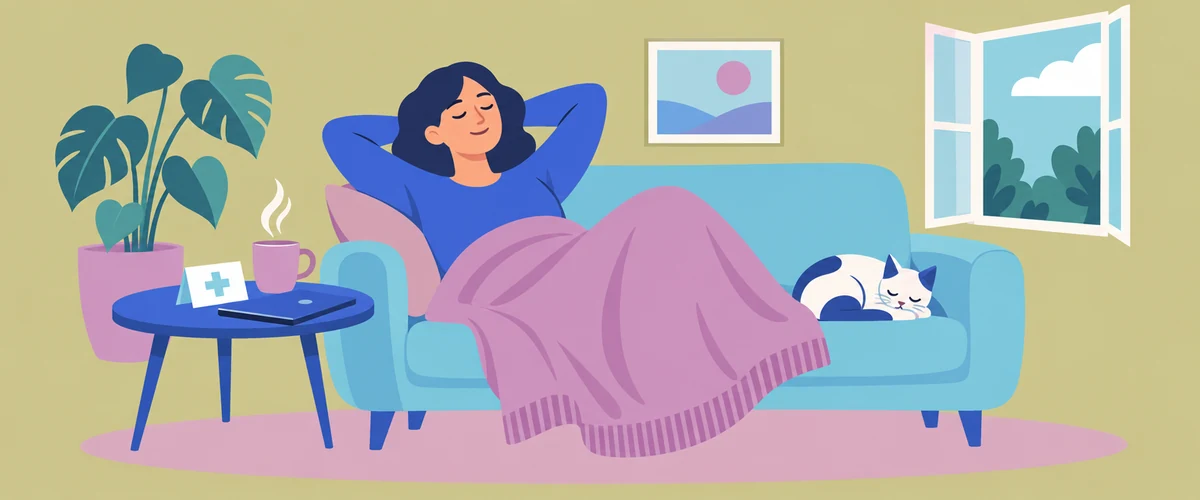
Stress leave isn't a separate type of leave in Australia. It is time off because stress, anxiety or burnout has made it hard to do your job, and it is generally taken as paid sick leave (also called personal leave). The Fair Work Ombudsman says paid sick leave is for when you can't work because of a personal illness or injury, and that this can include stress.
Who can take stress leave
Full-time and part-time employees are covered by the National Employment Standards. Full-time employees get 10 days of paid sick and carer's leave a year, and part-time employees get a pro-rata amount based on their ordinary hours. The leave builds up gradually through each year of work, and any you don't use carries over to the next year, so a long-serving employee may have a larger balance than they expect. You can take as much as you have built up, in blocks of any length. Your employer has to tell you your leave balance if you ask. Showing it on the payslip is good practice but isn't required, so don't assume it will be there.
Casual employees don't get paid sick leave. Their only National Employment Standards entitlement in this area is two days of unpaid carer's leave each time a family or household member needs care, which isn't leave for their own illness. A casual who is unwell can ask not to be rostered, but the Fair Work Ombudsman's pages don't set out a right to time off for it, so check your award or contract. Our guide to casual employment rights explains what else casuals are and aren't entitled to.
Your award, enterprise agreement or contract may give you more than the national minimum, so it's worth checking those documents before you assume 10 days is your limit.
Telling your employer
You have to let your employer know you're taking the leave, and the Fair Work Ombudsman says this should be as soon as possible, which can be after the leave has started. Tell them how long you expect to be away. If you're not sure, say so and give your best estimate, then update them once you know more.
You don't have to give a diagnosis. Something like "I'm not well enough to work and I'm seeing my doctor" is enough to start. You might say "I've been advised to take some time off for a health reason" if you'd rather keep detail private. Your employer can ask for evidence that you were unfit for work, but that is different from being entitled to a full account of your health.
If you're worried about how it will land, it can help to decide in advance what you want to happen. Do you want a few days to recover, or an open-ended break while you see a doctor? Who should cover your work, and do you want to be contacted at all? Being clear about these makes the conversation shorter. You could put the essentials in a short email so there's a record of when you told them.
The certificate and other evidence
Your employer can ask for evidence, even for a single day. The Fair Work Ombudsman says there are no strict rules on the type, but it has to be enough to convince a reasonable person that you were genuinely entitled to the leave, and what your employer asks for must always be reasonable in the circumstances. Medical certificates and statutory declarations are both listed as acceptable examples, and a statutory declaration can help if you couldn't get a doctor's appointment. An award or enterprise agreement can also set out when evidence is needed and what kind, so check yours.
The evidence is there to show you were unable to work because of illness. The Fair Work Ombudsman's pages don't say whether a certificate must name the condition, so it's worth asking your doctor what they will write and telling them how much you're comfortable with your employer seeing. The Fair Work Ombudsman also says it doesn't consider it reasonable for an employer to contact your doctor for further information. If your employer asks for more than seems reasonable, you can call the Fair Work Infoline on 13 13 94.
If you don't give evidence when it's requested, you may not be entitled to be paid for the leave. That's the main reason to sort out a certificate early rather than leave it until you return.
Job protection while you're away
If you can provide evidence of your illness, you are protected from being dismissed because of the absence while you are away for less than three consecutive months (or less than three months in total over the last 12 months), or while you are still using paid sick leave. The protection ends only when both things are true: you've been away longer than that and you've used all your paid sick leave. Even then, you may be protected for other reasons, such as state and territory workers' compensation laws, and an employer still has to follow the proper rules for a dismissal. If you think you were dismissed for taking leave, the time limit to apply to the Fair Work Commission for a general protections claim is 21 days from the day after you were dismissed, so get advice quickly from the Fair Work Ombudsman or a community legal centre.
If your sick leave runs out
Some people need more time than their balance allows. If you're in that position, you have a few options to raise with your employer:
- Annual leave. You can ask to use annual leave. It is taken by agreement between you and your employer.
- Long service leave. If you've been with your employer long enough, you may be able to take it. Our guide to long service leave covers the rules.
- Unpaid leave. You can ask for it, and the Fair Work Ombudsman says it is often taken because the employee has no paid leave left. Your employer has to agree. Time on unpaid leave generally doesn't count as service and doesn't build up sick leave, so ask how it will affect your entitlements.
- A gradual return. A doctor may recommend fewer hours or changed duties, and it's reasonable to ask your employer to consider a plan.
Unused sick leave isn't paid out when your job ends, unlike annual leave, so there's rarely a reason to hold back from using it when you need it.
When work is the cause
If the stress comes from your job, such as an unmanageable workload, bullying or a conflict that hasn't been resolved, you have other paths besides taking leave. You can ask about changes to the work itself. Our guides on workplace bullying and resolving conflict at work explain how to raise it, including through a formal grievance procedure.
You may also be able to make a workers' compensation claim for a psychological injury such as anxiety, depression or an adjustment disorder. Safe Work Australia says it may be available for conditions such as anxiety and depression if you meet the scheme's definition of a worker and work is a significant contributing factor, and that in some circumstances you may not be eligible where the injury came from a reasonable decision or action by your employer. Workers' compensation is run by each state and territory, and this article doesn't set out each scheme's tests or time limits. The Fair Work Ombudsman lists these bodies for advice: WorkSafe ACT, the State Insurance Regulatory Authority in NSW, NT WorkSafe, WorkCover Queensland, ReturnToWork SA, WorkSafe Tasmania, WorkSafe Victoria, WorkCover WA, and Comcare for Commonwealth employees. Look up your own scheme before you lodge anything, because time limits are likely to apply.
Your employer also has a duty under work health and safety laws to eliminate psychosocial risks, or minimise them as far as reasonably practicable. Safe Work Australia lists job demands, low job control, bullying and poor organisational change management among the psychosocial hazards, which gives you a way to describe the problem when you raise it.
If you're thinking that leave won't be enough and you may need to leave the job, our guide to resigning due to health or stress explains notice and your options.
Where to get help
If things feel hard to manage right now, your GP is a good first call.
Article sources
- Fair Work Ombudsman, paid sick and carer's leave
- Fair Work Ombudsman, notice and medical certificates
- Fair Work Ombudsman, long periods of sick leave
- Fair Work Ombudsman, unpaid leave
- Fair Work Ombudsman, workers' compensation
- Safe Work Australia, workers' compensation for psychological injuries
- Safe Work Australia, psychosocial hazards
Related articles

How much bereavement leave you get, and whether it's paid
Most employees can take two days of compassionate leave each time a close family or household member dies. Who gets it, whether it's paid, and what to say.
Long service leave in every state and territory
Long service leave kicks in after 7 years in Victoria and the ACT and 10 everywhere else, and the weeks you get differ too. Here's what you get where you work, and what happens if you leave first.
Overtime pay, time in lieu and what your award says
Overtime rates come from your award or agreement, not one national rule. How rates work, what happens on a salary, and how time off in lieu works.