HomeCoursesFood science and productionCertificate III
Certificate III · national qualification
Certificate III in Baking
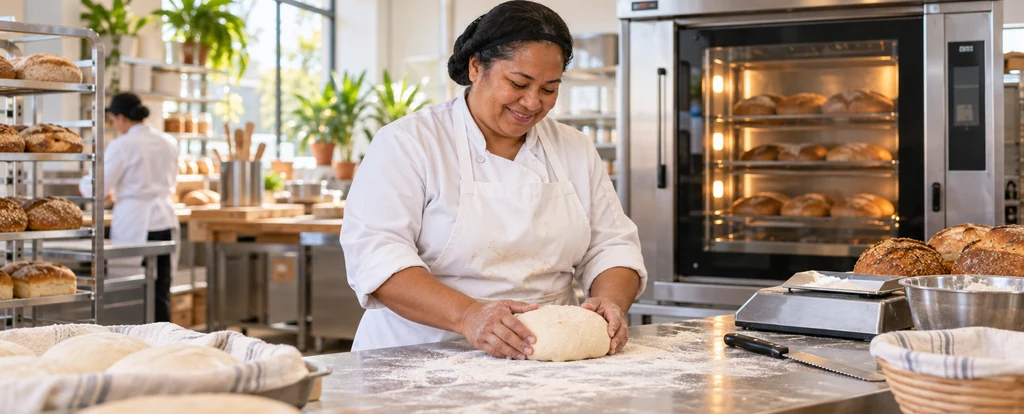
This qualification trains you to work as a baker in a commercial bakery, producing bread, cakes, pastry and biscuits to a consistent standard.
- How long it takes
- 2 to 3 years
- full time at TAFE NSW
- What it costs
- From $16,100
- Full fee at TAFE Queensland
- How you can study
- On campus
- Main job
- Baker
- $73,700 median pay, In demand
- Taught by
- 14 providers
- Every state and territory
Is this course right for you?
What the Certificate III in Baking asks of you, and what you might want to check first.
It helps to have
- an interest in baking and food production
- a careful approach to food safety and hygiene
- good hand skills for shaping dough and pastry
- the ability to follow recipes and schedules
Before you start
There are no entry requirements for this qualification.
Certificate III or Certificate IV?
The Certificate IV in Baking is the higher level. This Certificate III describes the skills and knowledge of a baker who bakes bread, cake, pastry and biscuit products in a commercial baking environment.
See the courseWhere this course can take you
Jobs this qualification is a recognised route into, and the study that can follow it.
Jobs you can do with it
Baker
Bakers mix, shape and bake bread, cakes and pastries to a daily production schedule, keeping the shelves full and the standard consistent from batch to batch.
What else you need
Complete the baking trade training and required workplace or apprenticeship arrangements; comply with food-safety and workplace requirements. This catalogue groups awards: verify the chosen provider, programme and intake; the family-level link is not confirmation that every offering is approved.
Median pay$73,700
In demand
If you study further
Pay is the median for everyone in the job, and “In demand” means the job is on the national shortage list.
What it costs
Paying the full fee
$16,100 to $27,300
across the TAFEs listed below. Private providers set their own fees.
| TAFE | State | Full fee |
|---|---|---|
| GOTAFE | VIC | $27,300 |
| TAFE Queensland | QLD | $16,100 |
GOTAFEVIC
- Full fee
- $27,300
TAFE QueenslandQLD
- Full fee
- $16,100
Fees as each TAFE shows them on its website, read 20 September 2026. Private providers set their own fees.
Where you can study this course
There are 14 places you can study this course. When you compare them, check they teach it the way you want to study, how far you'd be from a campus, what it will cost you and what past students say about the teaching and support. They're listed by how often people search for them, and none of them pays to be here or to move up.
- Course page for TAFE NSW (opens in a new tab)

TAFE NSW
8 campuses, NSW
4.0from 2,410 Google reviews
- How you study
- On campus
- How long
- 2 to 3 years
What students like
- Teachers are supportive and ready to help
- Staff are helpful and friendly
- Course content is practical and industry relevant
What to weigh up
- Enrolment and admin can be slow
- Some find front desk staff less helpful
- Website for Charles Darwin University (opens in a new tab)

Charles Darwin University
12 campuses, NSW, NT
4.2from 619 Google reviews
What students like
- Admin and support staff are helpful
What to weigh up
- Units vary depending on the lecturer
- Feedback on assessments can vary
- Course page for TAFE Queensland (opens in a new tab)

TAFE Queensland
8 campuses, QLD
4.1from 2,040 Google reviews
- How you study
- On campus
What students like
- Teachers are helpful and supportive
What to weigh up
- Poor communication from admin
- Website for TAFE SA (opens in a new tab)

TAFE SA
26 campuses, SA
4.4from 1,339 Google reviews
What students like
- Lecturers are nice and helpful
What to weigh up
- Enrolment and admin can be slow
- Course information can be unclear
- Website for Federation University Australia (opens in a new tab)

Federation University Australia
23 campuses, NSW, VIC
4.2from 562 Google reviews
What students like
- Teaching and resources are high quality
- Friendships and classmates make study memorable
What to weigh up
- Admissions can be slow
- Poor communication with students
- Learning support can be slow to follow through
- Course page for gotafe (opens in a new tab)

gotafe
Shepparton - Fryers Street, VIC
4.3from 72 Google reviews
- How you study
- On campus
- Website for TasTAFE (opens in a new tab)
TasTAFE
12 campuses, TAS
4.3from 167 Google reviews
- Website for Canberra Institute of Technology (opens in a new tab)
Canberra Institute of Technology
6 campuses, ACT
4.4from 291 Google reviews
What students like
- Service is warm, attentive and professional
What you’ll learn
19 units: 15 that everyone takes and 4 you choose.
- Food safety and hygiene
- Bread making
- Pastry production
- Cakes and sponges
- Biscuits and cookies
- Production scheduling
See all 15 core units
Core units
Everyone completes these. Select a unit to see what it covers.
Loading the details for FBPFSY2002…
Loading the details for FBPFSY2002…
Questions to ask before you enrol
Providers run this course differently, so the answers change from one to the next.
- When is the next intake, and how many are there each year?
- What is the total cost, including materials, checks and any placement costs?
- Can I study part time or online, and how does that change the length?
- Do the units count towards a higher qualification if I go on to study further?
Questions people ask
Who is this qualification for?
It prepares you to work as a baker in a commercial bakery, producing bread, cakes, pastry and biscuits to a consistent standard. You learn food safety, workplace health and safety, and how to schedule production so a day's baking comes out on time. It leads to roles like baker, bakery assistant, cake decorator or pastry chef.
Do I need experience or other qualifications first?
There are no entry requirements for this qualification. Each provider can set its own conditions, so check with the one you choose.
How is it different from Certificate IV in Baking?
The Certificate IV in Baking is the higher level. This Certificate III describes the skills and knowledge of a baker who bakes bread, cake, pastry and biscuit products in a commercial baking environment.