Audiometrist
Audiometrists test hearing and fit hearing aids, helping people manage hearing loss in everyday situations.
- Median salary*
- $75,400
4.4%vs last year, before tax
- People employed
- 470
6.0%vs last year
- Projected growth*
- +10%
to 2035
- AI exposure*
- Moderate
- automation risk
- Average hours*
- 38/wk
−2h vs all jobs
- Shortage status*
- Not in shortage
national
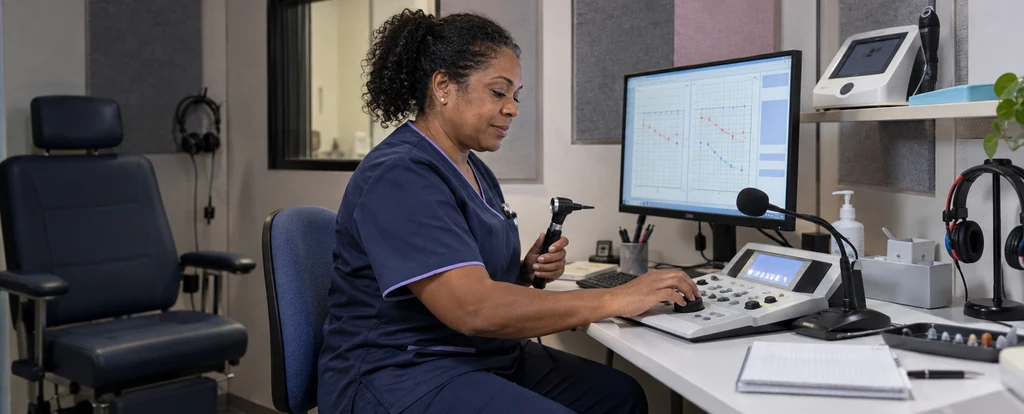
Audiometrists run hearing tests, explain the results and fit hearing devices, often seeing the same clients for years as their hearing changes. They work in private clinics, hearing aid retailers, community health services and some ear, nose and throat practices, usually alongside audiologists and other clinical staff. The role is closest to audiology, but audiometrists qualify through vocational study and focus on assessment and hearing aid fitting rather than the diagnostic and rehabilitation work an audiologist does.
How much do audiometrists earn?
The median full-time salary for an audiometrist is $75,400 per annum, before tax, up $16,000 since 2018.
Pay depends heavily on the setting. Retail hearing aid chains often pay a base salary plus a bonus linked to hearing aid sales, which can lift total earnings above the base, while community health and hospital roles pay under an award or enterprise agreement with less variation. Experienced audiometrists who move into clinic management or their own practice can earn more again, and hours and penalty rates differ between retail and health service employers.
What does an audiometrist do day to day?
The list below is what fills most weeks; the exact mix shifts with seniority and whatever stage the current work is at.
- Testing hearing with pure-tone and speech audiometry after checking the ear canal and eardrum with an otoscope
- Interpreting audiograms and explaining what the results mean to the client sitting in front of you
- Programming hearing aids in fitting software and adjusting them as clients report how they sound at home
- Taking ear impressions and troubleshooting devices that whistle, crackle or feel uncomfortable
- Advising clients on communication strategies, hearing protection and when to come back for a review
What skills do audiometrists need?
Employers look for patient care and support, clinical assessment and treatment, health education and advice, backed by Pure-tone audiometer fluency and strong written communication.
Specialist skills
- Patient care and support
- Clinical assessment and treatment
- Health education and advice
Software and tools
- Pure-tone audiometer
- Tympanometer
- Otoscope
- Real-ear measurement system
- Noah hearing aid fitting software
General skills
- Written communication
- Attention to detail
- Problem solving
- Empathy and interpersonal care
- Customer service
Is the job growing?
About 470 people work as audiometrists in Australia, and employment is projected to grow 10% over the decade to 2035. That's healthy, above-average growth, and the role should stay in solid demand.
How do you become an audiometrist?
Here's the path most audiometrists take, step by step.
- 1Finish Year 12 or equivalent
Training providers generally ask for Year 12 or a recognised equivalent, and some employers accept mature-age entrants with relevant customer service or health experience. School subjects are not usually specified, but biology, physics or maths make the audiometry coursework easier.
- 2Complete a Certificate IV in Audiometry
This is the standard entry qualification, usually about 12 months of study, and it includes supervised clinical placement where you learn to run a test on a real person and take ear impressions. Some providers deliver it part time so you can keep working.
- 3Consider a Diploma of Hearing Device Prescription and Evaluation
This covers hearing aid prescription and fitting in more depth and is often studied while working in a clinic. Some employers expect it, particularly for roles where you select and fit devices rather than only test hearing.
- 4Get accredited and join a professional body
Practitioners who see clients funded through the Australian Government Hearing Services Program need accreditation under that scheme, and membership of a professional body such as the Australian College of Audiology is common. Both help when you apply for clinical roles.
Ready to apply as an audiometrist?
Whether you're working toward becoming an audiometrist or already are one and want a hand with the next step (sharpening your resume for ATS screening, tightening your cover letter, or knowing what you'll actually be asked at interview), here are examples grounded in this specific role, not generic templates.
What jobs can an audiometrist move to?
Moving into Audiologist typically comes with the biggest pay rise, worth $28,800 a year more on average.
| Move to | Typical pay change | Overlap | Retraining |
|---|---|---|---|
| Audiologist Audiometrists bring practical hearing assessment and hearing aid fitting experience, but need a university degree to become an audiologist. | +$28,800 | 71% | requalify |
Moves are chosen from Jobs and Skills Australia's Data on Occupation Mobility, which follows income tax records between 2011-12 and 2020-21, together with entry requirements and skill overlap. A known move is one people were seen making in that data. Pay change compares median full-time pay for the two roles.
Who works as an audiometrist?
The typical audiometrist is 42 years old; 76% are women, 68% work full-time, and full-timers average 38 hours a week.
- 42
- Median age
- 76%
- Female share
- 68%
- Full-time
- −2h
- vs all-jobs avg
What's it like being an audiometrist?
The job runs on appointments: a hearing test, a results conversation, a fitting, a review six months later. It suits someone who likes a defined procedure with a measurable result, but is also comfortable sitting with a worried or sceptical person and explaining what a hearing aid will and will not do. The setting shapes the day, because a retail clinic and a community health service have different pressures, rhythms and pay.
What people like
- The moment a hearing aid goes in. Clients often notice sounds they had stopped registering, like a kettle boiling or a grandchild's voice, and you are in the room when it happens.
- Testing rewards precision. Audiometry has a clear procedure and a result you can see. When the audiogram is clean and repeatable, the next step is straightforward and you know the test was done properly.
- You see the same people over years. Hearing changes slowly, so clients return for reviews and new fittings. That continuity makes the advice easier, because you already know how they live and what they struggled with last time.
- Technical work and people work in one job. You spend part of the day with equipment and software, and part of it in conversation with someone deciding whether a device is worth the money.
What people find hard
- Sales targets sit alongside care. In retail hearing aid chains, pay and performance are often tied to how many devices you fit, which can pull against the clinical advice you would otherwise give.
- Hearing aids do not restore normal hearing. Devices help most people, but crowded restaurants and group conversations stay hard. Managing that expectation, especially after someone has paid a lot, takes patience.
- Not everyone can be tested cleanly. Cognitive decline, earwax, tinnitus or a client who over-responds can make a reliable audiogram difficult, and you may need to test again or refer on.
- Progression is limited in a small field. There are few senior clinical positions, so moving up usually means managing a clinic, owning one, or going back to university to become an audiologist.
Based on our synthesis of professional-body surveys and public accounts of the role, not first-person verified reviews.
Which industries employ audiometrists?
Health care and social assistance employs the largest share of audiometrists, followed by Retail trade.
Top employing industries
- 1Health care and social assistance
- 2Retail trade
- 3Public administration and safety
Ranked by employment share; the source doesn't publish an exact percentage per industry.
| Certificate III/IV | 34% | |
|---|---|---|
| Diploma / Advanced Diploma | 26% | |
| Bachelor degree | 20% | |
| Year 12 or below | 20% |
Will AI replace audiometrists?
This is a moderately exposed role. Hearing testing itself is increasingly automated, with self-test kiosks and software that can run a screening audiogram without a practitioner in the room, and hearing aid fitting software suggests gain settings from the audiogram. What keeps the exposure from being high is the physical and human side of the job: ear impressions, otoscopy, real-ear measurement and the counselling that turns a test result into a decision someone is willing to make.
Share of typical working time by exposure level
- Hearing testing with pure-tone and speech audiometryAutomated audiometry and kiosk screening can handle routine threshold testing, but you still manage the client, check reliability and repeat the test when the responses do not make sense.30%moderate
- Hearing aid fitting, programming and fine-tuningNoah and similar fitting software propose settings from the audiogram, yet real-ear measurement and what a client reports in a noisy café usually override the first suggestion.25%moderate
- Explaining results and advising clients on hearing protection and communicationTurning an audiogram into a plan someone will follow, and handling the cost and expectation questions that come with it, depends on a relationship an automated test cannot build.25%low
- Taking ear impressions and troubleshooting devicesEar impressions need a steady hand inside a real ear canal, and a whistling or uncomfortable aid is diagnosed by looking and listening, not by an algorithm.20%low
Moves least exposed to AI
These career moves from audiometrist work are rated low for AI exposure:
- Audiologist
High skill overlap (71%), requalify to get there, and a low automation-risk profile.
Common questions about becoming an audiometrist
Straight answers to the questions people ask most.
How much do audiometrists earn?
Audiometrists earn a median of $75,400 per year before tax. Actual pay varies with the employer, since retail hearing aid chains often add a bonus tied to sales while health service roles follow an award or enterprise agreement. Experience, accreditation and clinic management responsibilities also affect what you are offered.
How do I become an audiometrist?
The usual route is a Certificate IV in Audiometry (HLT47425), which takes about a year and includes supervised clinical placement. Many audiometrists then complete a Diploma of Hearing Device Prescription and Evaluation, often while working, and apply for accreditation under the Australian Government Hearing Services Program.
Are audiometrists in demand?
Audiometrists are currently not in shortage, and employment is projected to grow 10% over the decade to 2035 over the decade to 2035. With about 470 people working in the role, a small number of new positions shifts the figures noticeably, so it is worth checking vacancies in your area before enrolling in study.
Will AI replace audiometrists?
Parts of the work are already automated: self-test kiosks and automated audiometry can screen hearing, and fitting software uses algorithms to suggest hearing aid settings. Ear impressions, otoscopy, real-ear measurement and the conversation about what a device can realistically do still need a trained person, which is why the role is only partly exposed.
What is the difference between an audiometrist and an audiologist?
An audiologist holds a university degree, usually a master's, and can do diagnostic work such as paediatric and balance assessment, while an audiometrist qualifies through vocational study and focuses on hearing assessment and hearing aid fitting. An audiometrist who wants the broader scope needs to requalify at university, and pay is typically about $28,800 more for audiologists.
What can an audiometrist move into?
The main move is into audiology, which means a university degree and a broader clinical scope. People also come into the role from dental assisting and similar clinical support work, where patient care skills carry over but audiometry study is still required, and audiometrists earn about $12,400 more than dental assistants. Later in a career, some experienced audiometrists manage a clinic or open their own, which is often where earnings grow.
Related roles
Not sure this is you? Take the career quiz and get a ranked shortlist of roles that fit how you like to work.