Beekeeper
Beekeepers keep honey bee colonies for honey, beeswax and the pollination that orchards and seed crops depend on.
- Median salary*
- $62,400
3.5%vs last year, before tax
- People employed
- 1,600
0.0%vs last year
- Projected growth
- +1.2%
to 2035
- AI exposure*
- Low
- automation risk
- Average hours
- 50/wk
+10h vs all jobs
- Shortage status
- Not in shortage
national
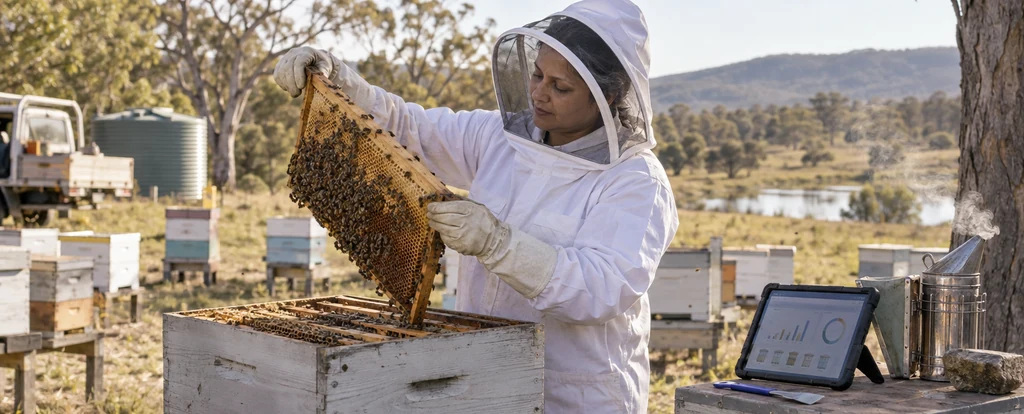
Most beekeeping happens in apiaries on farms, private land and alongside orchards, and hives are often loaded onto trucks at night to follow flowering between districts. The role sits apart from general farm work because the stock is insects: colony health, queen performance and pest pressure drive everything else in the week. Most beekeepers run their own small operation or work in a family-sized team, and varroa mite management now shapes much of the working year.
How much do beekeepers earn?
The median full-time salary for a beekeeper is $62,400 per annum, before tax, up $13,300 since 2018.
Beekeeping income follows the honey crop, which swings with rainfall, bushfire and flowering, so two years with the same hive count can look very different. Pollination contracts for almonds and other crops give many operators steadier money than honey, and beekeepers who own their hives carry both the costs and the upside. Employees are usually paid by the hour or the season under a farm award, while owner-operators draw whatever the year leaves.
What does a beekeeper do day to day?
The list below is what fills most weeks; the exact mix shifts with seniority and whatever stage the current work is at.
- Inspecting hives for brood health, queen performance, pests and disease
- Harvesting, extracting and processing honey, beeswax and other hive products
- Feeding colonies and managing hive nutrition through seasonal dearths
- Loading hives onto trucks and positioning them at pollination sites under contract
- Monitoring and treating pests such as varroa mite and small hive beetle, and keeping the movement records biosecurity rules require
What skills do beekeepers need?
Employers look for animal care and handling, field inspection and testing, operations management, backed by HiveTracks fluency and strong safety and compliance awareness.
Specialist skills
- Animal care and handling
- Field inspection and testing
- Operations management
- Plant and equipment operation
- Inventory management
Software and tools
- HiveTracks
- BroodMinder hive sensors
- Arnia hive scales
- BeePlus apiary records app
- Microsoft Excel
General skills
- Safety and compliance awareness
- Physical stamina and dexterity
Is the job growing?
About 1,600 people work as beekeepers in Australia, and employment is projected to grow 1.2% over the decade to 2035. That's modest growth: demand is steady rather than booming.
How do you become a beekeeper?
Here's the path most beekeepers take, step by step.
- 1Spend a season with a working apiary
Most beekeepers learn by helping an experienced operator with inspections, extraction and hive moves, either as paid casual work or alongside their own first hives. It is the quickest way to find out whether the heat, the lifting and the stings suit you before you spend money on equipment.
- 2Complete a Certificate III in Beekeeping
This is the standard qualification and covers colony health, pest and disease management, extraction and food safety. Some TAFE campuses and registered training organisations deliver it part time or online with practical assessment, and a traineeship with a commercial apiary combines the study with paid work.
- 3Register your hives and learn your state's biosecurity rules
Several states require hives to be registered and hive movements recorded, and the details differ by state, so check with your state agriculture department. Varroa mite management now determines how often hives are inspected, how they are treated and where they can be moved.
- 4Build up hives and equipment gradually
A commercial operation of several hundred hives takes significant capital in boxes, extractors, a vehicle and protective gear. Many beekeepers start with a handful of hives alongside other work and reinvest honey and pollination income each season.
- 5Add the business skills the job needs
Because most beekeepers sell their own honey and negotiate pollination contracts, pricing, food safety compliance, insurance and record keeping matter as much as hive craft. Short courses in small business and farm safety cover most of what an owner-operator needs.
Study routes we have checked
Qualifications that are a recognised way into this role, and what else you need.
- Certificate III in Beekeeping
A recognised route into this role
Meet applicable beehive ownership, biosecurity and transport rules alongside the course requirements.
Ready to apply as a beekeeper?
Whether you're working toward becoming a beekeeper or already are one and want a hand with the next step (sharpening your resume for ATS screening, tightening your cover letter, or knowing what you'll actually be asked at interview), here are examples grounded in this specific role, not generic templates.
What jobs can a beekeeper move to?
Moving into Deer Farmer typically comes with the biggest pay rise, worth $13,000 a year more on average.
| Move to | Typical pay change | Overlap | Retraining |
|---|---|---|---|
| Deer Farmer A beekeeper's livestock handling and seasonal management experience suits deer farming, with its focus on animal health and pasture. | +$13,000 | 70% | minimal |
| Dairy Farmer A beekeeper's animal husbandry and hive health skills carry into dairy farming's livestock care and grazing management. | +$11,400 | 78% | minimal |
| Vegetable Grower Pollination knowledge and crop awareness from beekeeping transfer to vegetable growing, where flowering cycles and hive placement matter. | +$10,400 | 70% | minimal |
| Goat Farmer Goat farming uses the same animal husbandry and herd health skills a beekeeper develops managing colonies and seasonal cycles. | −$2,600 | 70% | minimal |
Moves are chosen from Jobs and Skills Australia's Data on Occupation Mobility, which follows income tax records between 2011-12 and 2020-21, together with entry requirements and skill overlap. A known move is one people were seen making in that data. Pay change compares median full-time pay for the two roles.
Who works as a beekeeper?
The typical beekeeper is 49 years old; 79% are men, 68% work full-time, and full-timers average 50 hours a week.
- 49
- Median age
- 21%
- Female share
- 68%
- Full-time
- +10h
- vs all-jobs avg
What's it like being a beekeeper?
The year runs on flowering and hive cycles rather than a clock, with long days through extraction and pollination moves and quieter weeks in winter. The work is physical and often solitary, and it suits people who are content lifting boxes in protective gear and making colony decisions on their own. Because most beekeepers are self-employed, pricing, contracts and equipment costs are part of the job rather than something someone else handles.
What people like
- You work outdoors on your own terms. Most of the year is spent in the bush or among orchard rows, and self-employed beekeepers set their own route and hours around the season.
- The result is something you can hold. Honey, beeswax and pollination contracts all come from hives you manage yourself, so a season's work is visible in the drums and boxes in the shed.
- Every colony is a small puzzle. Brood patterns, swarming and seasonal flows change constantly, so inspections rarely feel like the same task twice.
- The heavy work falls at predictable times. Honey flow, extraction and almond pollination arrive at known points in the year, which makes it possible to plan around the busiest weeks.
What people find hard
- A full box of honey is heavy. Supers come off the hive in the heat of an inspection and have to be lifted while wearing a veil and gloves, which takes a toll on backs and shoulders.
- Stings are part of the work. Protective gear lowers the risk but does not remove it, and a serious allergy can end a beekeeping career, so it is worth knowing how you react early.
- Income follows the season, not the effort. Drought, bushfire and poor flowering can cut a honey crop badly no matter how well the hives are managed.
- Varroa and biosecurity rules add paperwork. Treatments, inspections and movement records are now a standing part of the year, and getting them wrong can cost hives or the right to move bees across state lines.
Based on our synthesis of professional-body surveys and public accounts of the role, not first-person verified reviews.
Which industries employ beekeepers?
Agriculture, Forestry and Fishing employs the largest share of beekeepers.
Top employing industries
- 1Agriculture, Forestry and Fishing
Ranked by employment share; the source doesn't publish an exact percentage per industry.
| Year 12 or below | 43.9% | |
|---|---|---|
| Certificate III/IV | 25.9% | |
| Bachelor degree | 10.9% | |
| Diploma / Advanced Diploma | 7.4% | |
| Postgraduate | 5.1% |
Will AI replace beekeepers?
Beekeeping is a low-exposure job. The decisions that matter, reading brood, finding a queen, judging when to treat for varroa and when to move hives, are made at the hive with smoke and a hive tool, and no sensor does that for you. Weight scales, brood temperature sensors and apiary record apps help with monitoring and compliance paperwork, but they feed a decision a beekeeper still makes.
Share of typical working time by exposure level
- Inspecting colonies and judging hive healthA beekeeper still opens the hive, reads the brood pattern and spots a failing queen or early disease, though sensor data can flag a colony losing weight before the next inspection.35%moderate
- Feeding, treating and maintaining hivesMixing feed, applying varroa treatments and repairing and painting boxes are physical jobs done in the apiary, with no realistic automation.25%low
- Moving hives and managing pollination contractsLogistics software can plan routes and load weights, but loading hives onto a truck at night and negotiating with growers stays with the beekeeper.25%moderate
- Harvesting, extracting and processing honeyLarger operations run uncapping and spinning lines with little hands-on work, while small beekeepers still extract by hand in a shed.15%high
Common questions about becoming a beekeeper
Straight answers to the questions people ask most.
How much do beekeepers earn?
Beekeepers earn $62,400 per year before tax on average for full-time work. What you actually take home depends on whether you own the hives and sell your own honey and pollination services or work for someone else, and on how the season went. Wages for employees are set by the relevant farm award, including casual and seasonal rates.
How do you become a beekeeper?
There is no single entry requirement, but most people start by helping an experienced beekeeper for a season and then complete a Certificate III in Beekeeping (AHC31824). Several states also require hives to be registered with the state agriculture department, and varroa management is now part of the training new beekeepers need.
Are beekeepers in demand?
Beekeepers are currently not in shortage, and employment is projected to grow 1.2% over the decade to 2035. The occupation is small, at about 1,600 people, so openings tend to come through industry networks and pollination contracts rather than steady advertised vacancies.
Will AI replace beekeepers?
Very little of the job can be automated. Hive scales, brood sensors and apiary record apps help track colony weight and compliance paperwork, but opening a hive, finding a queen, treating disease and moving hives at night are hands-on tasks that still need a person at the apiary.
What other work can a beekeeper move into?
The animal husbandry and seasonal management carry into other agricultural work: Dairy Farmer and Vegetable Grower roles both turn on flowering cycles and hive placement, while Deer Farmer and Goat Farmer rely on similar livestock handling and herd health. Farm Worker is the usual route in the other direction, though commercial beekeeping calls for a certificate and specialist hive training. Most beekeepers own their hives, and expanding hive numbers or pollination contracts is the common way earnings grow.
Do you need a licence to keep bees?
Not a licence in the usual sense, but several states require hives to be registered and hive movements to be recorded, and the rules differ by state. If you sell honey you also need to meet food safety requirements for extracting and packing it.
Related roles
Not sure this is you? Take the career quiz and get a ranked shortlist of roles that fit how you like to work.