Defence Force Officer
Defence force officers are commissioned leaders in the Australian Defence Force, responsible for the people, training and operations assigned to them.
- Median salary
- $184,200
4.2%vs last year, before tax
- People employed
- 8,200
1.2%vs last year
- Projected growth
- +17.5%
to 2035
- AI exposure*
- Low
- automation risk
- Average hours
- 48/wk
+8h vs all jobs
- Shortage status*
- In shortage
national
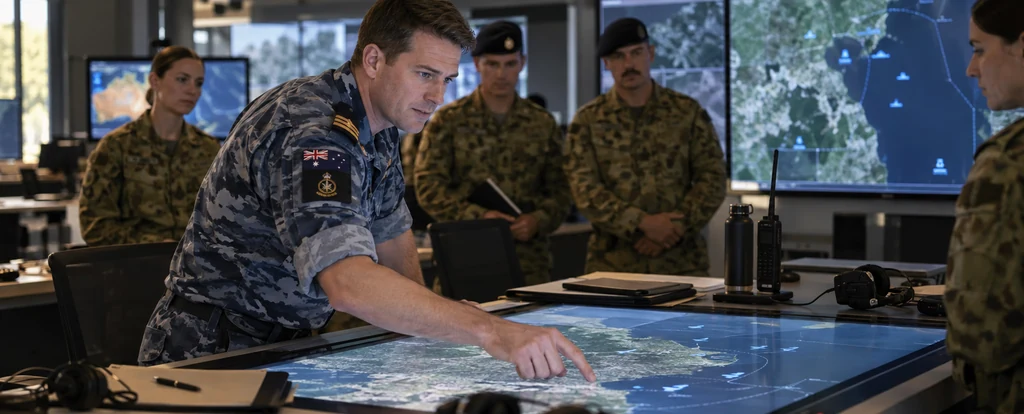
Defence force officers serve as commissioned leaders in the Army, Navy or Air Force, working from a base, a ship or a deployed headquarters depending on their service and specialisation. The commission is what separates them from other ADF members: it gives them legal authority over the personnel and equipment under their command and makes them answerable for how both are used. A new officer usually takes charge of a small team of junior members, while more senior officers plan at unit, formation or headquarters level.
How much do defence force officers earn?
The median full-time salary for a defence force officer is $184,200 per annum, before tax, up $38,700 since 2018.
Pay is set by the Defence Force Remuneration Tribunal rather than an enterprise agreement, so it moves with rank and years of service rather than through negotiation. Allowances carry a large share of the total package: deployment, specialist skills, conditions of service and housing assistance can each add a substantial amount, and some deployment pay is tax free. Civilian roles with comparable responsibility often package lower, which is worth weighing against the training and structure Defence provides.
What does a defence force officer do day to day?
The list below is what fills most weeks; the exact mix shifts with seniority and whatever stage the current work is at.
- Leading a platoon, flight or ship's division day to day
- Planning operations and training exercises, then briefing the people who carry them out
- Managing the welfare, discipline and career progression of the members under you
- Coordinating logistics, equipment and unit budget matters with supporting units
- Advising senior command on operational and strategic questions
What skills do defence force officers need?
Employers look for strategy development, operations management, risk and internal controls, backed by MILIS fluency and strong people leadership.
Specialist skills
- Strategy development
- Operations management
- Risk and internal controls
- Emergency response
- Project management
Software and tools
- MILIS
- Battle Management System
- Defence Protected Network
- Microsoft Office
General skills
- People leadership
- Written communication
- Stakeholder management
Is the job growing?
About 8,200 people work as defence force officers in Australia, and employment is projected to grow 17.5% over the decade to 2035. That's healthy, above-average growth, and the role should stay in solid demand.
How do you become a defence force officer?
Here's the path most defence force officers take, step by step.
- 1Check you meet the entry requirements
Defence Force Recruiting assesses age, citizenship, education, medical fitness and character, and you need a security clearance before you can serve. Most officer entrants have finished Year 12, and a degree is required for some specialist categories.
- 2Sit the aptitude testing and officer selection board
Applicants complete aptitude testing, a medical and fitness assessment, and an officer selection board that looks at leadership potential rather than school marks. The process takes months, so it is worth starting while you are still finishing school or a degree.
- 3Complete officer training
The Australian Defence Force Academy in Canberra combines a degree with military training over several years, while direct entry officers train at the Royal Military College at Duntroon, HMAS Creswell for the Navy, or the officers' training school at RAAF Base East Sale. Training covers leadership, tactics, service knowledge and physical conditioning, and you are paid while you complete it.
- 4Or commission with a degree already in hand
Graduates in engineering, medicine, law, nursing or aviation can enter directly and finish a shorter commissioning course, often going straight into a specialist stream. This route is quicker, but the degree has to match a category Defence is recruiting for.
- 5Commission, then keep progressing
After commissioning you are posted to a unit as a junior officer, and promotion follows service-specific courses, performance and time in rank, with staff college later for those heading towards senior command. Serving members without a degree can also apply to commission through the ranks.
Ready to apply as a defence force officer?
Whether you're working toward becoming a defence force officer or already are one and want a hand with the next step (sharpening your resume for ATS screening, tightening your cover letter, or knowing what you'll actually be asked at interview), here are examples grounded in this specific role, not generic templates.
What jobs can a defence force officer move to?
None of the roles defence force officers typically move into pay more than the role itself. General Manager is the closest match. If a bigger salary is the goal, moving up into a senior or principal position within the role is usually the faster route than moving sideways.
| Move to | Typical pay change | Overlap | Retraining |
|---|---|---|---|
| General Manager Defence officers bring command, strategic planning and people leadership to senior management, though business qualifications may be needed.Known move | −$36,000 | 32% | reskill |
| Supply Chain Manager Defence logistics and operational planning carry into supply chain management, with further study in logistics or procurement often required.Known move | −$36,800 | 36% | reskill |
| Pilot Defence flying and command experience transfer to commercial aviation, but civil pilot licences and type endorsements are required.Known move | −$46,300 | 32% | requalify |
| Aerospace Engineer Defence aviation and systems experience supports aerospace engineering work, though a full engineering degree is required.Known move | −$46,500 | 3% | requalify |
| Intelligence Analyst Defence officers bring security clearance, operational awareness and briefing skills to intelligence analysis, though formal intelligence qualifications are required.Known move | −$71,200 | 17% | requalify |
Moves are chosen from Jobs and Skills Australia's Data on Occupation Mobility, which follows income tax records between 2011-12 and 2020-21, together with entry requirements and skill overlap. A known move is one people were seen making in that data. Pay change compares median full-time pay for the two roles.
Who works as a defence force officer?
The typical defence force officer is 33 years old; 80% are men, 90% work full-time, and full-timers average 48 hours a week.
- 33
- Median age
- 20%
- Female share
- 90%
- Full-time
- +8h
- vs all-jobs avg
What's it like being a defence force officer?
Defence life alternates between routine unit work, concentrated field or sea time, and postings that move you and your household every few years. The hours run longer than most civilian jobs and deployments take you away from home for months, but the work carries clear responsibility early and a structure that tells you what is expected. It suits people who want to lead a team in a setting where the stakes and the rules are both explicit.
What people like
- Responsibility arrives early. A junior officer can be accountable for a team, its equipment and its training within a year of commissioning, which few other careers offer at that stage.
- You lead the same people over time. Officers train and deploy with the same group, so you watch individuals develop and come to rely on them directly.
- Training is funded and ongoing. Promotion courses, specialist qualifications and staff college are paid for and built into the career, so you keep developing without funding it yourself.
- The work changes with each posting. A career can move between regimental duties, instructional work, headquarters planning and overseas deployment, which keeps the job from settling into one routine.
What people find hard
- Postings move the whole household. You can be posted interstate or overseas every few years, and partners and children carry much of the disruption that comes with it.
- Long stretches away from home. Exercises and deployments mean weeks or months apart from family, sometimes with limited notice and patchy contact.
- Defence sets the terms. Where you serve, which specialisation you take and when you promote are decided by the organisation, so personal preferences only stretch so far.
- Administration sits alongside command. A solid part of the week goes to reports, personnel paperwork and compliance, which frustrates officers who came for the operational side.
Based on our synthesis of professional-body surveys and public accounts of the role, not first-person verified reviews.
Which industries employ defence force officers?
Public Administration and Safety employs the largest share of defence force officers.
Top employing industries
- 1Public Administration and Safety
Ranked by employment share; the source doesn't publish an exact percentage per industry.
| Bachelor degree | 29.1% | |
|---|---|---|
| Postgraduate | 26.4% | |
| Year 12 or below | 24.1% | |
| Diploma / Advanced Diploma | 11.2% | |
| Certificate III/IV | 7.4% |
Will AI replace defence force officers?
Defence force officer work sits at low exposure to AI and automation, because the job is command rather than production: an officer holds legal authority over the people and equipment under them and answers for how both are used. Tools such as the Battle Management System, MILIS for logistics and the Defence Protected Network already speed up planning, stock tracking and reporting, and they will keep getting better. What they change is how quickly information reaches the officer, not who makes the call.
Share of typical working time by exposure level
- Leading a platoon, flight or ship's divisionMost of the week goes to leading in person: briefings, welfare conversations, discipline and setting the standard for a small team.35%low
- Planning operations and writing ordersPlanning software and the Battle Management System assemble the picture faster, but the officer still weighs the options and issues the order.25%moderate
- Training and mentoring junior membersRunning training is hands-on work, and an instructor judges progress by watching people perform under pressure.20%low
- Reports, logistics and personnel administrationPersonnel files, reports and stock records are already partly automated through MILIS and the Defence Protected Network, and that share keeps growing.20%high
Common questions about becoming a defence force officer
Straight answers to the questions people ask most.
How much do defence force officers earn?
Defence force officers earn a median of $184,200 per year before tax. Rank, years of service, service category and the allowances attached to a posting all move the total considerably.
How do you become a defence force officer?
You apply through Defence Force Recruiting, pass aptitude, medical and fitness assessments and an officer selection board, then complete officer training at the Australian Defence Force Academy or a single-service college. A degree helps and is mandatory for some specialist entries, while serving members can also commission through the ranks. The whole process usually takes months, so applying early matters.
Are defence force officers in demand?
Defence force officers are currently in shortage nationally, and employment is projected to grow 17.5% over the decade to 2035. That gives you a sense of how many places Defence expects to fill over the years ahead, although the application, clearance and training pipeline is long either way.
Will AI replace defence force officers?
No. The role carries low exposure to AI and automation, because command rests on legal authority over people and on decisions made with incomplete information. Systems such as the Battle Management System, MILIS for logistics and the Defence Protected Network already speed up planning, stock tracking and reporting, and they will keep improving. What changes is how quickly information reaches the officer, not who issues the order.
What can defence force officers do after leaving?
Officers commonly move into general management, supply chain management, commercial aviation, aerospace engineering and intelligence analysis. A move into general manager work typically pays $36,000 less, and the command, planning and people leadership carry across, though business qualifications often help. Flying and engineering roles need civil licences or a full degree before you can work in them.
Related roles
Not sure this is you? Take the career quiz and get a ranked shortlist of roles that fit how you like to work.