Dive Instructor
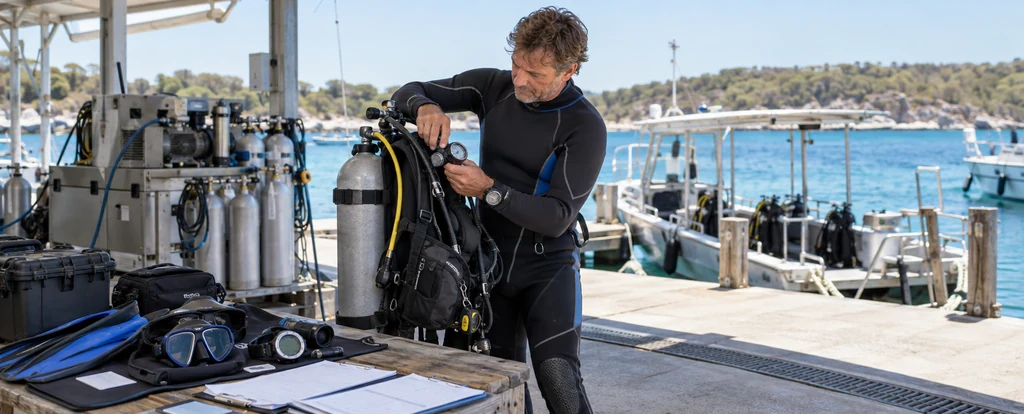
Dive instructors teach people to scuba dive safely, running in-water training and guided dives so students and tourists can explore the ocean with confidence.
- Median salary*
- $59,800
3.8%vs last year, before tax
- People employed
- 510
2.0%vs last year
- Projected growth
- +12.1%
to 2035
- AI exposure*
- Low
- automation risk
- Average hours
- 47/wk
+7h vs all jobs
- Shortage status
- Not in shortage
national
Dive instructors train recreational divers, from first open water courses through to advanced and specialty certifications. Most work for dive schools, charter operators and liveaboard tourism businesses on a seasonal or casual basis, and the day splits between teaching, supervising dives and looking after gear. The role is sometimes confused with commercial diving, which is a different job: commercial divers work on construction, inspection and salvage contracts, while dive instructors spend their time teaching.
How much do dive instructors earn?
The median full-time salary for a dive instructor is $59,800 per annum, before tax, up $12,400 since 2018.
Dive schools mostly employ instructors casually or seasonally, so weekly pay swings with the tourism calendar and how many courses are running. Course commissions, gear sales and liveaboard or resort packages that include accommodation and meals can add to the base rate, and many instructors pick up other work in the off season. Specialty ratings and a returning clientele do more for earnings than years in the role.
What does a dive instructor do day to day?
The list below is what fills most weeks; the exact mix shifts with seniority and whatever stage the current work is at.
- Briefing students and certified divers on the dive plan, hand signals and what to do if something goes wrong
- Leading guided dives and supervising students underwater, watching air, depth and how each person is coping
- Demonstrating and assessing scuba skills during courses, from mask clearing to buoyancy control
- Filling tanks and servicing regulators, wetsuits and compressor equipment between trips
- Recording dive logs, certification paperwork and incident reports, and chasing up students who still need a skill signed off
What skills do dive instructors need?
Employers look for teaching and instruction, emergency response, plant and equipment operation, backed by Dive computers (Shearwater, Suunto) fluency and strong safety and compliance awareness.
Specialist skills
- Teaching and instruction
- Emergency response
- Plant and equipment operation
Software and tools
- Dive computers (Shearwater, Suunto)
- PADI eLearning / SSI Digital Learning
- FareHarbor
- Rezdy
- Xero
General skills
- Safety and compliance awareness
- Customer service
- Written communication
- Physical stamina and dexterity
Is the job growing?
About 510 people work as dive instructors in Australia, and employment is projected to grow 12.1% over the decade to 2035. That's healthy, above-average growth, and the role should stay in solid demand.
How do you become a dive instructor?
Here's the path most dive instructors take, step by step.
- 1Get certified as a recreational diver
Start with an open water course, then work through advanced and rescue diver ratings. Each level requires a set number of logged dives, and you pay for the courses yourself.
- 2Qualify as a divemaster
Divemaster is the first professional rating: you assist instructors, lead certified divers and run surface support. It usually takes a few months of full-time training, or longer part-time, and it is where you find out whether you enjoy leading groups.
- 3Complete an instructor course with a training agency
Agencies such as PADI and SSI run instructor development courses followed by an instructor examination. You will also need current CPR, first aid and oxygen provider certificates and professional liability insurance before you can teach.
- 4Work a season or two and add specialty ratings
New instructors usually start with a dive school or charter operator over a summer season, often casually. Specialty ratings such as deep, wreck or night diving, and a second language, widen what you can teach and where you can work.
Ready to apply as a dive instructor?
Whether you're working toward becoming a dive instructor or already are one and want a hand with the next step (sharpening your resume for ATS screening, tightening your cover letter, or knowing what you'll actually be asked at interview), here are examples grounded in this specific role, not generic templates.
What jobs can a dive instructor move to?
Moving into Commercial Diver typically comes with the biggest pay rise, worth $54,600 a year more on average.
| Move to | Typical pay change | Overlap | Retraining |
|---|---|---|---|
| Commercial Diver Dive instructors can move into commercial diving with additional commercial diving training; underwater confidence and dive theory carry across.Known move | +$54,600 | 17% | reskill |
| Sailing Instructor Sailing instructor uses the same aquatic teaching, safety and group management skills, so the move needs only minimal retraining. | +$0 | 80% | minimal |
| Rafting Guide Rafting guide draws on outdoor leadership, water safety and group instruction, with a short course for river-specific skills. | +$0 | 59% | short course |
| Ski Instructor Ski instructor builds on outdoor instruction, risk management and client teaching, with a short course for snow-specific certification. | −$2,600 | 71% | short course |
Moves are chosen from Jobs and Skills Australia's Data on Occupation Mobility, which follows income tax records between 2011-12 and 2020-21, together with entry requirements and skill overlap. A known move is one people were seen making in that data. Pay change compares median full-time pay for the two roles.
Who works as a dive instructor?
The typical dive instructor is 35 years old; 66% are men, 52% work full-time, and full-timers average 47 hours a week.
- 35
- Median age
- 34%
- Female share
- 52%
- Full-time
- +7h
- vs all-jobs avg
What's it like being a dive instructor?
The days are long and physical, with early starts, heavy kit and a lot of time on a boat or shore before anyone gets in the water. Instructors who enjoy it tend to like being outside, working with nervous beginners and seeing someone's first breath underwater change their whole day. The trade-off is that the work follows the tourist season, so the same job often moves town or country from year to year.
What people like
- You are in the water most days. Teaching happens on reefs, in bays and off boats, which is a very different working week from a classroom or an office.
- Watching a nervous beginner get it. Someone who could not put their face underwater on day one is often swimming comfortably by day three, and you are the reason that happened.
- The qualification travels. Agency certifications are recognised internationally, so instructors can follow the seasons between Queensland, the Northern Territory, Fiji and South East Asia.
- Small teams and clear procedures. Dive crews are usually three or four people who know their roles, and the safety standards are written down and followed rather than improvised.
What people find hard
- Seasonal work and gaps between contracts. Summer is busy and winter can be quiet, so instructors often plan the year around two or three separate placements.
- Heavy kit in the heat. Tanks, weight belts and wetsuits are carried, loaded and rinsed several times a day, and that is before you get in the water.
- Teaching the same entry-level skills. Much of the work is open water courses, so you repeat the same briefings and skill demonstrations week after week.
- Responsibility when something goes wrong. You are accountable for your students underwater and for the paperwork afterwards, and incidents are investigated in detail.
Based on our synthesis of professional-body surveys and public accounts of the role, not first-person verified reviews.
Which industries employ dive instructors?
Transport, Postal and Warehousing employs the largest share of dive instructors, followed by Education and Training.
Top employing industries
- 1Transport, Postal and Warehousing
- 2Education and Training
- 3Arts and Recreation Services
Ranked by employment share; the source doesn't publish an exact percentage per industry.
| Bachelor degree | 26.1% | |
|---|---|---|
| Certificate III/IV | 21.4% | |
| Year 12 or below | 20.8% | |
| Diploma / Advanced Diploma | 16.4% | |
| Postgraduate | 8.6% |
Will AI replace dive instructors?
Dive instruction is one of the less exposed jobs in this group, because the core of the work happens underwater with a person who may be nervous, tired or close to panicking. Booking and rostering software such as Rezdy and FareHarbor, agency eLearning platforms and dive computers have taken over scheduling, theory delivery and dive logging, which changes how courses are run rather than removing the instructor from the water.
Share of typical working time by exposure level
- In-water instruction and supervision of studentsHolding a regulator in for a nervous student at four metres, or spotting a diver who is finning too hard against a current, depends on being there and reading the person in front of you.30%low
- Teaching dive theory and marking knowledge reviewsAgency eLearning platforms already deliver the physics, tables and physiology modules and score the quizzes, which frees the instructor to spend contact time on the water skills.25%high
- Tank filling, gear servicing and compressor checksOxygen cleaning, regulator servicing schedules and compressor filter changes are physical jobs with a hands-on safety check at the end, and a missed step shows up as bad air or a failed regulator.25%low
- Dive briefings and site planningForecast and tide apps help pick the site and the entry point, but the briefing still has to account for who is on the boat and how they handled the last dive.20%moderate
Common questions about becoming a dive instructor
Straight answers to the questions people ask most.
How much do dive instructors earn?
Median full-time pay for dive instructors is $59,800 per year before tax. Casual and seasonal work is common, so what you take home in a given year depends heavily on how many courses you teach and whether accommodation or meals are included.
How do you become a dive instructor?
You work up through the recreational certification pathway: open water, advanced, rescue diver, then divemaster, then an instructor development course and instructor examination with an agency such as PADI or SSI. Most people do it over one to two years while holding another job, and the courses are self-funded. You will also need current first aid, CPR and oxygen provider certificates and professional liability insurance before you teach.
Are dive instructors in demand?
Dive instructors are currently not in shortage, and employment is projected to grow 12.1% over the decade to 2035. The work follows the tourism calendar, so where and when you look for a job matters as much as the overall number of positions.
Will AI replace dive instructors?
Not in any direct way. Digital learning has moved most dive theory online and dive computers now log dives automatically, but supervising a person underwater and reacting if they panic is physical work that stays with the instructor.
What else can a dive instructor do?
Commercial diving takes the same underwater confidence and dive theory into construction and inspection work, and it pays $54,600 more a year, though you need a commercial diving qualification first. Sailing instructor and ski instructor draw on the same outdoor teaching and group management skills, so those moves need only a short course or none at all. Many experienced instructors end up running their own dive school or teaching freelance, which is often where earnings grow.
Do you need a degree to be a dive instructor?
No. The credential employers ask for is the agency instructor certification, not a university qualification, although around 26% of the people in the role hold a Bachelor degree. A degree can help if you later move into marine science, tourism management or operating your own school.
Related roles
Not sure this is you? Take the career quiz and get a ranked shortlist of roles that fit how you like to work.