Drycleaner
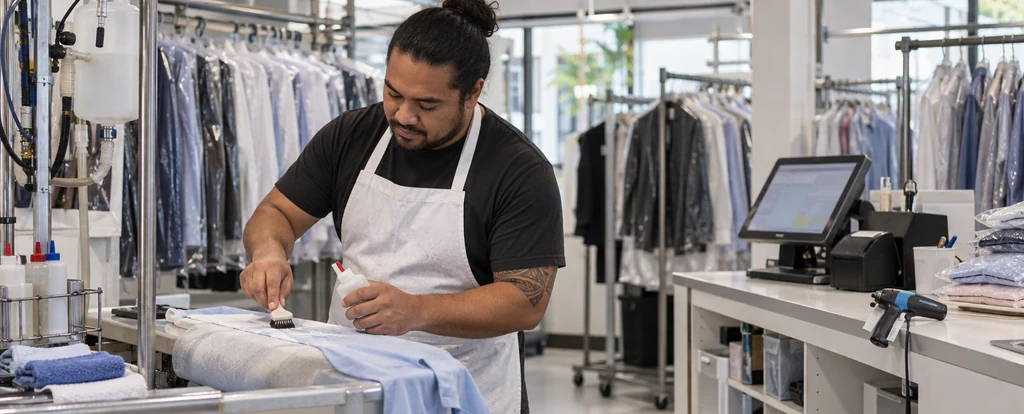
Drycleaners clean, press and finish garments and other textiles using solvent based machines and hand spotting, so customers get their clothes back wearable and looking smart.
- Median salary*
- $49,400
4.2%vs last year, before tax
- People employed
- 1,700
0.0%vs last year
- Projected growth
- +4.1%
to 2035
- AI exposure*
- Moderate
- automation risk
- Average hours
- 43/wk
+3h vs all jobs
- Shortage status*
- Not in shortage
national
Most drycleaners work in small retail shops, taking garments in at the counter, cleaning them on site and handing them back within a day or two, while others work in commercial laundries serving hotels, hospitals and aged care. The job sits close to laundry work and general cleaning, but the solvent machines, the spotting board and the finishing equipment are what set it apart, and knowing what a delicate fabric will survive is the part that takes longest to learn. Training is usually on the job, sometimes with a certificate level qualification, and the work involves handling cleaning solvents under workplace health and safety requirements.
How much do drycleaners earn?
The median full-time salary for a drycleaner is $49,400 per annum, before tax, up $10,400 since 2018.
Pay depends a lot on the employer: a small suburban shop and a commercial laundry serving hotels pay differently, and a supervisor who runs the counter, orders stock and rosters staff earns more than someone pressing all day. Award coverage sets minimum rates, and early starts, Saturday trading and public holidays often carry penalty rates that lift weekly earnings above the base rate. Casual and part-time work is common in retail shops, so what lands in your account can move around more than an annual figure suggests.
What does a drycleaner do day to day?
The list below is what fills most weeks; the exact mix shifts with seniority and whatever stage the current work is at.
- Reading care labels and sorting garments by fabric, colour and cleaning method
- Loading and running dry cleaning machines and monitoring solvent recovery
- Pre-treating and hand spotting stains on a spotting board
- Pressing and finishing garments with steam, vacuum tables and form finishers
- Inspecting items for damage, tagging them and handing them back at the counter
What skills do drycleaners need?
Employers look for cleaning and grounds maintenance, operations management, inventory management, backed by SPOT Business Systems point of sale fluency and strong attention to detail.
Specialist skills
- Cleaning and grounds maintenance
- Operations management
- Inventory management
Software and tools
- SPOT Business Systems point of sale
- SMRT Systems
- Xero
- Garment barcode tagging system
General skills
- Attention to detail
- Customer service
- Safety and compliance awareness
- Time and deadline management
Is the job growing?
About 1,700 people work as drycleaners in Australia, and employment is projected to grow 4.1% over the decade to 2035. That's modest growth: demand is steady rather than booming.
How do you become a drycleaner?
Here's the path most drycleaners take, step by step.
- 1Start with an entry level job
No formal qualification is needed to begin, and most drycleaners learn on the job. Retail shops hire counter staff and pressers and train them up, so reliability and an eye for detail matter more than a certificate at this stage.
- 2Learn the machines and the stain work
Under supervision you pick up care labels, solvent handling and spotting technique, along with the ventilation and protective equipment rules that come with working around cleaning chemicals. This is the part of the job that takes the longest to get good at.
- 3Add a traineeship or certificate
A traineeship with an employer often leads to the Certificate II or Certificate III in Dry Cleaning Operations (MST30922), and the certificate is commonly expected of supervisors. Funding and recognition differ by state, so check with your state training authority.
- 4Move into supervising or running the shop
Experienced drycleaners take on rostering, ordering solvent and supplies, pricing and training new staff. From there, some buy an existing shop or open one of their own.
Study routes we have checked
Qualifications that are a recognised way into this role, and what else you need.
- Certificate III in Dry Cleaning Operations
A recognised route into this role
Complete the qualification's technical training and workplace safety requirements.
Ready to apply as a drycleaner?
Whether you're working toward becoming a drycleaner or already are one and want a hand with the next step (sharpening your resume for ATS screening, tightening your cover letter, or knowing what you'll actually be asked at interview), here are examples grounded in this specific role, not generic templates.
What jobs can a drycleaner move to?
Moving into Cleaner typically comes with the biggest pay rise, worth $20,400 a year more on average.
| Move to | Typical pay change | Overlap | Retraining |
|---|---|---|---|
| Cleaner Drycleaners bring textile care and stain treatment skills to general cleaning, though further study is needed for the broader role.Known move | +$20,400 | 40% | reskill |
| Laundry Worker Drycleaners move readily into laundry work, sharing skills in washing, stain removal and pressing garments.Known move | +$500 | 53% | short course |
Moves are chosen from Jobs and Skills Australia's Data on Occupation Mobility, which follows income tax records between 2011-12 and 2020-21, together with entry requirements and skill overlap. A known move is one people were seen making in that data. Pay change compares median full-time pay for the two roles.
Who works as a drycleaner?
The typical drycleaner is 51 years old; 59% are women, 38% work full-time, and full-timers average 43 hours a week.
- 51
- Median age
- 59%
- Female share
- 38%
- Full-time
- +3h
- vs all-jobs avg
What's it like being a drycleaner?
The work has a steady rhythm: garments arrive at the counter through the morning and most need to be cleaned, pressed and ready for collection by the end of the day. It suits people who like working with their hands and seeing a job finished, and who don't mind being on their feet for most of a shift. Pressure builds in peak periods such as wedding season and the first cold snap, when formal wear and winter coats arrive at once and customers want them back quickly.
What people like
- You can see the result. A stained jacket or a crumpled dress comes in one state and leaves in another, and the customer notices straight away. That kind of finished result is easy to take satisfaction from.
- Hands-on, practical work. Most of the day is spent at the machines, the spotting board or the press rather than in front of a screen, which suits people who prefer physical work.
- Regular customers. A retail shop serves its neighbourhood, so you get to know the people who come in each week and the local businesses that send their workwear through.
- A trade you keep learning. Fabrics, finishes and stains each behave differently, and experienced drycleaners build up a store of knowledge about what will come out and what won't.
What people find hard
- Some garments can't be saved. An old stain, a failing lining or damage the customer forgot to mention can mean an item comes back short of perfect, and you are the one explaining why.
- Solvent fumes and long shifts standing. The chemicals need good ventilation and protective equipment, and most of a shift is spent on your feet around machines that are not quiet.
- Early starts and Saturday trading. Shops need garments ready before customers finish work, so shifts often begin before 8am, and opening on Saturday is standard in retail drycleaning.
- Work that can't be rushed. Delicate items need slow, careful handling even when the rack is full, and a hurried press or spotting job is how garments get marked or damaged.
Based on our synthesis of professional-body surveys and public accounts of the role, not first-person verified reviews.
Which industries employ drycleaners?
Other Services employs the largest share of drycleaners.
Top employing industries
- 1Other Services
Ranked by employment share; the source doesn't publish an exact percentage per industry.
| Year 12 or below | 54.7% | |
|---|---|---|
| Certificate III/IV | 15.6% | |
| Bachelor degree | 10.1% | |
| Diploma / Advanced Diploma | 8.7% | |
| Postgraduate | 2.8% |
Will AI replace drycleaners?
This is a moderately exposed job. Computer controlled dry cleaning machines, automated solvent recovery and garment tracking software have taken over much of the machine set-up and record keeping, and shop systems handle pricing and customer details. What keeps the exposure in the middle is the hand work: judging a fabric, spotting a stain and finishing a delicate garment are still done by eye and experience.
Share of typical working time by exposure level
- Running and monitoring the dry cleaning machinesModern machines run stored programs for different fabric types and handle solvent recovery automatically, so setting up a load is increasingly a matter of choosing the cycle and checking it.30%high
- Stain identification and hand spottingWorking out what caused a mark and which treatment will shift it without damaging the dye or the weave is still done by eye at the spotting board.25%low
- Pressing and finishingSteam presses, vacuum tables and form finishers take much of the heat and pressure out of the job, but pleats, beading and soft tailoring still need hand finishing.25%moderate
- Counter service and garment trackingBarcode tagging and shop software handle intake records, collection reminders and pricing, while assessing a garment and managing a customer's expectations happens in person.20%moderate
Moves least exposed to AI
These career moves from drycleaner work are rated low for AI exposure:
- Cleaner
Solid skill overlap (40%), reskill to get there, and a low automation-risk profile.
Common questions about becoming a drycleaner
Straight answers to the questions people ask most.
How much do drycleaners earn?
The median for a drycleaner is $49,400 per year before tax, which is a full-time figure and a general guide rather than a promise for any one job. What you actually take home depends on your award, your hours and whether the role includes penalty rates for early starts, Saturdays and public holidays.
How do you become a drycleaner?
Most drycleaners start in an entry level job and learn on the job, with no formal qualification required to begin. A traineeship leading to the Certificate II or Certificate III in Dry Cleaning Operations (MST30922) is the usual way to formalise those skills, and it helps if you want to supervise or run a shop later.
Are drycleaners in demand?
Drycleaners are currently not in shortage, and employment is projected to grow 4.1% over the decade to 2035 over the decade. Openings tend to appear as people leave the trade rather than as new shops open, and most jobs are in retail dry cleaning shops and commercial laundries, so moving for work may mean looking beyond your own suburb.
Will AI replace drycleaners?
Parts of the job are already automated, particularly the machine programs, garment tracking and customer records, but a load still needs someone who can read a care label, judge a delicate fabric and work a stain by hand. Automated machines and point of sale software handle the routine side, and the decision about what a garment can survive stays with the drycleaner.
What jobs can a drycleaner move into?
Cleaners earn $20,400 more, and the move uses the same textile care and stain treatment skills, though general cleaning covers a much wider range of premises and usually needs some retraining. Laundry work is a closer fit, since washing, stain removal and pressing carry straight over. The other common path is ownership, because many drycleaners end up running their own shop, and that is often where earnings grow.
What are the hours like for a drycleaner?
Drycleaners work around 43 hours a week in a full-time role, and 38% work full time. Shops open early so garments are ready for collection the same day, so starts before 8am are common, and casual or part-time hours make up a good share of the workforce.
Related roles
Not sure this is you? Take the career quiz and get a ranked shortlist of roles that fit how you like to work.