Engineering Technologist
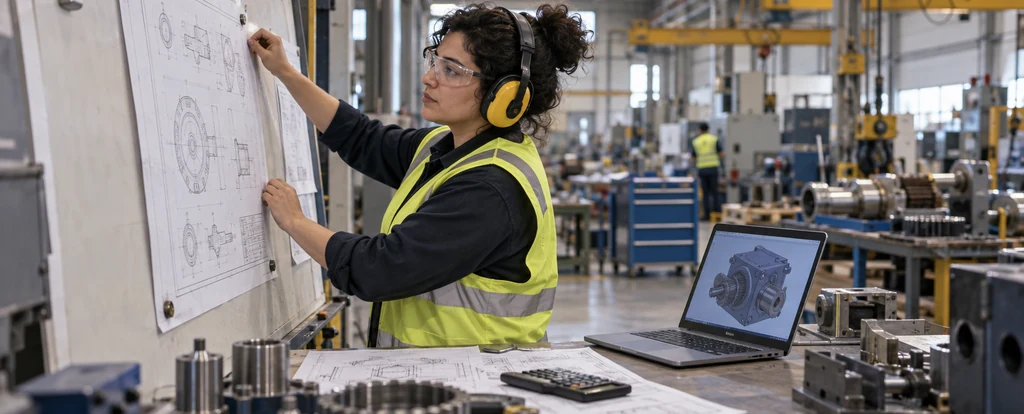
Engineering technologists apply engineering principles to build, test and maintain the systems and equipment that engineers design.
- Median salary*
- $106,600
3.6%vs last year, before tax
- People employed
- 370
7.5%vs last year
- Projected growth
- +23%
to 2035
- AI exposure*
- Moderate
- automation risk
- Average hours
- 40/wk
matches all-jobs average
- Shortage status
- In shortage
national
Engineering technologists work in factories, construction sites and engineering consultancies, turning designs into drawings, specifications and commissioned equipment. They sit between the engineer who owns the design and the trades who build it, and much of the job is making sure the two line up. The role is often confused with engineering technician work: technicians install and maintain, while technologists are expected to carry the analysis, documentation and compliance side of a project as well.
How much do engineering technologists earn?
The median full-time salary for an engineering technologist is $106,600 per annum, before tax, up $22,700 since 2018.
Sector drives pay more than the job title does: technologists on large construction and infrastructure projects are usually paid more than those in smaller manufacturing businesses, and site or remote placements often carry allowances on top of base pay. Larger employers tend to set pay through enterprise agreements with annual increments, so increases come with each year of experience rather than from a single negotiation. Shutdown and commissioning periods often come with paid overtime or time in lieu, which is worth checking when you compare offers.
What does an engineering technologist do day to day?
The list below is what fills most weeks; the exact mix shifts with seniority and whatever stage the current work is at.
- Preparing detailed designs, drawings and specifications in CAD, then revising them when site conditions differ from the plan
- Running calculations and simulations in tools like MATLAB and SolidWorks to check a design before it is built
- Testing and commissioning equipment, from switchboards in a new building to production machinery on a factory floor
- Inspecting installations with the trades and checking them against standards, then chasing up the fixes that come out of it
- Working out quantities, costs and lead times so a project can be priced, scheduled and ordered
What skills do engineering technologists need?
Employers look for engineering design and analysis, cAD and technical drawing, project engineering and delivery, backed by AutoCAD fluency and strong problem solving.
Specialist skills
- Engineering design and analysis
- CAD and technical drawing
- Project engineering and delivery
- Field inspection and testing
- Worksite safety management
- Regulatory compliance
Software and tools
- AutoCAD
- SolidWorks
- MATLAB
- Microsoft Project
General skills
- Problem solving
Is the job growing?
About 370 people work as engineering technologists in Australia, and employment is projected to grow 23% over the decade to 2035. That's very strong growth. Few roles in Australia are expanding this fast, and it points to solid demand for years to come.
How do you become an engineering technologist?
Here's the path most engineering technologists take, step by step.
- 1Finish Year 12 with maths and physics
Engineering technology degrees and diplomas assume a solid maths base, and most courses list Mathematical Methods or equivalent as a prerequisite. Physics helps, particularly for the mechanical, electrical and civil streams.
- 2Complete an engineering technology qualification
The standard entry is a Bachelor of Engineering Technology, usually three years full time, accredited at engineering technologist level by Engineers Australia. A Diploma or Advanced Diploma of Engineering (MEM60122) at TAFE takes one to two years and lets you work while you study, and some people enter with a four-year engineering degree instead.
- 3Build site or workshop experience early
Cadetships, vacation work and placements are how you get past the theory and learn what a specification looks like once it reaches a real site. Employers in construction and manufacturing weigh that practical exposure heavily when hiring graduates.
- 4Join Engineers Australia and check registration rules
Engineers Australia has a membership category for engineering technologists, and the National Engineering Register lists those who meet its requirements. Registration for engineers doing certain building work varies by state, so check the rule where you work.
Ready to apply as an engineering technologist?
Whether you're working toward becoming an engineering technologist or already are one and want a hand with the next step (sharpening your resume for ATS screening, tightening your cover letter, or knowing what you'll actually be asked at interview), here are examples grounded in this specific role, not generic templates.
What jobs can an engineering technologist move to?
Moving into Engineering Manager typically comes with the biggest pay rise, worth $76,400 a year more on average.
| Move to | Typical pay change | Overlap | Retraining |
|---|---|---|---|
| Engineering Manager An engineering technologist brings technical coordination and project experience to engineering management, with further study in management required.Known move | +$76,400 | 12% | requalify |
| Mechatronics Engineer An engineering technologist brings automation and systems integration experience to mechatronics engineering, with further study in robotics and control.Known move | +$37,000 | 34% | reskill |
| Mechanical Engineer An engineering technologist brings systems design and testing experience to mechanical engineering, with further study bridging the theory gap.Known move | +$29,300 | 40% | reskill |
| Electrical Engineer An engineering technologist brings circuit, control and testing knowledge to electrical engineering, needing little extra training.Known move | +$26,200 | 70% | minimal |
| Civil Engineer An engineering technologist brings project delivery and technical drawing skills to civil engineering, with a short course covering civil codes.Known move | +$8,700 | 50% | short course |
Moves are chosen from Jobs and Skills Australia's Data on Occupation Mobility, which follows income tax records between 2011-12 and 2020-21, together with entry requirements and skill overlap. A known move is one people were seen making in that data. Pay change compares median full-time pay for the two roles.
Who works as an engineering technologist?
The typical engineering technologist is 32 years old; 86% are men, 84% work full-time, and full-timers average 40 hours a week.
- 32
- Median age
- 14%
- Female share
- 84%
- Full-time
- +0h
- vs all-jobs avg
What's it like being an engineering technologist?
An engineering technologist's week follows the project: design and documentation early, site inspections and commissioning as it nears handover. The pressure is set by contract dates, equipment deliveries and the point at which a design meets an actual building or plant. It suits someone who likes practical problem solving, is comfortable being the person who has to make a design work once it leaves the office, and doesn't mind that a good share of the week goes on documentation.
What people like
- The work moves between desk and site. A week can start with drawings in the office and end with a commissioning test on a plant floor. If sitting still all day wears you down, that mix is the main draw.
- You see the result. Designs become physical things: a conveyor, a switchboard, a water treatment unit. The feedback on whether you got it right arrives quickly and in person.
- Technical problems with a verifiable answer. When equipment fails or a part doesn't fit, the diagnosis is methodical and the fix can usually be tested. That suits people who like working through a problem until it is genuinely closed out.
- The skills travel across industries. The same drafting, testing and project skills are wanted in manufacturing, construction and engineering consultancies, so changing industries doesn't mean starting over.
What people find hard
- You sit in the middle. Technologists carry the design intent out to the trades and bring the site reality back to the engineer, and both sides can be frustrated when the two don't match.
- Documentation takes real time. Specifications, inspection records and compliance paperwork are part of the job, and standards get revised, so it isn't work you finish once and forget.
- Dates set by contracts. Commissioning windows and project milestones are fixed by agreement, so late equipment or bad weather on site can push work into evenings and weekends.
- Site conditions and travel. Factory floors, tunnels and construction sites are noisy, dusty and sometimes remote, and some roles involve regular travel or a roster away from home.
Based on our synthesis of professional-body surveys and public accounts of the role, not first-person verified reviews.
Which industries employ engineering technologists?
Manufacturing employs the largest share of engineering technologists, followed by Professional, Scientific and Technical Services.
Top employing industries
- 1Manufacturing
- 2Professional, Scientific and Technical Services
- 3Construction
Ranked by employment share; the source doesn't publish an exact percentage per industry.
| Postgraduate | 44.5% | |
|---|---|---|
| Bachelor degree | 36.6% | |
| Diploma / Advanced Diploma | 9.8% | |
| Certificate III/IV | 4.9% | |
| Year 12 or below | 1.9% |
Will AI replace engineering technologists?
Engineering technology sits in the middle of the range: the computational side of the job, drafting, calculation and documentation, is being automated quickly, while the physical side is not. CAD and BIM tools, simulation software and automated take-offs already do work that used to fill a technologist's week, which raises the value of someone who can set the tools up, check the output and then make the thing work on site. None of a commissioning test or a site inspection can be done from a desk.
Share of typical working time by exposure level
- Site inspection and commissioningChecking a weld, a clamp torque or a control loop means being at the plant with the right instruments, and that part of the job has barely changed.30%low
- Drafting and detailing in CADParametric and AI-assisted drafting tools can turn a specification into a first-pass drawing, but someone still has to set tolerances, check buildability and issue the sheet.25%high
- Estimating, scheduling and documentationAutomated take-offs and template documents cut the time spent on quantities and reports, though supplier quotes, variations and site records still need someone to chase and check.25%moderate
- Analysis and simulationSimulation packages already carry the calculation, so the exposure sits in model set-up and screening options, while judging whether a result clears the relevant standard remains a person's call.20%moderate
Moves least exposed to AI
These career moves from engineering technologist work are rated low for AI exposure:
- Civil Engineer
Solid skill overlap (50%), short course to get there, and a low automation-risk profile.
Common questions about becoming an engineering technologist
Straight answers to the questions people ask most.
How much do engineering technologists earn?
$106,600 per year before tax is the median for full-time engineering technologists. What shifts it most is the sector you work in and whether the role is site-based, since project and remote allowances add to base pay.
How do you become an engineering technologist?
The usual route is a Bachelor of Engineering Technology, an accredited three-year degree, or a Diploma or Advanced Diploma of Engineering at TAFE followed by further study. 45% of the people in the role hold a postgraduate qualification, though that describes the current workforce rather than what employers require for entry.
Are engineering technologists in demand?
Engineering technologists are currently in shortage nationally, and employment in the occupation is projected to grow 23% over the decade to 2035. Only about 370 people work in the role nationally, so a small number of large projects can shift the picture from one year to the next.
Will AI replace engineering technologists?
AI is changing parts of the job rather than the whole of it. Drafting, quantity take-offs and routine calculations are increasingly automated by CAD, BIM and estimating software, while inspection, testing and commissioning still need someone at the plant with instruments in hand. Technologists who can set up these tools, check what they produce and then make the design work on site are the ones the tools help most.
What can an engineering technologist move into?
Electrical engineering is a move that needs little extra training, since circuit, control and testing work overlaps closely, and the median is $26,200 more than for engineering technologists. Civil engineers earn $8,700 more on the median and the step across usually needs only a short course in civil codes and standards. Mechanical engineers earn $29,300 more, but the move takes longer because the design theory in an engineering degree is the part you are most likely to need to pick up.
What is the difference between an engineering technologist and an engineer?
Engineers own the original design and the theory behind it, while technologists apply established engineering principles to build, test and modify it. In practice the line is blurry and plenty of technologists do work that looks like engineering. The difference shows up in who signs off on the design and in the qualification employers ask for.
Related roles
- Mechanical Engineer
- Civil Engineer
- Electrical Engineer
- Engineering Manager
- Mechatronics Engineer
- Civil Engineering Technician
Not sure this is you? Take the career quiz and get a ranked shortlist of roles that fit how you like to work.