Exercise Physiologist
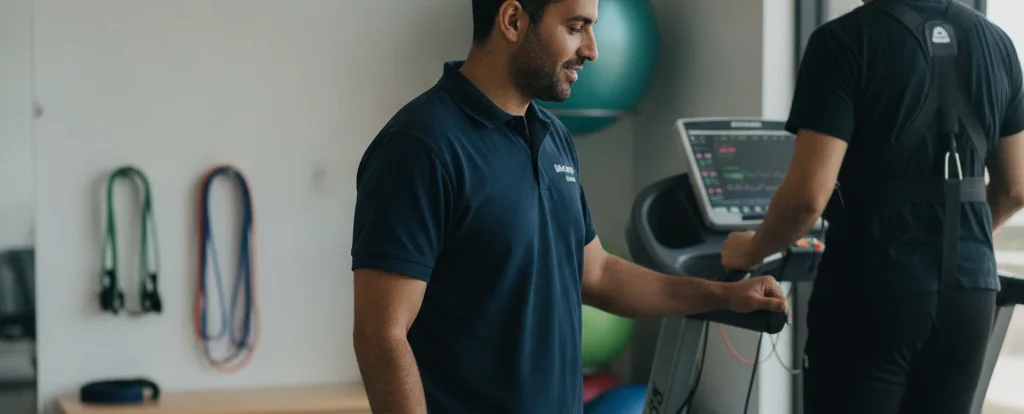
Exercise physiologists use exercise as treatment, assessing people with chronic disease, injury or disability and prescribing movement programs that manage their condition.
- Median salary
- $96,100
3.8%vs last year, before tax
- People employed
- 5,100
2.0%vs last year
- Projected growth
- +24.7%
to 2035
- AI exposure*
- Low
- automation risk
- Average hours
- 41/wk
+1h vs all jobs
- Shortage status
- Not in shortage
national
Exercise physiologists work in hospitals, rehabilitation units, private clinics, community health services and aged care, and increasingly over telehealth. Most clients arrive on a referral from a GP, specialist, insurer or the NDIS rather than booking in themselves, which shapes how the work is funded and measured. Accreditation with Exercise & Sports Science Australia is what separates the role from personal training, because it allows Medicare, NDIS and workers' compensation billing and rests on a clinical qualification rather than a fitness one.
How much do exercise physiologists earn?
The median full-time salary for an exercise physiologist is $96,100 per annum, before tax, up $19,800 since 2018.
What you earn depends heavily on the setting. Public hospital and health service roles are paid under state awards with set increments for years of experience, while private practice often pays a base plus a share of billings, so your caseload and how much of it is funded through Medicare, the NDIS or workers' compensation matter. Contracting, rural and remote roles, and clinical specialisation all shift the figure as well.
What does an exercise physiologist do day to day?
The list below is what fills most weeks; the exact mix shifts with seniority and whatever stage the current work is at.
- Taking a full health and exercise history, then testing capacity with measures such as a six-minute walk, grip strength or a cardiopulmonary exercise test
- Writing a program around one specific condition, so a cardiac client's sessions look nothing like the plan for someone with type 2 diabetes
- Running sessions one to one or in small groups, adjusting load, pace and technique as capacity changes week to week
- Liaising with the referring GP, physiotherapist or insurer and writing progress notes they can act on
- Coaching clients through the hard stretches: the first fortnight of a new program, a flare-up, or a setback that has stalled their motivation
What skills do exercise physiologists need?
Employers look for clinical assessment and treatment, care planning and coordination, rehabilitation and therapy, backed by Cardiopulmonary exercise testing equipment fluency and strong written communication.
Specialist skills
- Clinical assessment and treatment
- Care planning and coordination
- Rehabilitation and therapy
- Health education and advice
- Patient care and support
- Data analysis
Software and tools
- Cardiopulmonary exercise testing equipment
- Strength and conditioning apparatus
- Wearable fitness monitors
- Electronic health records (EHR)
- Telehealth platforms
General skills
- Written communication
- Problem solving
Is the job growing?
About 5,100 people work as exercise physiologists in Australia, and employment is projected to grow 24.7% over the decade to 2035. That's very strong growth. Few roles in Australia are expanding this fast, and it points to solid demand for years to come.
How do you become an exercise physiologist?
Here's the path most exercise physiologists take, step by step.
- 1Complete an accredited exercise physiology degree
This is usually a three or four year bachelor degree in exercise physiology or clinical exercise physiology, and it includes supervised practicum hours with real clients. Check that the course is accredited by Exercise & Sports Science Australia before you enrol, because accreditation is what the registration step depends on.
- 2Become an Accredited Exercise Physiologist
Accreditation with Exercise & Sports Science Australia is the licence to practise as a health professional rather than a fitness provider. It requires the accredited degree and practicum, and it is what allows you to bill Medicare, the NDIS, workers' compensation schemes and private health funds.
- 3Set up your billing and insurance
You will need a Medicare provider number, professional indemnity insurance and, depending on the setting, a working with children check or police check. Employers in hospitals and clinics usually help with this, but contractors arrange it themselves.
- 4Add a postgraduate qualification if you are coming from another degree
About 45% of the people working as exercise physiologists hold a postgraduate qualification, which makes a graduate diploma or masters in clinical exercise physiology a realistic route for someone who already has a health, science or sport science degree.
Study routes we have checked
Qualifications that are a recognised way into this role, and what else you need.
- Bachelor of Clinical Exercise Physiology
A recognised route into this role
Complete the ESSA-accredited exercise-physiology programme, clinical practical experience and professional accreditation requirements. Exercise science and sport science alone are different qualifications. This catalogue groups awards: verify the chosen provider, programme and intake; the family-level link is not confirmation that every offering is approved.
Ready to apply as an exercise physiologist?
Whether you're working toward becoming an exercise physiologist or already are one and want a hand with the next step (sharpening your resume for ATS screening, tightening your cover letter, or knowing what you'll actually be asked at interview), here are examples grounded in this specific role, not generic templates.
What jobs can an exercise physiologist move to?
Moving into Work Health and Safety Officer typically comes with the biggest pay rise, worth $22,700 a year more on average.
| Move to | Typical pay change | Overlap | Retraining |
|---|---|---|---|
| Work Health and Safety Officer Rehabilitation and injury prevention knowledge suits work health and safety, with a short course adding the required compliance skills.Known move | +$22,700 | 18% | short course |
| Physiotherapist Exercise prescription and chronic disease management carry across, but becoming a physiotherapist requires a physiotherapy qualification and registration.Known move | +$2,100 | 81% | requalify |
Moves are chosen from Jobs and Skills Australia's Data on Occupation Mobility, which follows income tax records between 2011-12 and 2020-21, together with entry requirements and skill overlap. A known move is one people were seen making in that data. Pay change compares median full-time pay for the two roles.
Who works as an exercise physiologist?
The typical exercise physiologist is 29 years old; 52% are women, 62% work full-time, and full-timers average 41 hours a week.
- 29
- Median age
- 52%
- Female share
- 62%
- Full-time
- +1h
- vs all-jobs avg
What's it like being an exercise physiologist?
The work runs on appointments: a day is a sequence of assessments and sessions rather than tasks you can leave and pick up. Progress is slow and often measured in what a client can now do without help, so the satisfactions arrive months apart while the setbacks can arrive weekly. It suits someone who likes explaining why a program is built the way it is, and who can keep a client going through a stretch where nothing visible is changing.
What people like
- Sessions long enough to actually explain things. Appointments are typically far longer than a GP consult, so you have room to teach someone why their program looks the way it does and to adjust it in the moment.
- Watching capacity come back. A client who could not manage the stairs at home at the first appointment, and can six months later, is the result the job is built around.
- A caseload that spans conditions. One morning might hold a cardiac rehabilitation group, a teenager with cerebral palsy and an older client managing type 2 diabetes, so the clinical thinking stays varied.
- Exercise as the treatment, not the warm-up. You are prescribing movement as the intervention itself, which gives the role a clear purpose and keeps it distinct from fitness coaching.
What people find hard
- Referrals decide your workload. Most clients come through a GP, insurer or the NDIS, so a slow referral month or a delayed plan approval empties the diary in ways you cannot control.
- Non-attendance and drop-off. Cancellations and clients who stop coming sit behind a lot of unbilled time, and private practice absorbs that cost directly.
- Billable targets and unpaid admin. Clinic roles often set a caseload target, which means notes, reports to referrers and follow-up calls get squeezed around appointments.
- Progress that takes months to show. Chronic conditions improve slowly, and a flare-up or a hospital admission can undo weeks of work, which rewards patience over quick wins.
Based on our synthesis of professional-body surveys and public accounts of the role, not first-person verified reviews.
Which industries employ exercise physiologists?
Health Care and Social Assistance employs the largest share of exercise physiologists, followed by Arts and Recreation Services.
Top employing industries
- 1Health Care and Social Assistance
- 2Arts and Recreation Services
Ranked by employment share; the source doesn't publish an exact percentage per industry.
| Bachelor degree | 51.6% | |
|---|---|---|
| Postgraduate | 45.1% | |
| Diploma / Advanced Diploma | 0.7% | |
| Year 12 or below | 0.6% | |
| Certificate III/IV | 0.1% |
Will AI replace exercise physiologists?
Exercise physiology has low exposure to AI overall. The treatment is delivered in person and adapted to how a client responds on the day, which is difficult to automate, so the prescribing and coaching stays with the accredited clinician. Where technology is already present, cardiopulmonary testing equipment, wearable monitors and electronic health records mainly help with analysing results and tracking progress between sessions, and they change the record-keeping far more than the treatment.
Share of typical working time by exposure level
- Running sessions and coaching clientsReading a client's breathing, technique and fatigue in the room and changing the session on the spot is the part that has to be done by a person.45%low
- Initial assessment and exercise testingA six-minute walk or a cardiopulmonary exercise test is conducted by the clinician, though the equipment and software increasingly interpret and chart the results.20%moderate
- Program design and progression planningSoftware can suggest templates, but the plan has to account for a client's medications, comorbidities and how they have responded, which is clinical judgement.20%moderate
- Progress notes, reports and referrer liaisonDrafting notes and reports from session data is already being partly automated, freeing time but still needing a clinician's check before anything goes to a GP or insurer.15%high
Common questions about becoming an exercise physiologist
Straight answers to the questions people ask most.
How much do exercise physiologists earn?
$96,100 per annum, before tax, is the median for full-time exercise physiologists. Public health service roles follow award increments for years of experience, while private practice pay commonly depends on your caseload and how much of it is billable through Medicare, the NDIS or insurers.
How do you become an exercise physiologist?
You need an exercise physiology degree accredited by Exercise & Sports Science Australia, then accreditation as an Accredited Exercise Physiologist. Accreditation is the step that turns the degree into the job, because it is what lets you bill Medicare, the NDIS and workers' compensation schemes.
Are exercise physiologists in demand?
Exercise physiologists are currently not in shortage, and employment in the profession is projected to grow 24.7% over the decade to 2035. Most roles sit in health care and social assistance, so hiring tends to follow funded chronic disease, rehabilitation and disability programs, and the work clusters in hospital outpatient services, aged care and private clinics that hold those contracts.
Will AI change the work of an exercise physiologist?
The treatment itself is largely out of reach of automation, because it depends on reading how someone moves and responds in the room on the day. Software and wearables are already changing the work around it, analysing cardiopulmonary test results, drafting progress notes and tracking activity between sessions, which cuts admin time rather than clinical time.
What can an exercise physiologist move into?
Some move into physiotherapy, where exercise prescription and chronic disease management carry across but a physiotherapy degree and registration are required, and pay is $2,100 more. Others move into work health and safety, where rehabilitation and injury prevention knowledge transfers and a short course covers the compliance side, with pay $22,700 more. Many stay in the field and open their own practice or take a share in a clinic, which is often where earnings grow.
What is the difference between an exercise physiologist and a physiotherapist?
Physiotherapists assess and treat injury and movement problems, often using hands-on techniques, while exercise physiologists use prescribed exercise as the treatment itself, usually for chronic conditions such as diabetes, heart disease or cancer. The two overlap in rehabilitation, and both are accredited professions that can bill Medicare under a care plan.
Related roles
- Physiotherapist
- Work Health and Safety Officer
- Fitness Instructor
- Personal Trainer
- Chiropractor
- Audiologist
Not sure this is you? Take the career quiz and get a ranked shortlist of roles that fit how you like to work.