Irrigation Designer
Irrigation designers plan the pumps, pipes and controls that deliver water to a farm or a landscape, matching the system to the site, the crop and the water available.
- Median salary*
- $91,000
4.0%vs last year, before tax
- People employed
- 2,200
0.0%vs last year
- Projected growth*
- +7%
to 2035
- AI exposure*
- Moderate
- automation risk
- Average hours*
- 40/wk
matches all-jobs average
- Shortage status*
- In shortage (regional)
national
Most irrigation designers work for design consultancies, irrigation suppliers and engineering firms, and some work directly for large farms, councils and landscape contractors. The role covers the planning side of irrigation: an irrigation technician installs and maintains the system, while the designer works out what it should be and why. The week is split between site visits and desk work in CAD, spreadsheets and hydraulic modelling software.
How much do irrigation designers earn?
The median full-time salary for an irrigation designer is $91,000 per annum, before tax, up $19,000 since 2018.
Who you work for shapes pay more than anything else, since design consultancies and engineering firms generally pay above farms, nurseries and small landscape businesses. A degree opens the higher bands, and regional or remote projects often come with allowances. Designers who run their own practice set their own rates, though income then depends on how much work they can win.
What does an irrigation designer do day to day?
The list below is what fills most weeks; the exact mix shifts with seniority and whatever stage the current work is at.
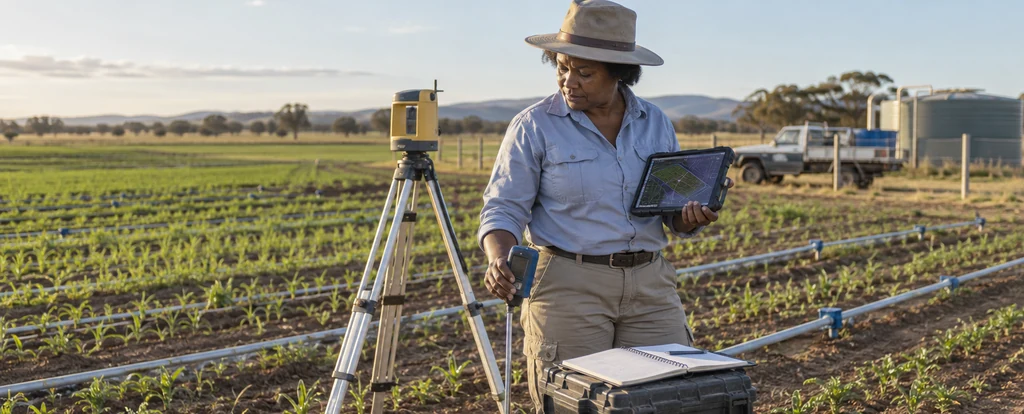
- Walking the site to check water pressure, soil type, slope and how the block is planted
- Sizing pumps, pipes and emitters using hydraulic calculations and design software
- Drafting irrigation plans, specifications and schedules that installers can work from
- Costing the system and preparing quotes, often months ahead of planting season
- Checking the design against water licensing rules and council or environmental requirements
What skills do irrigation designers need?
Employers look for engineering design and analysis, cAD and technical drawing, data analysis, backed by AutoCAD fluency and strong problem solving.
Specialist skills
- Engineering design and analysis
- CAD and technical drawing
- Data analysis
- Project management
- Environmental assessment
- Regulatory compliance
Software and tools
- AutoCAD
- IrriCAD
- HydroCAD
- QGIS
- Microsoft Excel
General skills
- Problem solving
- Written communication
Is the job growing?
About 2,200 people work as irrigation designers in Australia, and employment is projected to grow 7% over the decade to 2035. That's modest growth: demand is steady rather than booming.
How do you become an irrigation designer?
Here's the path most irrigation designers take, step by step.
- 1Finish Year 12 with maths and a science
Engineering, agricultural science and horticulture degrees all assume senior maths, and physics or chemistry helps with the hydraulics and soil subjects later.
- 2Complete a bachelor degree
Agricultural engineering, environmental engineering, agricultural science or horticulture are the usual degrees. Around 52% of people in the role hold a bachelor degree, but it is not the only way in.
- 3Or build up from a diploma and field experience
A diploma in irrigation, horticulture or civil construction plus a few years as an irrigation technician is a common route, and the practical knowledge carries into design work.
- 4Learn the design software
AutoCAD, IrriCAD and QGIS are standard, and most people pick them up on the job or through short TAFE courses rather than in a degree.
- 5Consider certification
Irrigation Australia runs a certification program for designers, and some councils, specifiers and large growers ask for it on tenders.
Ready to apply as an irrigation designer?
Whether you're working toward becoming an irrigation designer or already are one and want a hand with the next step (sharpening your resume for ATS screening, tightening your cover letter, or knowing what you'll actually be asked at interview), here are examples grounded in this specific role, not generic templates.
What jobs can an irrigation designer move to?
Moving into Environmental Engineer typically comes with the biggest pay rise, worth $46,700 a year more on average.
| Move to | Typical pay change | Overlap | Retraining |
|---|---|---|---|
| Environmental Engineer Irrigation designers bring water system planning and efficiency expertise to environmental engineering roles, though a degree is required. | +$46,700 | 62% | requalify |
| Agricultural Engineer Irrigation designers bring practical water delivery and crop water needs knowledge to agricultural engineering, though a degree is required. | +$13,000 | 50% | requalify |
Moves are chosen from Jobs and Skills Australia's Data on Occupation Mobility, which follows income tax records between 2011-12 and 2020-21, together with entry requirements and skill overlap. A known move is one people were seen making in that data. Pay change compares median full-time pay for the two roles.
Who works as an irrigation designer?
The typical irrigation designer is 45 years old; 80% are men, 85% work full-time, and full-timers average 40 hours a week.
- 45
- Median age
- 20%
- Female share
- 85%
- Full-time
- +0h
- vs all-jobs avg
What's it like being an irrigation designer?
The job has a steady rhythm of site visits and desk time, with deadlines set by planting seasons, funding rounds and construction schedules. It suits people who enjoy solving a practical problem with numbers and then seeing the system run in the paddock. There is a lot of screen time, so the days out on site tend to be the ones designers look forward to.
What people like
- You can go back and see the system working. Designs are built within months, so you can visit a block you planned and watch the pumps and valves do what the drawings said they would.
- Water savings you can point to. Comparing the old system with the new one often shows a real drop in water use and pumping cost, which is an easy conversation with a grower.
- Every site is different. Soil, slope, water source, crop and budget all change between jobs, so you are rarely repeating the same design twice.
- Technical problem solving. Working out how to get even pressure across a sloping block with a limited water allocation is a genuine puzzle, and the answer is checkable.
What people find hard
- Deadlines bunch around planting season. The system has to be in before the block goes in, so everyone wants their design finished at the same time and the weeks before planting can be long.
- The budget and the ideal design do not always match. A grower may cut the pump or the filtration to save money, and you end up specifying a system you know will underperform.
- Site visits mean heat, dust and driving. Checking a property can take hours on the road and then a walk along the rows in the middle of summer, with the pressure test done on the spot.
- Decisions outside your control. Water allocations, funding rounds and commodity prices can pause a project after the design is finished, and sometimes it never goes ahead.
Based on our synthesis of professional-body surveys and public accounts of the role, not first-person verified reviews.
Which industries employ irrigation designers?
Agriculture, Forestry and Fishing employs the largest share of irrigation designers, followed by Professional, Scientific and Technical Services.
Top employing industries
- 1Agriculture, Forestry and Fishing
- 2Professional, Scientific and Technical Services
- 3Construction
- 4Electricity, Gas, Water and Waste Services
- 5Administrative and Support Services
Ranked by employment share; the source doesn't publish an exact percentage per industry.
| Bachelor degree | 52% | |
|---|---|---|
| Postgraduate | 26% | |
| Diploma / Advanced Diploma | 13% | |
| Other | 9% |
Will AI replace irrigation designers?
Irrigation design sits in the middle: the calculations, modelling and drafting that fill much of the week are increasingly handled by software, and that will continue. What holds the exposure down is the part of the job that happens on site and in conversation, reading a paddock, judging what a crop needs and agreeing a system the client will actually pay for and run.
Share of typical working time by exposure level
- Choosing the system and costing itSupplier catalogues and pricing tools speed up comparisons, but weighing dripline against sprinklers for a specific crop, water allocation and budget is still a judgement the grower expects you to explain.35%moderate
- Site and soil assessmentPressure testing a hydrant, digging a soil pit and checking how a block is planted cannot be done from a desk, and the numbers that come back set up everything else.30%low
- Sizing pipes, pumps and emittersHydraulic software does the calculations in seconds once you enter the flow, pressure and pipe runs, so the designer's work shifts to setting the right inputs and checking the result makes sense.20%high
- Drafting plans and specificationsCAD libraries and IrriCAD templates cut the drawing time sharply, though someone still has to set out the layout and make sure the installer can build from it.15%high
Common questions about becoming an irrigation designer
Straight answers to the questions people ask most.
How much do irrigation designers earn?
Irrigation designers earn $91,000 per year before tax on average, based on full-time workers. Pay depends mostly on the employer, with consultancies and engineering firms paying more than farms and small landscape businesses, and a degree opening the higher bands.
How do you become an irrigation designer?
Most designers come through a bachelor degree in agricultural engineering, environmental engineering, agricultural science or horticulture, then learn the design software on the job. A diploma plus several years as an irrigation technician is a well-worn alternative, and the field knowledge often makes the designs more practical.
Are irrigation designers in demand?
Irrigation designers are currently in shortage in regional areas, and employment is projected to grow 7% over the decade to 2035. Water efficiency rules, drought pressure and the cost of pumping all keep demand for design work steady, and regional roles are often the hardest to fill.
Will AI replace irrigation designers?
Not the whole job. Software already handles pipe sizing, hydraulic modelling and much of the drafting, and that share will keep growing, but someone still has to walk the site, judge what a crop needs and agree a workable system with the person paying for it.
What can irrigation designers move into?
Experienced designers often move into environmental engineering or agricultural engineering, where their water planning knowledge carries across but a degree is required; environmental engineers typically earn $46,700 more and agricultural engineers $13,000 more. Irrigation technicians, horticulturists and landscapers move the other way, bringing installation, plant and site knowledge into design. Many designers also set up their own practice or consultancy, which is often where earnings grow.
Do irrigation designers work outdoors?
Both, with a mix of site visits and office time. Full-time irrigation designers average 40 hours a week, and the balance tips towards the desk on larger projects with detailed drawings and specifications.
Related roles
- Environmental Engineer
- Agricultural Engineer
- Irrigation Technician
- Horticulturist
- Landscaper
- Fisheries Officer
Not sure this is you? Take the career quiz and get a ranked shortlist of roles that fit how you like to work.