Irrigation Technician
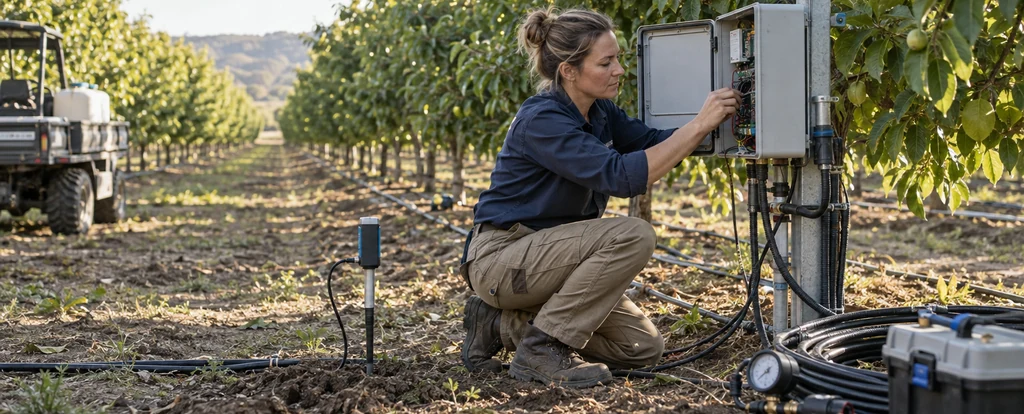
Irrigation technicians install and service the systems that deliver water to crops, gardens and sports fields, keeping plants supplied without wasting water.
- Median salary*
- $75,400
4.0%vs last year, before tax
- People employed
- 1,200
0.0%vs last year
- Projected growth*
- +4%
to 2035
- AI exposure*
- Low
- automation risk
- Average hours*
- 40/wk
matches all-jobs average
- Shortage status*
- In shortage (regional)
national
Most irrigation technicians work for irrigation contractors, farms, councils or sports venues, moving between sites rather than staying in one place. The job overlaps with plumbing and landscaping, but the focus stays narrow: getting water from the source to the plant at the right pressure and rate. The work happens outdoors in most weather, on sites that range from a suburban backyard to a broadacre farm.
How much do irrigation technicians earn?
The median full-time salary for an irrigation technician is $75,400 per annum, before tax, up $15,700 since 2018.
Pay depends a lot on the sector. Local government and sports turf roles usually sit under enterprise agreements with set increments, while farm and horticulture work tends to follow the horticulture award and can include overtime and seasonal hours. Technicians who hold extra qualifications such as backflow prevention or an excavator licence, and those supervising a crew, generally earn more than the middle of the range.
What does an irrigation technician do day to day?
The list below is what fills most weeks; the exact mix shifts with seniority and whatever stage the current work is at.
- Installing pipework, valves, pumps and sprinklers to a design plan
- Programming controllers and adjusting watering schedules as the season changes
- Testing pressure and flow, and checking that soil moisture sensors are reading correctly
- Fault finding and repairing leaks, blocked emitters and failed valves
- Servicing pumps and filters, and working through winter maintenance rounds
What skills do irrigation technicians need?
Employers look for hand and power tool work, installation and maintenance, reading plans and specifications, backed by Irricad fluency and strong problem solving.
Specialist skills
- Hand and power tool work
- Installation and maintenance
- Reading plans and specifications
- Worksite safety management
- Plant and equipment operation
Software and tools
- Irricad
- Rain Bird controllers
- Hunter irrigation controllers
- Netafim drip systems
- Soil moisture sensors
General skills
- Problem solving
- Attention to detail
- Customer service
Is the job growing?
About 1,200 people work as irrigation technicians in Australia, and employment is projected to grow 4% over the decade to 2035. That's modest growth: demand is steady rather than booming.
How do you become an irrigation technician?
Here's the path most irrigation technicians take, step by step.
- 1Complete a construction induction course
The White Card is required before you can work on a building site, and most irrigation contractors will not send you out without one. It takes about a day and can be done online or in person.
- 2Start a Certificate III in Irrigation Technology
TAFE and several registered training organisations offer this qualification, often through a traineeship or apprenticeship with an irrigation contractor. It usually takes around three years part time while you work, and covers hydraulics, pipe systems, pumps, controllers and water efficiency.
- 3Get on the tools as a trade assistant
Many people enter through labouring for an irrigation or landscaping business, or through a council parks and gardens team. That gives you trenching, pipe fitting and controller experience while you decide whether to commit to the qualification.
- 4Add the licences and qualifications employers ask for
An excavator or forklift licence, working at heights, confined space and backflow prevention accreditation all open up more of the work, particularly on commercial and council jobs.
- 5Look at certification through Irrigation Australia
The industry body runs a certified irrigation technician program for people with several years in the trade. It is not compulsory, but it helps if you want to move into supervisory, auditing or design-facing work.
Ready to apply as an irrigation technician?
Whether you're working toward becoming an irrigation technician or already are one and want a hand with the next step (sharpening your resume for ATS screening, tightening your cover letter, or knowing what you'll actually be asked at interview), here are examples grounded in this specific role, not generic templates.
What jobs can an irrigation technician move to?
Moving into Irrigation Designer typically comes with the biggest pay rise, worth $15,600 a year more on average.
| Move to | Typical pay change | Overlap | Retraining |
|---|---|---|---|
| Irrigation Designer Practical installation and system knowledge carries into designing irrigation layouts, with further study in hydraulics and drafting. | +$15,600 | 3% | reskill |
| Pipelayer Pipe laying and trenching experience applies to irrigation installation, with a short course covering drainage and water supply standards. | +$2,600 | 84% | short course |
| Greenkeeper Experience maintaining sports field watering systems carries into turf care, though greenkeeping requires a new apprenticeship. | +$900 | 64% | requalify |
| Landscaper Irrigation installation skills transfer to garden landscaping, with a short course covering planting, paving and project work. | −$10,400 | 56% | short course |
Moves are chosen from Jobs and Skills Australia's Data on Occupation Mobility, which follows income tax records between 2011-12 and 2020-21, together with entry requirements and skill overlap. A known move is one people were seen making in that data. Pay change compares median full-time pay for the two roles.
Who works as an irrigation technician?
The typical irrigation technician is 43 years old; 98% are men, 83% work full-time, and full-timers average 40 hours a week.
- 43
- Median age
- 2%
- Female share
- 83%
- Full-time
- +0h
- vs all-jobs avg
What's it like being an irrigation technician?
The job follows a seasonal rhythm: installation work builds through spring and summer, while winter is given over to repairs, upgrades and servicing. Days are physical and practical, with a mix of solo site work and short stints alongside a crew or an apprentice. It suits people who like diagnosing a problem by hand and seeing a system run properly at the end of it.
What people like
- Outdoor work that changes site to site. One week you are on a golf course, the next on an orchard or a new housing estate, so the setting and the problems change constantly.
- You can see the system working. A zone that ran dry or a pump that kept cutting out is fixed, tested and left running, which gives you a clear finish to the day.
- The technical side keeps moving. Controllers, soil moisture sensors and drip systems are getting more capable, so there is always something new to learn about how water behaves in different soils.
- Water efficiency is part of the brief. Clients increasingly want to use less water for the same result, so your recommendations on emitters, zoning and scheduling carry real weight.
What people find hard
- Weather and ground conditions. Summer installation work is hot, and winter repairs mean wet trenches, heavy clay and mud that sticks to everything.
- Digging around other people's work. Older sites have pipes, cables and irrigation lines in places no plan shows, and finding them by hand slows the job down.
- Seasonal swings. New installs cluster in the warmer months, so hours can be long in spring and thin in winter, depending on the employer.
- Travel between jobs. Agricultural and regional work can mean long drives between properties, with the vehicle loaded and the day starting early.
Based on our synthesis of professional-body surveys and public accounts of the role, not first-person verified reviews.
Which industries employ irrigation technicians?
Agriculture and horticulture employs the largest share of irrigation technicians, followed by Landscape and garden services.
Top employing industries
- 1Agriculture and horticulture
- 2Landscape and garden services
- 3Building construction
- 4Local government
- 5Sports and recreation
Ranked by employment share; the source doesn't publish an exact percentage per industry.
| Certificate III/IV | 34% | |
|---|---|---|
| Diploma / Advanced Diploma | 26% | |
| Bachelor degree | 20% | |
| Year 12 or below | 20% |
Will AI replace irrigation technicians?
Irrigation work rates low for AI exposure because most of it happens in the ground: trenching, laying pipe, fitting valves and finding the fault when a pump or zone fails. Software already handles part of the thinking, with design packages such as Irricad and controller apps that adjust schedules from weather and soil data, but someone still has to survey the site, build the system and repair what breaks.
Share of typical working time by exposure level
- Laying pipe and fitting valves and sprinklersTrenching, cutting and joining pipe runs depends on soil, slope and what is already buried on site, none of which a model can feel from a desk.35%low
- Fault finding and repairsController logs and flow readings might point to the right zone, but a pump that keeps tripping or a line losing pressure still has to be traced by hand.30%low
- Programming controllers and setting schedulesApps can build a watering schedule from weather and soil moisture data, though someone has to check it against the plant type, the soil and the pressure at the outlet.20%moderate
- Site assessment and water efficiency checksGauges measure flow and pressure accurately, but deciding whether a system needs re-zoning or a different emitter comes from having seen similar sites perform badly.15%moderate
Common questions about becoming an irrigation technician
Straight answers to the questions people ask most.
How much does an irrigation technician earn?
The median full-time pay for irrigation technicians is $75,400 per year before tax. Local government and sports turf roles usually pay to an enterprise agreement, while farm work varies with the award, overtime and how much of the year you are on installation rather than service.
How do you become an irrigation technician?
Most people start as a trade assistant with an irrigation, landscaping or council crew, then work through a Certificate III in Irrigation Technology (AHC32424) as a traineeship or apprenticeship. You will need a White Card before you set foot on a construction site, and additional licences such as a high risk work licence for excavator operation or backflow prevention accreditation help once you are established.
Are irrigation technicians in demand?
Irrigation technicians are currently in shortage in regional areas, and employment is projected to grow 4% over the decade to 2035. With about 1,200 people in the role across the country, demand is concentrated in agricultural regions and in councils and sports venues maintaining existing systems.
Will AI or automation replace irrigation technicians?
No, and the exposure here is genuinely low, because most of the job involves digging, fitting, testing and repairing things in the ground. Controller apps and soil moisture sensors can build and adjust watering schedules, but someone still has to survey the site, set the system up and find the break when a zone stops working.
What can an irrigation technician move into?
Design work is a common step and pays $15,600 more, usually after further study in hydraulics and drafting. Pipelaying uses much of the same trenching and pipe knowledge and pays $2,600 more, while greenkeeping shares the turf and watering side of the work and pays $900 more once you complete the apprenticeship. Experienced technicians also start their own contracting businesses, which is often where earnings grow.
Is irrigation work seasonal?
Installation work peaks through spring and summer, when new systems go in and existing ones are running hard, while winter is busier with repairs, upgrades and servicing. Employers who do both installation and maintenance can usually offer steadier hours across the year than those who only install.
Related roles
Not sure this is you? Take the career quiz and get a ranked shortlist of roles that fit how you like to work.