Makeup Artist
Makeup artists design and apply cosmetics to give a client the look an occasion calls for, whether that's a wedding, a photo shoot, a stage performance or a night out.
- Median salary*
- $49,400
3.8%vs last year, before tax
- People employed
- 2,000
0.0%vs last year
- Projected growth
- +8.3%
to 2035
- AI exposure*
- Low
- automation risk
- Average hours
- 36/wk
−4h vs all jobs
- Shortage status
- Not in shortage
national
Makeup artists work wherever a face needs finishing: bridal parties getting ready at dawn, fashion runways, film and television sets, cosmetics counters, and a home studio or a client's lounge room for those who freelance. The job is about colour matching, blending and finish rather than skin treatments, which is where it sits closest to beauty therapy. Many work for themselves, so quoting, booking and keeping a client list run alongside the makeup itself.
How much do makeup artists earn?
The median full-time salary for a makeup artist is $49,400 per annum, before tax, up $10,200 since 2018.
How you work shapes the pay more than anything else: a counter or salon job pays a wage, often with commission on product sales, while freelance work is priced per booking and rises with your client list. Wedding and event season bunches the work into warmer months, and screen work is usually negotiated per production. Brushes, products and sanitising supplies come out of your own money in either case.
What does a makeup artist do day to day?
The list below is what fills most weeks; the exact mix shifts with seniority and whatever stage the current work is at.
- Consulting with a client about the look they want, the occasion and how long it needs to last
- Preparing skin so makeup sits properly, including cleansing, priming and colour matching
- Applying makeup with brushes, sponges and airbrush for bridal, editorial, runway or screen looks
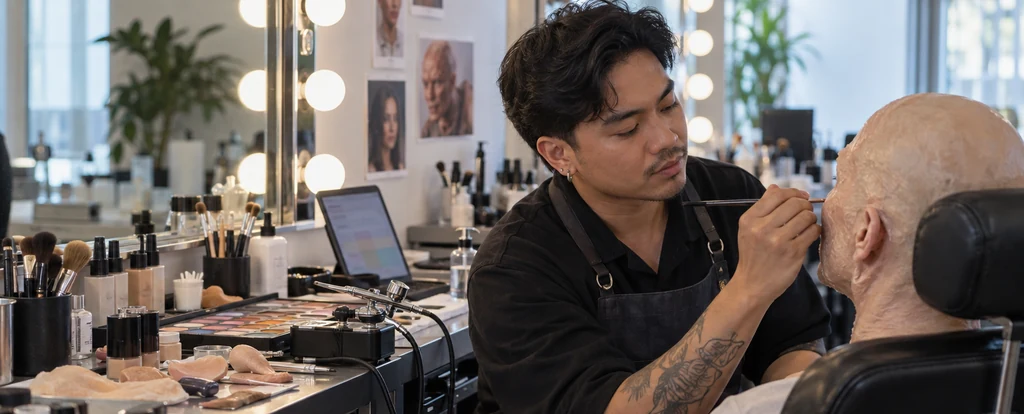
- Building wounds, prosthetics and character effects for film, television and theatre
- Cleaning brushes, sanitising tools and restocking the kit between clients
What skills do makeup artists need?
Employers look for personal care services, hair and beauty services, visual design, backed by Makeup brushes and tools fluency and strong client relationships and advisory.
Specialist skills
- Personal care services
- Hair and beauty services
- Visual design
Software and tools
- Makeup brushes and tools
- Airbrush makeup kit
- Prosthetic and special effects materials
- Sanitising products
- Booking and scheduling software
General skills
- Client relationships and advisory
- Written communication
- Attention to detail
- Customer service
Is the job growing?
About 2,000 people work as makeup artists in Australia, and employment is projected to grow 8.3% over the decade to 2035. That's modest growth: demand is steady rather than booming.
How do you become a makeup artist?
Here's the path most makeup artists take, step by step.
- 1Start with a makeup qualification
A Certificate III in Makeup or a shorter private course covers skin preparation, colour theory and hygiene, and usually takes a few months to a year. It is the quickest route to a first paying client, and it teaches the sanitation standards salons, retailers and sets expect.
- 2Build a portfolio on real faces
Photograph work as you finish it, on a range of skin tones and face shapes rather than only your own, and keep the images current. Clients and employers generally choose on the strength of the portfolio rather than the certificate.
- 3Get paid experience
Assist an established artist on wedding days, shoots or backstage work, or take a role on a cosmetics counter. Both pay a wage while you build speed, learn how products behave under pressure and meet the people who refer work.
- 4Choose a direction and add training
Bridal, editorial, airbrushing, screen and prosthetics each need their own practice, and short courses exist for most of them. Specialising is how a freelance artist raises prices and gets repeat bookings.
- 5Set up as a business if you freelance
Freelance artists need an ABN, public liability insurance and a booking system, plus a mobile kit if you travel to clients. Registering these before the first invoice avoids trouble later.
Ready to apply as a makeup artist?
Whether you're working toward becoming a makeup artist or already are one and want a hand with the next step (sharpening your resume for ATS screening, tightening your cover letter, or knowing what you'll actually be asked at interview), here are examples grounded in this specific role, not generic templates.
What jobs can a makeup artist move to?
Moving into Store Manager typically comes with the biggest pay rise, worth $34,800 a year more on average.
| Move to | Typical pay change | Overlap | Retraining |
|---|---|---|---|
| Store Manager Cosmetics counter experience and product knowledge suit retail management, though broader store operations and rosters need management training.Known move | +$34,800 | 4% | reskill |
| Beauty Therapist Makeup artists already handle colour, skin preparation and client care, so beauty therapy builds on this with formal skin treatment training.Known move | +$11,900 | 71% | reskill |
| Dermal Therapist Skincare knowledge and treatment room manner carry into dermal therapy, which requires diploma study in skin science.Known move | +$10,400 | 35% | reskill |
| Eyelash Technician Precise work around the eyes and gentle client handling carry into lash application, with only a short course needed.Known move | +$1,600 | 53% | short course |
| Nail Technician Fine motor skills and salon client service transfer to nail work, which needs only a short course in nail technology.Known move | +$0 | 47% | short course |
Moves are chosen from Jobs and Skills Australia's Data on Occupation Mobility, which follows income tax records between 2011-12 and 2020-21, together with entry requirements and skill overlap. A known move is one people were seen making in that data. Pay change compares median full-time pay for the two roles.
Who works as a makeup artist?
The typical makeup artist is 31 years old; 96% are women, 22% work full-time, and full-timers average 36 hours a week.
- 31
- Median age
- 96%
- Female share
- 22%
- Full-time
- −4h
- vs all-jobs avg
What's it like being a makeup artist?
Days start early when a wedding is involved and run long when a shoot overruns, so the work suits someone who likes variety and can stay steady while a client watches the clock. Much of it happens standing, leaning in close, and reading how someone feels about what they see in the mirror. Between bookings there is the quieter work of answering enquiries, cleaning brushes and keeping the kit stocked.
What people like
- Seeing a look land. The moment a client sees the finished face and relaxes is the reason many artists stay in the job, and it happens on almost every booking.
- Variety in the week. A bridal party, a drag performer and a film extra can all be on the same calendar, each wanting something different from the same kit.
- Creative control on your own bookings. Freelance artists choose the jobs, set the look and name the price, which is more say than most service roles allow.
- Tangible results you can photograph. Every job produces something you can see and show, which makes building a portfolio and moving between markets straightforward.
What people find hard
- Income that arrives in waves. Freelance bookings cluster around wedding season and quiet weeks come without warning, which makes budgeting harder than a salaried job.
- Kit costs that never stop. Brushes, foundation shades, disposables and sanitising supplies are bought with your own money and replaced constantly.
- Early starts and long days. Bridal work can mean a 5am start, and a shoot day runs until the last look is wrapped and the kit is packed.
- Physical strain on hands and back. You stand and lean in for hours at a time, and repetitive brushwork takes a toll on wrists, shoulders and eyes.
Based on our synthesis of professional-body surveys and public accounts of the role, not first-person verified reviews.
Which industries employ makeup artists?
Other Services employs the largest share of makeup artists, followed by Retail Trade.
Top employing industries
- 1Other Services
- 2Retail Trade
- 3Information Media and Telecommunications
Ranked by employment share; the source doesn't publish an exact percentage per industry.
| Diploma / Advanced Diploma | 37.8% | |
|---|---|---|
| Certificate III/IV | 22.2% | |
| Year 12 or below | 19.2% | |
| Bachelor degree | 13.3% | |
| Postgraduate | 2.2% |
Will AI replace makeup artists?
This is a low-exposure job, because the work happens on a living face: matching foundation to a skin tone, working around an eye shape and keeping a client comfortable while the clock runs. Booking software, accounting tools and AI-drafted captions have absorbed much of the admin around the makeup, and they have not changed the application itself.
Share of typical working time by exposure level
- Applying makeup on the dayBlending, correcting and adjusting under time pressure happens by hand on a client who blinks, talks and sometimes cries.45%low
- Client consultations and look planningReading a face, a skin tone and an occasion is a conversation about what will actually suit that person, which reference images and style apps can inform but not settle.20%low
- Special effects, prosthetics and character workSculpting a wound or fitting a prosthetic piece to a performer's face is done and fitted manually, with 3D printing used mainly to produce the moulds beforehand.20%low
- Bookings, quotes and social mediaScheduling tools, automated reminders and AI-written captions handle a good share of the admin, though pricing a job and choosing which images to post still come down to you.15%moderate
Common questions about becoming a makeup artist
Straight answers to the questions people ask most.
How much do makeup artists earn?
Makeup artists earn $49,400 per annum before tax for full-time work, and median figures are a guide rather than a promise. Pay moves with how you work: freelance artists set their own rates and earn more in busy wedding and event periods, while counter and salon roles pay a wage plus commission on product sales.
How do you become a makeup artist?
Most people start with a Certificate III in Makeup or a short private course, then build a portfolio and a client list through assisted jobs and retail counter work. No licence is required in Australia, so your images and word of mouth do most of the hiring. Specialising in bridal, screen or prosthetics work usually comes later, after a few years on real bookings.
Are makeup artists in demand?
Makeup artists are currently not in shortage, and employment is projected to grow 8.3% over the decade to 2035 over the decade to 2035. Work comes through weddings, events, retail counters and screen production, so the practical question is how much of that activity exists where you live. Building relationships with photographers, hairdressers and venues is often what fills a quiet calendar.
Will AI replace makeup artists?
The hands-on core of this job rates low for AI exposure, because colour matching, blending and adjusting to a real, moving face are done by hand and in person. Booking apps, automated reminders and AI-written captions have taken over much of the admin around the work. Style apps can suggest a look, but they do not apply it or read how a client feels about it.
What other jobs can a makeup artist move into?
Beauty therapy is a common move, since skin knowledge and client consultation carry across, and beauty therapists earn $11,900 more. Dermal therapy pays $10,400 more but needs diploma study in skin science. Many makeup artists instead grow their own freelance business, which is often where earnings increase.
How do makeup artists find clients?
Word of mouth does most of it, helped by posting consistent photos of finished work and asking happy clients for reviews and referrals. Photographers, hairdressers and wedding venues pass on a large share of bookings, so those relationships are worth maintaining. A clear price list and quick replies to enquiries make a difference when several artists are quoting the same job.
Related roles
Not sure this is you? Take the career quiz and get a ranked shortlist of roles that fit how you like to work.