Home Manufacturing & Production
Metal Machinist
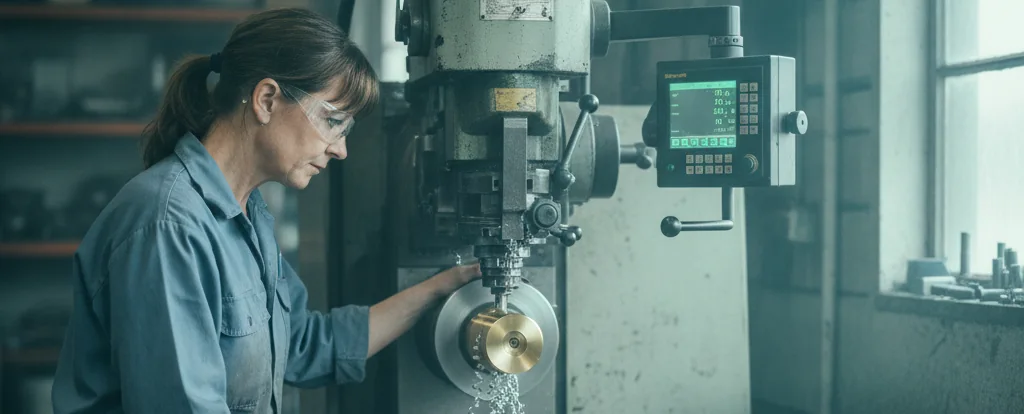
Metal machinists set up and run lathes, mills and CNC machines to cut metal stock and castings into parts that hold to exact tolerances.
- Median salary
- $135,500
4.2%vs last year, before tax
- People employed
- 119,900
0.8%vs last year
- Projected growth
- +7.2%
to 2035
- AI exposure*
- Moderate
- automation risk
- Average hours
- 50/wk
+10h vs all jobs
- Shortage status
- In shortage
national
Metal machinists work from technical drawings and specifications, selecting tools and cutting parameters before running a lathe, mill or CNC machine to shape metal to size. Most work in manufacturing plants, mining workshops or specialist machine shops, often producing or repairing parts that keep other equipment running. The role sits close to fabrication and toolmaking, but a machinist's work is defined by removing material to a precise measurement rather than welding structures or building tools from scratch.
How much do metal machinists earn?
The median full-time salary for a metal machinist is $135,500 per annum, before tax, up $28,500 since 2018.
Most machinists are paid under the manufacturing award or, in larger plants and mine sites, an enterprise agreement that sets rates by classification and shift. Overtime and shift penalties make a real difference to weekly earnings, and rates climb with CNC programming, setup and first-class trade skills. Small jobbing shops generally pay less than heavy manufacturing, mining and defence work.
What does a metal machinist do day to day?
The list below is what fills most weeks; the exact mix shifts with seniority and whatever stage the current work is at.
- Setting up jobs from technical drawings, dialling in tolerances before the first cut
- Running CNC and manual lathes and mills through repeat batches, watching for drift as tools wear
- Checking finished parts against the drawing with micrometers and gauges, and re-cutting anything out of tolerance
- Swapping tooling, clearing swarf and keeping machines running through a noisy, oily shift
- Troubleshooting a program or a part that is coming out wrong before a whole batch is scrapped
What skills do metal machinists need?
Employers look for reading plans and specifications, plant and equipment operation, fabrication and finishing, backed by CNC lathe fluency and strong attention to detail.
Specialist skills
- Reading plans and specifications
- Plant and equipment operation
- Fabrication and finishing
- Hand and power tool work
- Worksite safety management
Software and tools
- CNC lathe
- Vertical milling machine
- Precision calipers
- CAM software
- Digital readout systems
General skills
- Attention to detail
- Problem solving
Is the job growing?
About 119,900 people work as metal machinists in Australia, and employment is projected to grow 7.2% over the decade to 2035. That's modest growth: demand is steady rather than booming.
How do you become a metal machinist?
Here's the path most metal machinists take, step by step.
- 1Start with a Certificate III in Engineering (Mechanical Trade)
This is the trade qualification employers ask for, and it is normally completed through an apprenticeship rather than paid for up front. TAFE study covers machining, measurement, drawing interpretation and safety alongside workshop time.
- 2Get an apprenticeship, which is paid work from day one
A machining apprenticeship runs about four years and combines supervised workshop hours with your TAFE blocks. Group training organisations can place you with a host employer if you cannot find a shop willing to take on an apprentice directly.
- 3Learn manual machines before moving onto CNC
Most shops start apprentices on lathes and mills because you need to feel what a cut does to a particular grade of steel before you can trust a program. Manual work also stays part of the job for one-offs and repairs.
- 4Add CNC programming and CAM skills
Post-trade courses at TAFE or in-house training take you from operating a machine to setting it up and writing or editing the program. This is where responsibility and pay usually step up.
- 5Consider a diploma or degree later if you want to move off the tools
A diploma in engineering technology or a mechanical engineering degree opens technician, planning and design roles. The degree is a substantial commitment and normally needs to be done part time while you keep working.
Ready to apply as a metal machinist?
Whether you're working toward becoming a metal machinist or already are one and want a hand with the next step (sharpening your resume for ATS screening, tightening your cover letter, or knowing what you'll actually be asked at interview), here are examples grounded in this specific role, not generic templates.
What jobs can a metal machinist move to?
Moving into Mechanical Engineer typically comes with the biggest pay rise, worth $400 a year more on average.
| Move to | Typical pay change | Overlap | Retraining |
|---|---|---|---|
| Mechanical Engineer Machining experience informs design for manufacture, but a mechanical engineering degree is required to move into engineering.Known move | +$400 | 6% | requalify |
| Maintenance Planner Hands-on machinery experience helps plan maintenance schedules, with additional training in planning and scheduling.Known move | −$35,700 | 3% | reskill |
| Mechanical Engineering Technician Machining knowledge supports setting up and testing mechanical systems, with further study in engineering technology.Known move | −$41,900 | 17% | reskill |
| Metal Fabricator Precision machining and metal trade skills carry into fabrication work, with retraining in welding and structural assembly.Known move | −$47,700 | 70% | reskill |
| Toolmaker Precision machining and toolroom skills carry into making jigs and dies, with additional toolmaking training.Known move | −$70,500 | 61% | reskill |
Moves are chosen from Jobs and Skills Australia's Data on Occupation Mobility, which follows income tax records between 2011-12 and 2020-21, together with entry requirements and skill overlap. A known move is one people were seen making in that data. Pay change compares median full-time pay for the two roles.
Who works as a metal machinist?
The typical metal machinist is 40 years old; 96% are men, 94% work full-time, and full-timers average 50 hours a week.
- 40
- Median age
- 4%
- Female share
- 94%
- Full-time
- +10h
- vs all-jobs avg
What's it like being a metal machinist?
Machining is a shift-length job in a workshop: you set up, run, measure and repeat, with most of the day spent standing at a machine rather than moving between tasks. Full-time machinists average about 50 hours a week, and production shops and mine sites commonly run shifts and weekend overtime. The pressure comes from tolerance and deadline, because one wrong offset can scrap a casting that took weeks to arrive, and the reward is a part that fits first time.
What people like
- A part that fits first time. Measuring a finished component and finding it on size, with the surface finish you wanted, is the clearest sign the setup and the cutting parameters were right.
- Working out why a cut is going wrong. Chatter, a tool wearing faster than expected or a program that ran fine yesterday all have causes, and finding them is the problem-solving part of the trade.
- Machines rather than meetings. The work is hands-on and fairly self-contained, so you can concentrate on a job and finish the shift with something made.
- Skills that travel. Trade knowledge moves between a small jobbing shop, a mine site, a food plant and a defence contractor, and the same qualification is recognised across them.
What people find hard
- Noise, coolant and swarf. Workshops are loud and oily places, and you spend the shift on your feet on concrete with hearing protection on.
- Long production runs. Some jobs mean the same part for days on end, checking every tenth piece, which can get tedious.
- One mistake is expensive. Taking too much off a casting or a finished part can scrap it, and if it was a long-lead item the customer feels that immediately.
- Shift work and weekend overtime. Mines and larger plants run around the clock, so night shift, rotating rosters and Saturday work are common in those settings.
Based on our synthesis of professional-body surveys and public accounts of the role, not first-person verified reviews.
Which industries employ metal machinists?
Manufacturing employs the largest share of metal machinists, followed by Mining.
Top employing industries
- 1Manufacturing
- 2Mining
- 3Other Services
Ranked by employment share; the source doesn't publish an exact percentage per industry.
| Certificate III/IV | 75.4% | |
|---|---|---|
| Year 12 or below | 14.7% | |
| Diploma / Advanced Diploma | 5.2% | |
| Bachelor degree | 2.2% | |
| Postgraduate | 0.5% |
Will AI replace metal machinists?
Machining sits in the middle: CAM software now works out toolpaths and simulates cuts from a model, and in-machine probing measures parts without anyone stopping the job, so the programming and checking side of the trade is partly automated. What is not automated is how a job gets held, how a tool behaves in a particular grade of steel, and what a worn or broken component needs before it can be remade. Repair and one-off work are the least exposed, because there is often no clean model to machine from.
Share of typical working time by exposure level
- Programming and setting up CNC jobsCAM software turns a model into a toolpath, but the machinist still chooses the workholding, sets the offsets and proves the first part before the batch runs.30%moderate
- Manual lathe and mill work on one-offs and repairsA worn shaft or a broken bracket often arrives with no drawing, so the machinist measures the old part and decides the cuts from there.25%low
- Job planning, quoting and ordering materialSoftware can estimate cycle times and material costs quickly, though the number still depends on how the job will actually be held and cut.25%high
- Measuring finished parts and deciding if they passProbing and digital gauges do much of the measuring, but someone still judges when a reading is drifting and what to do about it.20%moderate
Moves least exposed to AI
These career moves from metal machinist work are rated low for AI exposure:
- Metal Fabricator
High skill overlap (70%), reskill to get there, and a low automation-risk profile.
Common questions about becoming a metal machinist
Straight answers to the questions people ask most.
How much does a metal machinist earn?
Metal machinists earn a median of $135,500 per year before tax, based on full-time workers. Pay rises with CNC programming and setup skills, with shift and overtime work, and in sectors such as mining and heavy manufacturing.
How do you become a metal machinist?
The usual route is a four-year apprenticeship that combines paid workshop time with a Certificate III in Engineering (Mechanical Trade) at TAFE. Around 75% of machinists currently hold Certificate III/IV as their highest qualification. Some people start as a machine operator or trades assistant and move into an apprenticeship once they have workshop experience.
Are metal machinists in demand?
Metal machinists are currently in shortage nationally, so trade-qualified people with CNC experience are hard for employers to find. Employment is projected to grow 7.2% over the decade to 2035, and the work is spread across manufacturing, mining and repair workshops rather than sitting in one industry.
Will AI replace metal machinists?
Machining has moderate exposure rather than a high one. CAM software generates toolpaths and simulates cuts, and in-machine probing measures parts automatically, which takes over some programming and checking, while setup, workholding, repair work and the decision that a part passes still sit with the machinist.
What can a metal machinist move into?
Machinists commonly move sideways within the metal trades, or into maintenance planning and engineering. Maintenance planning uses the same machinery knowledge, in scheduling and spares rather than at the machine, and the pay is $35,700 less. Mechanical engineering needs a degree and shifts the work to design and analysis, and some experienced machinists set up their own machine shop or jobbing workshop, which is often where earnings grow.
Related roles
- Metal Fabricator
- Mechanical Engineering Technician
- Maintenance Planner
- Mechanical Engineer
- Toolmaker
- Metal Trades Assistant
Not sure this is you? Take the career quiz and get a ranked shortlist of roles that fit how you like to work.