Home Manufacturing & Production
Toolmaker
Toolmakers make and repair the dies, jigs, moulds and fixtures that other machines use to produce parts to exact tolerances.
- Median salary*
- $65,000
3.8%vs last year, before tax
- People employed
- 2,000
0.0%vs last year
- Projected growth
- +10.3%
to 2035
- AI exposure*
- Moderate
- automation risk
- Average hours
- 42/wk
+2h vs all jobs
- Shortage status
- In shortage
national
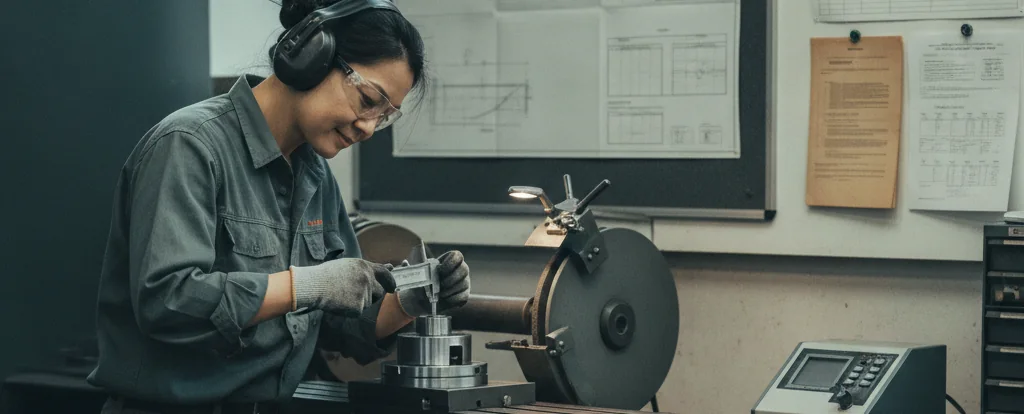
Toolmakers work in a tool room attached to a factory or in a specialist toolmaking shop, moving between CAD software, CNC machines and the bench within the same job. The role is often confused with a metal machinist's, but a toolmaker builds the tooling that a machinist or press operator later uses to turn out parts in volume. Most are employed in manufacturing, with smaller numbers in wholesale trade and equipment servicing.
How much do toolmakers earn?
The median full-time salary for a toolmaker is $65,000 per annum, before tax, up $13,500 since 2018.
Pay follows the trade qualification and the precision of the work, so toolmakers who program CNC machines, build micro-tooling or hold specialist die and mould skills tend to earn more than those doing routine maintenance. Shift work, overtime and enterprise agreements in larger manufacturing plants lift the total, and with average full-time hours around 42 a week, some of that difference shows up as penalties rather than base rate. A small general engineering shop and a tool room supplying medical or aerospace customers also pay on different scales.
What does a toolmaker do day to day?
The list below is what fills most weeks; the exact mix shifts with seniority and whatever stage the current work is at.
- Machining dies, jigs and mould components to tolerances measured in microns
- Hand-fitting and polishing tooling until the moving parts run true
- Reading drawings and CAD files to plan a fabrication sequence before cutting the first piece
- Diagnosing why a production tool is wearing, cracking or drifting out of specification
- Rebuilding or modifying tooling to get more life or output out of it
What skills do toolmakers need?
Employers look for reading plans and specifications, cAD and technical drawing, fabrication and finishing, backed by CNC milling machines fluency and strong problem solving.
Specialist skills
- Reading plans and specifications
- CAD and technical drawing
- Fabrication and finishing
- Plant and equipment operation
- Hand and power tool work
- Engineering design and analysis
Software and tools
- CNC milling machines
- CAD software (AutoCAD, Fusion 360)
- Precision calipers and micrometers
- Tool and cutter grinders
- Surface grinding machines
General skills
- Problem solving
- Attention to detail
Is the job growing?
About 2,000 people work as toolmakers in Australia, and employment is projected to grow 10.3% over the decade to 2035. That's healthy, above-average growth, and the role should stay in solid demand.
How do you become a toolmaker?
Here's the path most toolmakers take, step by step.
- 1Finish Year 10 or Year 12 with solid maths
Most employers ask for Year 10 completion with reasonable maths, and a pre-apprenticeship course or Year 12 can help you win a placement in a competitive intake.
- 2Start a toolmaking apprenticeship
The usual entry is a paid apprenticeship combining a Certificate III in Engineering (Mechanical Trade) with workshop training in a tool room, generally over three to four years.
- 3Get your trade qualification signed off
Once you complete the apprenticeship you are a qualified toolmaker. Toolmaking is not a licensed occupation in Australia, so there is no registration step after the trade.
- 4Add CAD and CNC programming
Many employers expect you to generate and check toolpaths, so a short course or post-trade certificate in CAD or CAM widens the work you can take on.
- 5Specialise or move into tool design
A Diploma of Engineering (Advanced Trade) or drafting studies can lead into designing tooling, estimating jobs or supervising a tool room.
Ready to apply as a toolmaker?
Whether you're working toward becoming a toolmaker or already are one and want a hand with the next step (sharpening your resume for ATS screening, tightening your cover letter, or knowing what you'll actually be asked at interview), here are examples grounded in this specific role, not generic templates.
What jobs can a toolmaker move to?
Moving into Metal Machinist typically comes with the biggest pay rise, worth $70,500 a year more on average.
| Move to | Typical pay change | Overlap | Retraining |
|---|---|---|---|
| Metal Machinist Toolmakers bring precision machining and fitting skills to metal machinist work, with retraining to cover the full range of machining operations.Known move | +$70,500 | 61% | reskill |
| Fitter and Turner Toolmakers bring machining and fitting skills to fitter and turner work, with retraining in broader assembly and maintenance tasks. | +$20,800 | 54% | reskill |
| Engineering Patternmaker Toolmakers bring mould and die knowledge to patternmaking, with retraining in pattern construction and casting preparation. | +$17,200 | 61% | reskill |
| Precision Instrument Maker Toolmakers bring fine metalworking and precision fitting to instrument making, with retraining in delicate assembly and calibration. | +$13,000 | 61% | reskill |
| Foundry Moulder Toolmakers bring mould-making experience to foundry work, with retraining in casting processes and molten metal handling. | +$5,200 | 61% | reskill |
Moves are chosen from Jobs and Skills Australia's Data on Occupation Mobility, which follows income tax records between 2011-12 and 2020-21, together with entry requirements and skill overlap. A known move is one people were seen making in that data. Pay change compares median full-time pay for the two roles.
Who works as a toolmaker?
The typical toolmaker is 53 years old; 99% are men, 87% work full-time, and full-timers average 42 hours a week.
- 53
- Median age
- 1%
- Female share
- 87%
- Full-time
- +2h
- vs all-jobs avg
What's it like being a toolmaker?
Tool room work runs in projects rather than shifts of identical parts: you study the drawing, machine the components, then fit and test the tool until it produces good parts. Most of the day is spent at a machine or a bench with a micrometer within reach, interrupted when a tool on the production floor fails and needs diagnosing. It tends to suit people who like precision and quiet problem-solving, and who are content that the reward for careful work is often that nothing goes wrong.
What people like
- Holding a tolerance almost nobody else can. Fitting a punch to its die with a clearance of a few microns, then measuring it true, is a skill you can see the result of.
- Seeing a job through from drawing to finished tool. You plan the sequence, machine the parts, fit them and test the tool in the press, so the whole job stays with you.
- Solving a problem that has stopped the line. When a die cracks mid-run, the toolmaker is the person who works out why and gets production moving again.
- Your work sets the pace downstream. The quality and life of the tooling decides how fast and how accurately everyone else can make parts.
What people find hard
- A scrapped die is an expensive mistake. A miscut block of hardened steel can waste days of machining and hundreds of dollars of material before anything is finished.
- Pressure when a tool fails in production. A press that is down costs the business by the hour, so repairs get done under time pressure and often outside ordinary hours.
- Maintenance and rework can dominate. Repairing worn tooling is a large part of the job, and it is less interesting than building something new from a drawing.
- Workshop conditions. Coolant, noise, metal dust and long stretches standing at a machine are part of most tool rooms.
Based on our synthesis of professional-body surveys and public accounts of the role, not first-person verified reviews.
Which industries employ toolmakers?
Manufacturing employs the largest share of toolmakers, followed by Other Services.
Top employing industries
- 1Manufacturing
- 2Other Services
- 3Wholesale Trade
Ranked by employment share; the source doesn't publish an exact percentage per industry.
| Certificate III/IV | 58.3% | |
|---|---|---|
| Diploma / Advanced Diploma | 17.7% | |
| Year 12 or below | 15.4% | |
| Bachelor degree | 3.5% | |
| Postgraduate | 1% |
Will AI replace toolmakers?
Toolmaking sits in the middle: software now handles much of the drawing, toolpath generation and measurement, which speeds up the front end of a job. What keeps the role grounded is the bench work, where a die is fitted, polished and tested by hand until it produces good parts, and the fault-finding that follows a tool failure in production.
Share of typical working time by exposure level
- Machining die, mould and jig componentsCNC mills, wire cutters and grinders cut to microns under program control, but choosing feeds, holding the workpiece and checking the first part off the machine are still calls a toolmaker makes.35%moderate
- Programming CNC machines and CAM toolpathsCAM software generates most of the cutting path now, so the work leans towards checking the simulation, selecting tooling and proving the setup.25%high
- Hand fitting, polishing and assembling toolingBlending a die face or fitting a punch to its clearance is judged by feel and a micrometer, and general tool rooms have no machine that does it for you.25%low
- Diagnosing and repairing tooling in productionSensors and software can flag a worn tool, but working out why a die is cracking and getting the press running again is on the toolmaker.15%moderate
Common questions about becoming a toolmaker
Straight answers to the questions people ask most.
How much do toolmakers earn?
Toolmakers earn a median of $65,000 per annum before tax, based on full-time workers. That is a middle figure, so experienced toolmakers with CNC programming, die and mould or micro-tooling skills, and those on shift rosters, can be paid more.
How do you become a toolmaker?
The standard route is a paid apprenticeship that combines a Certificate III in Engineering (Mechanical Trade) with hands-on training in a tool room, usually over three to four years. Employers generally look for Year 10 completion with sound maths, and a pre-apprenticeship course or Year 12 helps you compete for a placement.
Are toolmakers in demand in Australia?
Toolmakers are currently in shortage nationally, and employment is projected to grow 10.3% over the decade to 2035. It is a small trade, with about 2,000 people working as toolmakers, so openings are limited at any one time, but the qualification is not quickly replaced once an employer loses it.
Will AI replace toolmakers?
AI and automation are changing parts of the job rather than removing it, with the programming and measurement side most exposed. CAM software now generates much of a cutting path and automated measuring machines check parts quickly, but setting up a machine, fitting a punch to its die and working out why a tool cracked are still done by hand in the tool room.
What can a toolmaker move into?
Metal machinist work draws on the same turning, milling and precision measuring skills, and those roles typically pay $70,500 more. Precision instrument making uses the fine fitting side of the trade, with retraining in delicate assembly and calibration, and those roles typically pay $13,000 more. Some experienced toolmakers set up their own tool room or machining business, which is often where earnings grow.
Do you need a licence to work as a toolmaker?
No, toolmaking is a trade rather than a licensed occupation, so there is no registration or licence to hold in Australia. Employers rely on your Certificate III qualification, and some sites will ask for general safety induction training before you start.
Related roles
- Metal Machinist
- Precision Instrument Maker
- Engineering Patternmaker
- Foundry Moulder
- Fitter and Turner
- Metal Machinist
Not sure this is you? Take the career quiz and get a ranked shortlist of roles that fit how you like to work.