Minister of Religion
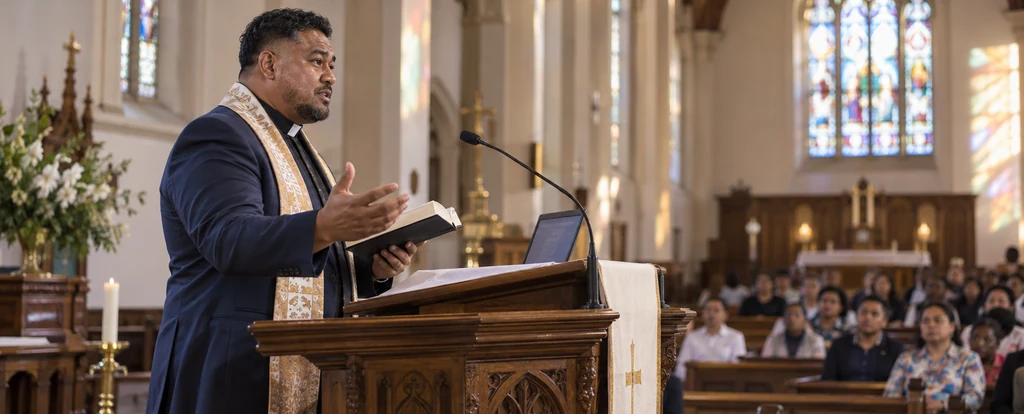
Ministers of religion lead worship, teach their faith and provide pastoral care to the people in their congregation.
- Median salary
- $103,700
4.4%vs last year, before tax
- People employed
- 18,800
2.2%vs last year
- Projected growth
- +18.6%
to 2035
- AI exposure*
- Low
- automation risk
- Average hours
- 45/wk
+5h vs all jobs
- Shortage status
- Not in shortage
national
Ministers of religion work in churches, mosques, synagogues, temples and other places of worship, and some serve as chaplains in schools, hospitals, aged care homes, prisons or the defence force. The work combines leading services with teaching, visiting the sick, counselling and officiating at weddings, funerals and baptisms, and it usually comes with responsibility for staff, volunteers and buildings. It differs from the practical and pastoral support that religious assistants provide, because a minister is endorsed or ordained by a religious body and carries responsibility for a congregation's worship and teaching.
How much do minister of religions earn?
The median full-time salary for a minister of religion is $103,700 per annum, before tax, up $22,000 since 2018.
What a minister earns depends heavily on the religious body and the congregation, because a large city parish, a school chaplaincy and a small rural congregation are funded in quite different ways. Many positions are part time, and a stipend plus housing or a manse rather than a salary is still common, which makes comparisons with other jobs awkward. Larger employers such as hospitals, schools, aged care providers and the defence force set pay through their own enterprise agreements.
What does a minister of religion do day to day?
The list below is what fills most weeks; the exact mix shifts with seniority and whatever stage the current work is at.
- Leading weekly worship services, prayers and religious ceremonies
- Preparing sermons and teaching sessions, usually working from the tradition's scriptures and texts
- Visiting members who are sick, grieving or in crisis, and offering counselling and practical help
- Officiating at weddings, funerals and baptisms, including meeting families beforehand to plan them
- Working with parish councils and volunteers on budgets, buildings and community programs
What skills do minister of religions need?
Employers look for pastoral care and wellbeing, counselling and support work, community engagement, backed by Planning Center fluency and strong empathy and interpersonal care.
Specialist skills
- Pastoral care and wellbeing
- Counselling and support work
- Community engagement
- Teaching and instruction
- Event coordination
Software and tools
- Planning Center
- ChurchSuite
- Microsoft Office
- Logos Bible Software
- Zoom
General skills
- Empathy and interpersonal care
- Written communication
- People leadership
Is the job growing?
About 18,800 people work as minister of religions in Australia, and employment is projected to grow 18.6% over the decade to 2035. That's healthy, above-average growth, and the role should stay in solid demand.
How do you become a minister of religion?
Here's the path most minister of religions take, step by step.
- 1Check what your faith tradition requires
Training and endorsement are set by each denomination or religious body rather than a national regulator, so the route differs. Some require a theological degree, others accept a diploma or in-house study, and all expect evidence of a calling and a period of discernment before you start.
- 2Complete theological study
A bachelor degree in theology, ministry or divinity usually takes three years of full-time study and covers scriptural study, ethics, pastoral care and supervised fieldwork. About 38% of the ministers working today hold a Bachelor degree, making it the most common qualification in the workforce, and postgraduate study is also common.
- 3Undergo supervised formation
Most traditions require field education or an internship, often as an assistant minister in a congregation, lasting one to two years and frequently paid. This is where you preach, visit and lead under supervision before your body assesses your readiness.
- 4Be endorsed and ordained
Ordination or commissioning by your religious body is what authorises you to lead services and teach on its behalf. Authorisation as a religious celebrant under Commonwealth marriage law is separate and is normally arranged by the denomination, and working with children and police checks are standard.
- 5Take up your first placement
The first position might be an assistant minister in a parish, a chaplaincy in a school, hospital, prison or aged care home, or a small congregation of your own. From there, moves to larger congregations, chaplaincy or teaching usually follow experience and further study.
Ready to apply as a minister of religion?
Whether you're working toward becoming a minister of religion or already are one and want a hand with the next step (sharpening your resume for ATS screening, tightening your cover letter, or knowing what you'll actually be asked at interview), here are examples grounded in this specific role, not generic templates.
What jobs can a minister of religion move to?
Moving into Secondary School Teacher typically comes with the biggest pay rise, worth $17,000 a year more on average.
| Move to | Typical pay change | Overlap | Retraining |
|---|---|---|---|
| Secondary School Teacher Ministers bring pastoral care, communication and ethical grounding, but need teaching qualifications and registration to work as secondary school teachers.Known move | +$17,000 | 29% | requalify |
| Primary School Teacher Ministers bring pastoral care and communication skills, but need teaching qualifications and registration to work as primary school teachers.Known move | +$12,100 | 24% | requalify |
| Social Worker Ministers bring pastoral counselling and community support experience, but need a social work degree to practise as social workers.Known move | +$9,200 | 26% | requalify |
| Youth Worker Ministers bring pastoral care and group work skills, and need a short course in youth work to make the move.Known move | −$7,800 | 48% | short course |
Moves are chosen from Jobs and Skills Australia's Data on Occupation Mobility, which follows income tax records between 2011-12 and 2020-21, together with entry requirements and skill overlap. A known move is one people were seen making in that data. Pay change compares median full-time pay for the two roles.
Who works as a minister of religion?
The typical minister of religion is 49 years old; 66% are men, 67% work full-time, and full-timers average 45 hours a week.
- 49
- Median age
- 34%
- Female share
- 67%
- Full-time
- +5h
- vs all-jobs avg
What's it like being a minister of religion?
The job has a steady weekly rhythm of preparation, services and meetings, interrupted by the unpredictable parts such as a funeral, a hospital call or a family in crisis. Ministers usually work alongside a small staff and a large group of volunteers, and much of the week goes into coordinating them as well as into the pastoral work itself. It tends to suit people who are comfortable speaking in front of a group, patient with slow relationships, and willing to be publicly identified with a faith and a community.
What people like
- People trust you at the moments that matter. Weddings, funerals, births and serious illness are when families turn to a minister, and the work is often most useful then.
- The job mixes teaching, care and leadership. A week can hold a sermon, a hospital visit, a committee meeting and a long conversation with a teenager, which suits people who don't want to do one kind of task all day.
- Long relationships with a congregation. You get to know families over years and see the effect of the care you give, which is different from work that finishes when a project does.
- Room to shape the work yourself. Within your tradition, you usually decide what to preach, where to spend your time and which community programs to build.
What people find hard
- The week doesn't keep office hours. Services, weddings and funerals fall on weekends and evenings, and emergencies don't wait, so the role rarely fits a standard week.
- You carry other people's hardest days. Grief, illness and family breakdown come to you regularly, and the weight of that accumulates over years.
- Congregational conflict lands on your desk. Disagreements about money, buildings, staffing or change usually end up with the minister, and some take months to work through.
- It's hard to be off duty. In a small community you are the minister at the supermarket and the school gate, which makes boundaries between work and personal life difficult to hold.
Based on our synthesis of professional-body surveys and public accounts of the role, not first-person verified reviews.
Which industries employ minister of religions?
Other Services employs the largest share of minister of religions, followed by Education and Training.
Top employing industries
- 1Other Services
- 2Education and Training
- 3Health Care and Social Assistance
Ranked by employment share; the source doesn't publish an exact percentage per industry.
| Bachelor degree | 38.1% | |
|---|---|---|
| Postgraduate | 32.2% | |
| Diploma / Advanced Diploma | 15.8% | |
| Year 12 or below | 5.9% | |
| Certificate III/IV | 5.5% |
Will AI replace minister of religions?
AI exposure for ministers of religion is low, because the core of the job is being present with people: leading worship, sitting with someone in grief, officiating at a funeral. Church management software such as Planning Center and ChurchSuite already handles rosters, giving records and event bookings, and AI tools can help draft a newsletter or a sermon outline. None of that carries the pastoral relationship, and a congregation expects a recognised person in the room.
Share of typical working time by exposure level
- Visiting the sick and supporting people in crisisA hospital visit or a conversation with a grieving family depends on being there in person and knowing the person.35%low
- Leading worship and officiating at weddings and funeralsServices and life ceremonies are public acts that a congregation expects an endorsed minister to lead.25%low
- Preparing sermons and teaching materialAI can gather commentary, illustrations and a first draft, but the sermon still has to speak to the people sitting in front of you.20%moderate
- Managing rosters, giving records and parish communicationsSoftware schedules volunteers and records donations, but the coordination with people and the decisions about money and buildings stay with the minister.20%low
Common questions about becoming a minister of religion
Straight answers to the questions people ask most.
How much do ministers of religion earn?
The median full-time pay for ministers of religion is $103,700 per annum, before tax. The figure moves with the religious body, the size and wealth of the congregation, and whether the employer is a school, hospital, aged care provider or the defence force rather than a congregation.
How do you become a minister of religion?
You usually complete theological study and a supervised placement, then receive endorsement and ordination from a religious body. Each denomination or faith community sets its own requirements, so check the route early, since some ask for a degree and others accept diplomas or in-house training.
Are ministers of religion in demand?
Ministers of religion are currently not in shortage, and employment is projected to grow 18.6% over the decade to 2035. Openings often depend on retirements and on whether a congregation or institution can fund the position, so a willingness to work in regional areas or in chaplaincy widens the options.
Will AI replace ministers of religion?
AI is unlikely to replace ministers of religion, and the work is among the least exposed to automation. Software already handles rosters, giving records and live streaming, and it can help draft a newsletter or a sermon outline, but pastoral visits, ceremonies and difficult conversations need a person the congregation knows and trusts.
Do ministers of religion work weekends?
Usually yes. Worship services sit on weekends, weddings and funerals rarely fall on a weekday afternoon, and hospitals and families in crisis don't wait for office hours, so the role rarely fits a Monday to Friday week. A day off during the week is a common arrangement instead.
What can ministers of religion move into?
Teaching and social work draw most directly on the same pastoral care and communication skills. Secondary school teachers earn $17,000 more, primary school teachers $12,100 more and social workers $9,200 more, though each requires further qualifications and teaching also requires registration. The path also runs the other way, with religious assistants and youth workers training for ordination after theological study and endorsement.
Related roles
- Secondary School Teacher
- Primary School Teacher
- Youth Worker
- Social Worker
- Religious Assistant
- Youth Worker
Not sure this is you? Take the career quiz and get a ranked shortlist of roles that fit how you like to work.