Nursery Hand
Nursery hands raise and care for plants in nurseries, growing the stock that garden centres, landscapers and revegetation projects buy.
- Median salary*
- $57,200
4.0%vs last year, before tax
- People employed
- 6,300
0.0%vs last year
- Projected growth
- +5.3%
to 2035
- AI exposure*
- Low
- automation risk
- Average hours
- 40/wk
matches all-jobs average
- Shortage status*
- Not in shortage
national
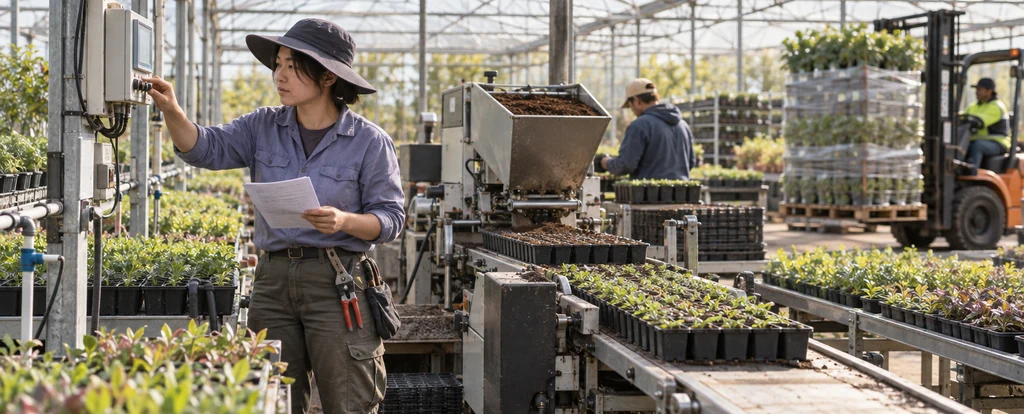
Nursery hands work in production and retail nurseries, potting sheds, glasshouses and shade houses, usually in a small team under a nursery supervisor. The job sits at the growing end of horticulture: where a gardener maintains plants already in the ground, a nursery hand raises them from seed or cutting to the size a customer buys. It is physical, weather-dependent work with a clear peak in the lead-up to spring planting.
How much do nursery hands earn?
The median full-time salary for a nursery hand is $57,200 per annum, before tax, up $11,900 since 2018.
Most nursery hands are paid under the Horticulture Award, so the casual loading, weekend watering rosters and public holiday shifts make a real difference to what lands in your account each week. Moving up the classification levels comes with taking on propagation, spray programs or dispatch and forklift duties, and larger wholesale nurseries often pay above the award minimum. Hours also swing with the season, so a quiet winter month can look very different from the weeks before spring.
What does a nursery hand do day to day?
The list below is what fills most weeks; the exact mix shifts with seniority and whatever stage the current work is at.
- Potting and repotting stock by hand or through a potting machine
- Watering and feeding to a schedule set with the irrigation controller
- Sowing seed, taking cuttings and pricking out seedlings for the next crop
- Walking the benches to check plants for pests, disease and nutrient problems
- Picking and packing orders for garden centres, landscapers and retail customers
What skills do nursery hands need?
Employers look for hand and power tool work, plant and equipment operation, inventory management, backed by Irrigation controllers fluency and strong physical stamina and dexterity.
Specialist skills
- Hand and power tool work
- Plant and equipment operation
- Inventory management
- Operations management
Software and tools
- Irrigation controllers
- Potting machines
- Forklift
- Secateurs and pruning tools
- Nursery inventory software
General skills
- Physical stamina and dexterity
- Attention to detail
- Safety and compliance awareness
Is the job growing?
About 6,300 people work as nursery hands in Australia, and employment is projected to grow 5.3% over the decade to 2035. That's modest growth: demand is steady rather than booming.
How do you become a nursery hand?
Here's the path most nursery hands take, step by step.
- 1Start with an entry-level nursery job
Most nurseries hire on reliability and a willingness to learn rather than a qualification, and train potting, watering, hygiene and safety procedures on the job. Casual work across a spring season is a common way in and a chance to show you can keep stock alive.
- 2Take a traineeship in horticulture
A Certificate II or III in Horticulture, delivered through a traineeship so you earn while you study, is the qualification nurseries look for when they promote someone to run a section. It covers plant identification, propagation, soils and integrated pest management.
- 3Add the licences the site needs
A forklift licence opens up dispatch and pallet work, and a chemical handling certificate lets you take on spraying and pest programs rather than just watering. Some nurseries also want a White Card for staff who deliver to or work on landscaping sites.
- 4Specialise
After a few years, experienced hands move into propagation, stock control or dispatch, or into a nurseryperson role through a full apprenticeship. Choosing one area, whether it is tube stock, advanced trees or turf, makes you harder to replace.
Ready to apply as a nursery hand?
Whether you're working toward becoming a nursery hand or already are one and want a hand with the next step (sharpening your resume for ATS screening, tightening your cover letter, or knowing what you'll actually be asked at interview), here are examples grounded in this specific role, not generic templates.
What jobs can a nursery hand move to?
Moving into Greenkeeper typically comes with the biggest pay rise, worth $19,100 a year more on average.
| Move to | Typical pay change | Overlap | Retraining |
|---|---|---|---|
| Greenkeeper Nursery hands bring plant health knowledge to greenkeeping, but the move requires an apprenticeship in turf management.Known move | +$19,100 | 32% | requalify |
| Turf Grower Nursery hands can specialise as turf growers, applying propagation and plant care skills with a short course. | +$10,400 | 58% | short course |
| Landscaper Nursery hands bring plant selection and care skills to landscaper roles, with retraining in construction and design.Known move | +$7,800 | 13% | reskill |
| Nurseryperson Nursery hands bring hands-on propagation and plant care into nurseryperson roles, but the step needs a full apprenticeship.Known move | +$2,600 | 75% | requalify |
| Gardener Nursery hands can move into gardener work, carrying plant knowledge into garden maintenance with further study.Known move | +$2,600 | 19% | reskill |
Moves are chosen from Jobs and Skills Australia's Data on Occupation Mobility, which follows income tax records between 2011-12 and 2020-21, together with entry requirements and skill overlap. A known move is one people were seen making in that data. Pay change compares median full-time pay for the two roles.
Who works as a nursery hand?
The typical nursery hand is 38 years old; 56% are women, 51% work full-time, and full-timers average 40 hours a week.
- 38
- Median age
- 56%
- Female share
- 51%
- Full-time
- +0h
- vs all-jobs avg
What's it like being a nursery hand?
The rhythm of the job follows the seasons and the irrigation system rather than a desk calendar, with early starts, plenty of standing and lifting, and a spring rush when stock leaves faster than it can be potted. It suits people who like seeing a result they can point at and who don't mind repeating a task until the bench is full. The pace is steady rather than pressured, but the plants don't wait, and a missed watering round shows up within a day.
What people like
- You can see what you've done. A bench of struck cuttings or a tray of seedlings ready for dispatch is a visible day's work, which is satisfying in a way that paperwork rarely is.
- Plant knowledge builds quickly. You learn names, growing conditions and pest problems by handling them, and that knowledge travels with you into gardening, landscaping or your own garden.
- Quiet, practical teamwork. Nursery crews are usually small, and the day is spent on shared tasks rather than meetings, which suits people who prefer to get on with the work.
- Work under cover when it counts. Much of the job happens in glasshouses and shade houses, so you are outdoors without being exposed to the worst of the weather.
What people find hard
- Repetition is built into the job. Potting several thousand tubes or weeding a full bench by hand is tedious, and the same tasks come around every week through the growing season.
- Spring compresses the workload. The weeks before peak planting are long, and the pressure to keep stock moving sits alongside the normal watering and pest rounds.
- Heat, cold and dust. Glasshouses get hot in summer, potting mix is dusty, and spraying and hygiene work means following the safety instructions closely every time.
- Hygiene rules leave no shortcuts. Pests and disease spread fast through a nursery, so cleaning tools, benches and boots is part of the job rather than something you do when there is time.
Based on our synthesis of professional-body surveys and public accounts of the role, not first-person verified reviews.
Which industries employ nursery hands?
Agriculture, Forestry and Fishing employs the largest share of nursery hands, followed by Wholesale Trade.
Top employing industries
- 1Agriculture, Forestry and Fishing
- 2Wholesale Trade
- 3Retail Trade
Ranked by employment share; the source doesn't publish an exact percentage per industry.
| Year 12 or below | 52.8% | |
|---|---|---|
| Certificate III/IV | 21.7% | |
| Bachelor degree | 9.5% | |
| Diploma / Advanced Diploma | 8.1% | |
| Postgraduate | 2% |
Will AI replace nursery hands?
This is low-exposure work, because most of it happens plant by plant and depends on judgement built from handling living stock. Irrigation controllers, potting machines and nursery inventory software take over the timing and record keeping, but someone still has to walk the benches, feel the weight of a pot and decide what a plant needs. The technology changes how fast the routine jobs go, not whether they get done.
Share of typical working time by exposure level
- Watering, feeding and climate checksIrrigation controllers and sensors handle the schedule, but you still check drippers, adjust for a hot day and spot the bench that is drying out faster than the rest.30%low
- Potting, pricking out and taking cuttingsA potting machine fills the tubes much faster than doing it by hand, while placing the seedling, firming the mix and cutting at the right node stay manual.30%low
- Pest, disease and plant health checksPhone apps help identify a problem from a photo, but scouting the crop, catching an outbreak early and deciding on a spray or a cull still means walking the rows.20%moderate
- Picking, packing and stock recordsInventory software tracks batches and availability, while lifting plants onto trolleys and checking an order against the docket before it leaves is done by hand.20%moderate
Common questions about becoming a nursery hand
Straight answers to the questions people ask most.
How much do nursery hands earn?
Nursery hands earn a median of $57,200 per year before tax, based on full-time work. Many roles are casual or seasonal, so casual loading, weekend watering rosters and how many hours you pick up in peak season change what you actually take home.
How do you become a nursery hand?
Most people start with no formal qualification, learning potting, watering and hygiene on the job at a production or retail nursery. A Certificate II or III in Horticulture, often through a traineeship, is what helps you move from casual work into a permanent role.
Are nursery hands in demand?
Nursery hands are currently not in shortage, and employment is projected to grow 5.3% over the decade to 2035 over the decade to 2035. Openings tend to be steady rather than plentiful, so a horticulture qualification, a forklift licence and a clean work record are what set you apart when a permanent job comes up.
Will AI or automation replace nursery hands?
Automation touches parts of the job, but the work itself is low exposure. Potting machines and irrigation controllers handle the repeatable steps, while assessing a plant's health, taking a cutting and judging when stock is ready to sell still depend on someone walking the benches. The plant handling and hygiene judgement are the parts machines do least well.
What can a nursery hand move on to?
The move into nurseryperson work carries across 75% of the skills, since propagation and plant care are already a big part of the nursery hand's week, and it usually needs a full apprenticeship, paying $2,600 more. Greenkeeping and landscaping are further moves that need training in turf management or construction, with greenkeepers earning $19,100 more and landscapers $7,800 more.
What's the difference between a nursery hand and a nurseryperson?
A nursery hand does the routine growing work, while a nurseryperson has completed an apprenticeship and takes responsibility for a crop or a section. In smaller nurseries the titles blur, but the difference shows in pay, supervision and what you are trusted to decide.
Related roles
Not sure this is you? Take the career quiz and get a ranked shortlist of roles that fit how you like to work.