Occupational Health Nurse
Occupational health nurses look after the health of people at work, running health surveillance, treating injuries and helping workers get back to the job.
- Median salary*
- $106,600
3.9%vs last year, before tax
- People employed*
- 2,200
0.0%vs last year
- Projected growth*
- +8%
to 2035
- AI exposure*
- Low
- automation risk
- Average hours*
- 38/wk
−2h vs all jobs
- Shortage status*
- In shortage
national
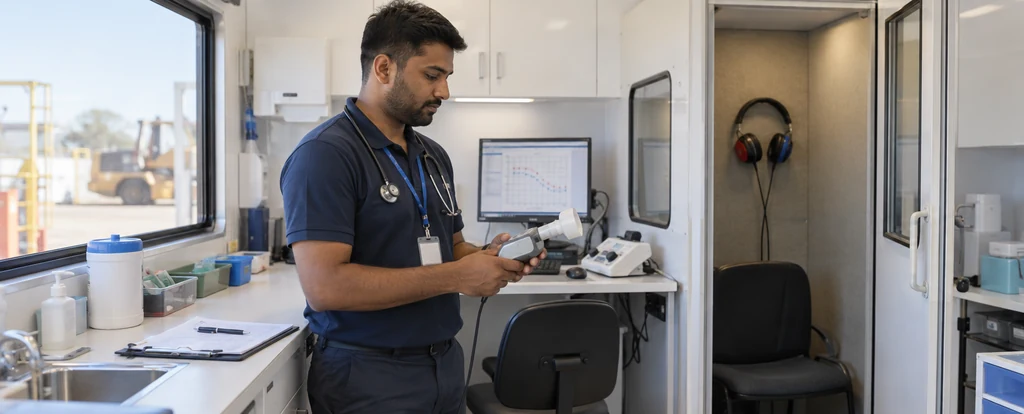
Occupational health nurses are registered nurses who work with a workforce rather than a ward, based in a clinic room on a mine site, factory or depot and moving out to where the work happens. They sit alongside safety advisers and human resources staff, so the job is as much about spotting patterns in exposure and injury data as it is about treating the person in front of them. Mining, manufacturing, construction, public administration and the occupational health providers that contract nurses out to those employers are the main sources of work.
How much do occupational health nurses earn?
The median full-time salary for an occupational health nurse is $106,600 per annum, before tax, up $22,200 since 2018.
Sector moves the figure more than anything else, with nurses on mine sites and in resources, often on fly-in fly-out rosters, earning well above those in community health, aged care or public administration. Enterprise agreements, penalty rates and shift arrangements shift it again. A postgraduate qualification in occupational health, or responsibility for a site's whole surveillance program, will put you higher in the range.
What does an occupational health nurse do day to day?
The list below is what fills most weeks; the exact mix shifts with seniority and whatever stage the current work is at.
- Running pre-employment and periodic medicals, including hearing tests, lung function checks and fitness-for-work assessments
- Treating minor injuries on site and managing first aid
- Coordinating return-to-work plans with the worker, their manager, their treating doctor and the insurer
- Tracking exposure data for noise, dust, chemicals and fatigue, and flagging clusters before they become claims
- Delivering vaccination programs and health education on sleep, manual handling and fatigue
What skills do occupational health nurses need?
Employers look for clinical assessment and treatment, patient care and support, care planning and coordination, backed by Cority fluency and strong written communication.
Specialist skills
- Clinical assessment and treatment
- Patient care and support
- Care planning and coordination
- Health education and advice
- Infection control and hygiene
- Risk and internal controls
- Regulatory compliance
Software and tools
- Cority
- SAP EHS
- Audiometry equipment
- Spirometry equipment
- Microsoft Excel
General skills
- Written communication
Is the job growing?
About 2,200 people work as occupational health nurses in Australia, and employment is projected to grow 8% over the decade to 2035. That's modest growth: demand is steady rather than booming.
How do you become an occupational health nurse?
Here's the path most occupational health nurses take, step by step.
- 1Complete a Bachelor of Nursing
Three years full time, or a two-year graduate entry degree if you already hold a bachelor's, followed by registration with AHPRA as a registered nurse. This credential is the base the specialty is built on and cannot be bypassed.
- 2Work as a registered nurse
Most occupational health nurses spend several years in hospital, community or mental health nursing first, because triage, assessment and injury care are learned on the floor rather than in a classroom.
- 3Study occupational health at postgraduate level
A graduate certificate or master's in occupational health nursing is common and is usually studied part time while you keep working. Coursework covers occupational hygiene, health surveillance and the work health and safety legislation that governs what you can record and disclose.
- 4Move into a workplace role
Provider companies, mine sites, manufacturers and government agencies recruit nurses who have clinical experience and some exposure to occupational health. Being willing to work on site or on a roster widens the openings considerably.
Ready to apply as an occupational health nurse?
Whether you're working toward becoming an occupational health nurse or already are one and want a hand with the next step (sharpening your resume for ATS screening, tightening your cover letter, or knowing what you'll actually be asked at interview), here are examples grounded in this specific role, not generic templates.
What jobs can an occupational health nurse move to?
Moving into Nurse Manager typically comes with the biggest pay rise, worth $31,600 a year more on average.
| Move to | Typical pay change | Overlap | Retraining |
|---|---|---|---|
| Nurse Manager Leadership role managing nursing teams, using clinical background and requiring further study in health management. | +$31,600 | 33% | reskill |
| Director of Nursing Senior nursing leadership role overseeing clinical services, building on nursing experience and requiring management qualifications. | +$28,600 | 56% | reskill |
| Nurse Practitioner Advanced practice nursing role that builds on registered nurse experience, requiring a master's degree and endorsement. | +$7,400 | 62% | requalify |
| Remote Area Nurse Autonomous nursing role in remote settings, using broad clinical skills and requiring additional remote practice training. | +$5,200 | 57% | short course |
| Diabetes Educator Specialist nursing role in chronic disease education, building on health promotion skills and requiring diabetes education qualifications. | −$2,600 | 50% | short course |
Moves are chosen from Jobs and Skills Australia's Data on Occupation Mobility, which follows income tax records between 2011-12 and 2020-21, together with entry requirements and skill overlap. A known move is one people were seen making in that data. Pay change compares median full-time pay for the two roles.
Who works as an occupational health nurse?
The typical occupational health nurse is 45 years old; 88% are women, 60% work full-time, and full-timers average 38 hours a week.
- 45
- Median age
- 88%
- Female share
- 60%
- Full-time
- −2h
- vs all-jobs avg
What's it like being an occupational health nurse?
Most occupational health nurses work standard weekday hours, which is a large part of the appeal for nurses leaving rotating hospital rosters. The rhythm follows the worksite: quiet stretches of surveillance, records and health promotion, then a burst of medicals when a new project or crew starts. It suits nurses who want autonomy and prevention, and who are comfortable making a call on a person's fitness for work and then defending it with their manager.
What people like
- Regular hours and a predictable week. Away from shift work you can plan around a weekday schedule, and part-time arrangements are common with provider companies and government employers.
- You follow a worker the whole way. An injury that would be handed to the next shift in a hospital becomes your case from first treatment through to the return-to-work plan and the follow-up.
- Prevention you can see in the data. Hearing loss rates, vaccination take-up and injury frequency are all measured, so the effect of a program you ran shows up in the next report.
- A broad scope and a lot of trust. On many sites you are the only clinician, which means running the clinic, advising managers and being the person workers come to first.
What people find hard
- You can be the only nurse on site. Professional isolation is real in single-nurse workplaces, and you carry the clinical decisions alone with a doctor or provider only a phone call away.
- Fitness-for-work calls put you in the middle. Telling a supervisor that a worker needs lighter duties for six weeks can be an uncomfortable conversation, and you are the one holding the line on it.
- Rosters and travel. Mine and construction roles often mean fly-in fly-out or drive-in drive-out rosters, with long shifts and weeks away from home.
- Records and legislation. Health surveillance registers, privacy requirements and work health and safety reporting take a steady share of the week, and the rules differ between states and territories.
Based on our synthesis of professional-body surveys and public accounts of the role, not first-person verified reviews.
Which industries employ occupational health nurses?
Occupational health and safety services employs the largest share of occupational health nurses, followed by Mining.
Top employing industries
- 1Occupational health and safety services
- 2Mining
- 3Manufacturing
- 4Construction
- 5Public administration
Ranked by employment share; the source doesn't publish an exact percentage per industry.
| Bachelor degree | 52% | |
|---|---|---|
| Postgraduate | 26% | |
| Diploma / Advanced Diploma | 13% | |
| Other | 9% |
Will AI replace occupational health nurses?
Occupational health nursing has low exposure to AI, because the core of the job is examining a person, judging whether they are fit for a particular task and handling that conversation confidentially. Software already runs the administrative layer, with audiometry programs scoring hearing tests and platforms such as Cority and SAP EHS keeping surveillance registers and scheduling medicals. What changes is the paperwork, not the assessment or the return-to-work negotiation.
Share of typical working time by exposure level
- Fitness-for-work assessments and injury treatmentDeciding whether someone can return to a task after a shoulder injury, or treating a laceration in the site clinic, needs hands-on assessment and a judgement about that person and that workplace.30%low
- Case management and return-to-work planningAgreeing suitable duties with a supervisor, a treating doctor and an insurer involves negotiation and confidentiality that no system can carry out on the nurse's behalf.30%low
- Hearing and lung function testingAudiometry and spirometry software can score results and flag a shift against a worker's baseline, but the nurse still sets up the test, coaches the worker through it and interprets it against their actual job.20%moderate
- Health surveillance records and compliance reportingPlatforms such as Cority and SAP EHS compile surveillance registers, generate compliance reports and send recall reminders, which removes most of the manual tracking from the week.20%high
Common questions about becoming an occupational health nurse
Straight answers to the questions people ask most.
How much do occupational health nurses earn?
$106,600 per year before tax for full-time work. Sector is the biggest variable, with resources and mining roles paying above community health and public administration, and experience, postgraduate qualifications and roster work all moving the figure from there.
How do you become an occupational health nurse?
You need to be a registered nurse first, which means a Bachelor of Nursing and registration with AHPRA. From there most people work clinically for a few years, then add a graduate certificate or master's in occupational health while applying for workplace roles.
Are occupational health nurses in demand?
Occupational health nurses are currently in shortage nationally, and employment is projected to grow 8% over the decade to 2035. About 2,200 people work in the role, mostly for mining, construction, manufacturing and public administration employers or the occupational health providers that contract to them.
Will AI replace occupational health nurses?
Exposure is low, because the work turns on examining a person, judging their fitness for a particular task and holding a confidential conversation that software cannot have. Records platforms such as Cority and SAP EHS already handle surveillance registers, scheduling and trend reports, and audiometry software helps score hearing tests, but a nurse still runs the testing and decides what the result means for that worker's job.
What can occupational health nurses move into?
Advanced practice and management are the common paths: nurse practitioner, nurse manager and director of nursing all build on the same registration with further study in advanced practice or health management, and nurse manager roles pay $31,600 more than occupational health nursing. Remote area nursing and diabetes education are shorter moves that lean on the same assessment and health education skills. Experienced nurses also contract as independent consultants or set up their own occupational health business, which is often where earnings grow.
Do occupational health nurses work shifts?
Usually not, and that is a big reason nurses move into the field. Full-time occupational health nurses average 38 hours a week, mostly on weekdays, though mine site and construction roles can come with rosters and travel.
Related roles
- Nurse Practitioner
- Nurse Manager
- Director of Nursing
- Diabetes Educator
- Remote Area Nurse
- Registered Nurse
Not sure this is you? Take the career quiz and get a ranked shortlist of roles that fit how you like to work.