Occupational and Environmental Physician
Occupational and environmental physicians work out how a job, a worksite or an exposure affects someone's health, and whether they are fit to keep doing the work.
- Median salary*
- $176,800
3.6%vs last year, before tax
- People employed*
- 480
4.0%vs last year
- Projected growth*
- +4%
to 2035
- AI exposure*
- Low
- automation risk
- Average hours*
- 42/wk
+2h vs all jobs
- Shortage status*
- In shortage
national
They work across mining, construction, manufacturing, health services and government, splitting their time between clinic consultations, workplace visits and written advice to employers, insurers and regulators. The role differs from general practice because the question is usually about capacity for a specific job rather than treatment of an illness, so much of the advice goes to the organisation as well as the patient. Most specialists hold fellowship of the Australasian Faculty of Occupational and Environmental Medicine within the Royal Australasian College of Physicians, after a medical degree and hospital training.
How much do occupational and environmental physicians earn?
The median full-time salary for an occupational and environmental physician is $176,800 per annum, before tax, up $37,700 since 2018.
Pay depends heavily on where the work sits. Specialists employed by mining and resources companies or contracted to large construction projects usually earn more than those in public health services or community-based occupational health clinics, and some roles carry site allowances or roster arrangements. Private practice income rises with the share of the week given to fee-for-service assessments, so a part-time clinic role and a full-time corporate advisory position are not directly comparable.
What does an occupational and environmental physician do day to day?
The list below is what fills most weeks; the exact mix shifts with seniority and whatever stage the current work is at.
- Assessing a worker's fitness for duty and capacity for specific job tasks, often before a return after injury or illness
- Diagnosing and managing occupational illness and work-related injury, including conditions that only emerge after years of exposure
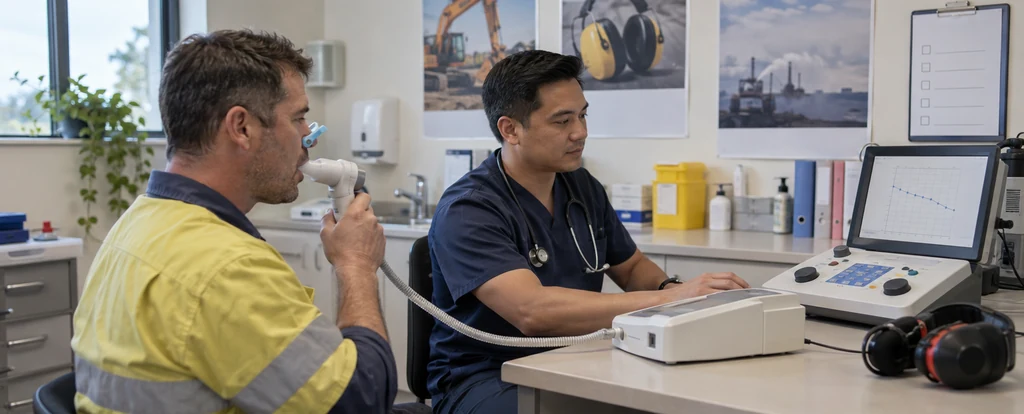
- Running pre-employment, periodic and exit medicals, with spirometry and audiometry testing where the job involves dust, noise or chemicals
- Visiting worksites to review hazards, exposures and the health surveillance an employer has in place
- Writing reports and coordinating return-to-work plans with employers, insurers and treating practitioners
What skills do occupational and environmental physicians need?
Employers look for clinical assessment and treatment, health education and advice, risk and internal controls, backed by Best Practice Software fluency and strong stakeholder management.
Specialist skills
- Clinical assessment and treatment
- Health education and advice
- Risk and internal controls
- Regulatory compliance
Software and tools
- Best Practice Software
- MedicalDirector
- Spirometry equipment
- Audiometry equipment
- Microsoft Excel
General skills
- Stakeholder management
- Written communication
- Attention to detail
Is the job growing?
About 480 people work as occupational and environmental physicians in Australia, and employment is projected to grow 4% over the decade to 2035. That's modest growth: demand is steady rather than booming.
How do you become an occupational and environmental physician?
Here's the path most occupational and environmental physicians take, step by step.
- 1Complete a medical degree
Entry is through an accredited medical program, either an undergraduate degree of five to six years or a graduate-entry doctor of medicine of four years, followed by an internship and general registration with AHPRA.
- 2Build general clinical experience
Most entrants spend several years in hospital medicine or general practice first. The broad assessment and patient management skills from general practice transfer directly, which is why it is the usual starting point.
- 3Enter advanced training in occupational and environmental medicine
Training runs through the Australasian Faculty of Occupational and Environmental Medicine within the Royal Australasian College of Physicians, usually over about three years, and typically includes a master's level qualification in occupational and environmental health alongside supervised clinic and workplace experience.
- 4Complete fellowship and keep up continuing professional development
Fellowship of the faculty is the specialist qualification employers, insurers and regulators recognise, and it is maintained through the college's continuing professional development program. Some doctors train part time while continuing to work in general practice.
Ready to apply as an occupational and environmental physician?
Whether you're working toward becoming an occupational and environmental physician or already are one and want a hand with the next step (sharpening your resume for ATS screening, tightening your cover letter, or knowing what you'll actually be asked at interview), here are examples grounded in this specific role, not generic templates.
What jobs can an occupational and environmental physician move to?
We don't list lateral moves for occupational and environmental physicians: leaving means a full new qualification rather than a career move, and the realistic routes in are covered under how to become one.
Who works as an occupational and environmental physician?
The typical occupational and environmental physician is 48 years old; 68% are men, 76% work full-time, and full-timers average 42 hours a week.
- 48
- Median age
- 32%
- Female share
- 76%
- Full-time
- +2h
- vs all-jobs avg
What's it like being an occupational and environmental physician?
The week is a mix of clinic appointments, workplace visits and report writing, so the job suits doctors who want clinical contact alongside work on how an organisation manages risk. Full-time hours average 42 a week, and the pressure comes mainly from the audience for your opinion: a worker hoping for a clearance, an employer wanting certainty, and an insurer watching the claim.
What people like
- You see the workplace, not just the patient. A site visit shows the task, the equipment and the exposure behind an injury, which is detail a consulting room cannot supply.
- Your advice changes how work is organised. Fitness-for-work systems, health surveillance programs and hazard controls are decisions you help shape, and their effect reaches whole crews rather than one patient.
- Hours are more predictable than in hospital specialties. Much of the work is scheduled clinic and advisory time, though site visits and roster work in mining and construction interrupt that pattern.
- The questions come from many industries. A single month can cover a mine site, a food factory, an office ergonomics review and a public sector policy question, so the medicine stays varied.
What people find hard
- Fitness-for-work decisions are not always welcome. Telling a worker they cannot return to their old job, or an employer that a control is inadequate, puts you in the middle of a disagreement that can end up before a tribunal.
- Report writing takes a large slice of the week. Opinions for employers, insurers and regulators have to be clear enough to stand up later, so every assessment is followed by careful drafting.
- The specialty is small. Vacancies are few, and openings cluster where mining, heavy industry, large manufacturers and government agencies are based, so moving for work is sometimes necessary.
- Travel is part of the job. Site visits can mean long drives or flights, and roster work in resources and construction takes you away from home for blocks of time.
Based on our synthesis of professional-body surveys and public accounts of the role, not first-person verified reviews.
Which industries employ occupational and environmental physicians?
Health Care and Social Assistance employs the largest share of occupational and environmental physicians, followed by Mining.
Top employing industries
- 1Health Care and Social Assistance
- 2Mining
- 3Construction
- 4Manufacturing
- 5Public Administration and Safety
Ranked by employment share; the source doesn't publish an exact percentage per industry.
| Bachelor degree | 52% | |
|---|---|---|
| Postgraduate | 26% | |
| Diploma / Advanced Diploma | 13% | |
| Other | 9% |
Will AI replace occupational and environmental physicians?
Occupational and environmental medicine is a low-exposure specialty. The decisive parts of the work, examining a worker, walking a site and judging whether someone can safely do a particular job, depend on physical presence and on a professional opinion that carries medico-legal weight. Software is changing the measurements and the paperwork rather than the assessment itself.
Share of typical working time by exposure level
- Fitness-for-work assessmentsEach assessment turns on a physical examination, a history and a real understanding of the job the person does, which is why a template or a risk score cannot replace it.30%low
- Worksite visits and hazard reviewWalking a site, watching the task and talking to the crew is how exposures get identified, and none of that is visible to a system sitting off site.25%low
- Reports, opinions and case correspondenceDrafting and summarising is where AI helps most, though the opinion and the reasoning behind it have to be yours when a claim or a tribunal dispute follows.25%moderate
- Health surveillance testingSpirometry and audiometry results are increasingly interpreted with software support, but the test still depends on correct technique and a clinical read of the pattern over time.20%moderate
Common questions about becoming an occupational and environmental physician
Straight answers to the questions people ask most.
How much do occupational and environmental physicians earn?
The median is $176,800 per year before tax for full-time work. Sector matters most: resources companies and large construction contractors pay above hospital and community health rates, and private practice income rises with the share of fee-for-service assessment work in your week.
How do you become an occupational and environmental physician?
Start with a medical degree and general registration, then spend a few years in hospital medicine or general practice before entering advanced training through the Australasian Faculty of Occupational and Environmental Medicine. Fellowship of the faculty is the specialist qualification employers and regulators recognise, and most trainees complete a master's level occupational health qualification along the way.
Are occupational and environmental physicians in demand in Australia?
They are currently in shortage nationally, and employment is projected to grow 4% over the decade to 2035. About 480 people work in the specialty, so openings are few each year and most appear where large employers in mining, manufacturing, construction and government are based.
Will AI replace occupational and environmental physicians?
No, the work is among the least exposed to automation. Software already supports spirometry and audiogram interpretation, scheduling and report templates, but the clinical examination, the worksite assessment and the fitness-for-work opinion rest on examining a person and understanding a job that no system can visit.
What can an occupational and environmental physician move into?
General practice is the usual way in rather than a way out: doctors who complete the faculty's training move across from it, and the median for this specialty sits $49,600 more than the median in general practice. Many specialists also set up private occupational health practices or consult to industry, and that is often where earnings grow.
How is this different from being a general practitioner?
A general practitioner treats whatever a patient brings through the door, while an occupational physician usually answers one question for a third party: whether this person can do this job, and what would make it safe. Your duty runs between the worker, the employer and the law, which shapes both the assessment and the report that follows it.
Related roles
- General Practitioner
- Optometrist
- Occupational Health Nurse
- Pharmacist
- Nurse Manager
- Occupational Therapist
Not sure this is you? Take the career quiz and get a ranked shortlist of roles that fit how you like to work.