Home Manufacturing & Production
Packaging Operator
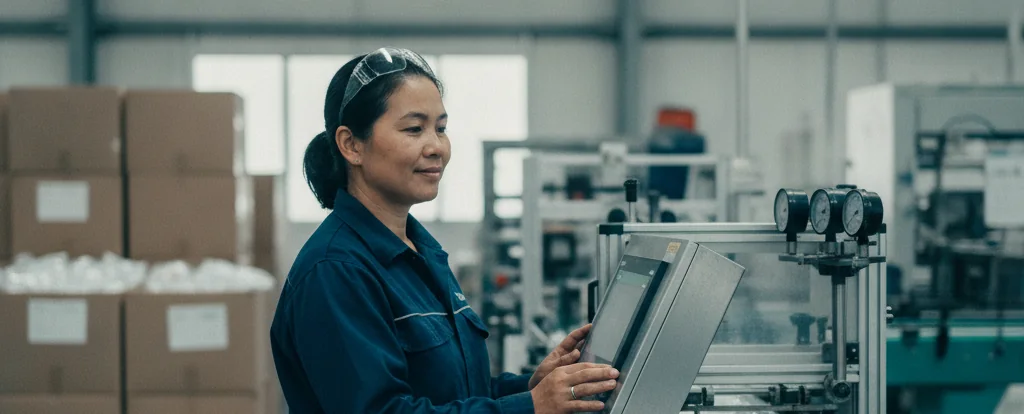
Packaging operators run the machinery that fills, wraps and seals products before they leave a factory for sale or distribution.
- Median salary*
- $49,300
4.2%vs last year, before tax
- People employed*
- 24,500
0.4%vs last year
- Projected growth*
- +1.8%
to 2035
- AI exposure*
- High
- automation risk
- Average hours*
- 38/wk
−2h vs all jobs
- Shortage status*
- Not in shortage
national
Packaging operators work on production lines in food, beverage, pharmaceutical and consumer goods plants, setting up and monitoring the machines that fill, label and seal finished products. The role sits closer to the end of the line than a process worker, who more often handles mixing, cooking or assembly earlier in production. Shifts are spent as part of a small team, watching for faults on the line and keeping records of output and downtime up to date.
How much do packaging operators earn?
The median full-time salary for a packaging operator is $49,300 per annum, before tax, up $10,300 since 2018.
The base rate is set by the award or enterprise agreement that covers your site, so two operators doing similar work at different plants can be paid differently. Shift loadings are where weekly pay moves most, since afternoon and night rosters, weekend work and overtime all add to the base, and plants that run around the clock offer more of them. A forklift licence or a Certificate III in food processing can also move you onto a higher classification on the same line.
What does a packaging operator do day to day?
The list below is what fills most weeks; the exact mix shifts with seniority and whatever stage the current work is at.
- Feeding and adjusting packaging lines to keep product moving at a steady rate
- Watching for jams, misfeeds and faulty seals before they turn into wasted stock
- Pulling and checking samples off the line for damage, weight or labelling mistakes
- Restacking and wrapping pallets ready for the next truck out
- Logging downtime, faults and output numbers at the end of each run
What skills do packaging operators need?
Employers look for plant and equipment operation, food safety and hygiene, process improvement, backed by Packaging machinery (horizontal/vertical form-fill-seal) fluency and strong attention to detail.
Specialist skills
- Plant and equipment operation
- Food safety and hygiene
- Process improvement
Software and tools
- Packaging machinery (horizontal/vertical form-fill-seal)
- Quality control gauges
- Production management software
- Handheld labellers
- Conveyor belt systems
General skills
- Attention to detail
- Problem solving
- Safety and compliance awareness
Is the job growing?
About 24,500 people work as packaging operators in Australia, and employment is projected to grow 1.8% over the decade to 2035. That's modest growth: demand is steady rather than booming.
How do you become a packaging operator?
Here's the path most packaging operators take, step by step.
- 1Finish Year 10 or Year 12
Most employers ask for basic secondary schooling rather than a specific qualification. Being able to read a production schedule, take simple measurements and follow safety procedures matters more than the certificate you hold.
- 2Pick up food handling and hygiene basics
Plants packing food or drink expect you to know the hygiene rules that apply on the floor. A short food handler certificate from a registered training organisation covers that ground and strengthens an application.
- 3Apply directly or through a labour hire firm
Many people start on a casual or fixed-term contract through a labour hire company and move to permanent work once they have shown they can run a line. Large food, beverage and pharmaceutical plants also advertise on their own websites.
- 4Learn the machines on the job
Training happens on the line, starting with one machine and building to a full line: film changes, settings, start-up and shutdown, and finding faults. It usually takes a few months before you are confident running a line on your own.
- 5Add a certificate or licence when you need it
A Certificate III in Food Processing (FBP30121) or a Certificate III in Process Manufacturing (MSM30116) supports a move to a higher classification or into machine operating, and a forklift licence opens up pallet and dispatch work.
Ready to apply as a packaging operator?
Whether you're working toward becoming a packaging operator or already are one and want a hand with the next step (sharpening your resume for ATS screening, tightening your cover letter, or knowing what you'll actually be asked at interview), here are examples grounded in this specific role, not generic templates.
What jobs can a packaging operator move to?
Moving into Machine Operator typically comes with the biggest pay rise, worth $31,500 a year more on average.
| Move to | Typical pay change | Overlap | Retraining |
|---|---|---|---|
| Machine Operator Operating general machinery builds on packaging line experience, and a short course supports the step into machine operator roles. | +$31,500 | 50% | short course |
| Process Worker Packaging operators can move into broader process work, using machine tending and product handling skills, with a short course.Known move | +$29,700 | 60% | short course |
| Warehouse Storeperson Packaging operators can move into warehouse storeperson roles, using product handling and dispatch awareness, with further training.Known move | +$19,800 | 32% | reskill |
| Meat Process Worker Meat processing builds on packaging and food handling skills, though entering the meat trade requires substantial retraining.Known move | +$15,400 | 42% | reskill |
| Meat Boner and Slicer Packaging operators with food production experience can specialise in meat boning and slicing after a short course.Known move | +$10,500 | 50% | short course |
Moves are chosen from Jobs and Skills Australia's Data on Occupation Mobility, which follows income tax records between 2011-12 and 2020-21, together with entry requirements and skill overlap. A known move is one people were seen making in that data. Pay change compares median full-time pay for the two roles.
Who works as a packaging operator?
The typical packaging operator is 38 years old; 58% are men, 78% work full-time, and full-timers average 38 hours a week.
- 38
- Median age
- 42%
- Female share
- 78%
- Full-time
- −2h
- vs all-jobs avg
What's it like being a packaging operator?
The work is steady and physical: a shift is a sequence of runs, each one starting with a film or product change and ending with a pallet wrapped and logged. The pressure comes from the line itself, because when it stops, everything waiting on that product stops with it, and the operator is usually the one who has to work out why. It suits people who like hands-on work with a clear result at the end of the day and who are content to do the same task carefully for long stretches.
What people like
- You can see what you did. A run finishes with pallets wrapped and ready to load, so progress is visible every hour rather than sitting in a file somewhere.
- The team is small and close. Operators work alongside a handful of people on the same line, which suits anyone who would rather work with others than alone at a desk.
- The training happens on the job. You do not need years of study to start, and the skills you build, setting up, fault finding and running a line, carry across to machine operating and process work.
- Rosters are set in advance. Full-time plant work runs to a fixed roster, so you know which days and which shift you are on well before the week begins.
What people find hard
- The repetition is real. A single run can last for hours, and the same checks, film changes and movements repeat throughout the shift.
- Noise, cold rooms and standing. Most packaging halls are loud, some rooms are chilled, and you are on your feet for the whole shift in steel-capped boots and other protective gear.
- Shift work and weekends. Plants with round-the-clock lines roster operators onto afternoons, nights and weekends, which is hard on sleep and family routines even with loadings attached.
- When the line stops, it is your problem. Downtime is measured and supervisors want product moving, so clearing a jam or a faulty seal while stock piles up behind you is the tense part of the job.
Based on our synthesis of professional-body surveys and public accounts of the role, not first-person verified reviews.
Which industries employ packaging operators?
Food and Beverage Manufacturing employs the largest share of packaging operators, followed by Pharmaceutical and Medical Device Manufacturing.
Top employing industries
- 1Food and Beverage Manufacturing
- 2Pharmaceutical and Medical Device Manufacturing
- 3Plastics and Packaging Materials Manufacturing
- 4Consumer Goods Manufacturing
Ranked by employment share; the source doesn't publish an exact percentage per industry.
| Certificate III/IV | 34% | |
|---|---|---|
| Diploma / Advanced Diploma | 26% | |
| Bachelor degree | 20% | |
| Year 12 or below | 20% |
Will AI replace packaging operators?
Packaging operator work is highly exposed to automation, because the line is already largely automated and what remains is mostly watching, checking and recording. Vision systems and inline checkweighers now handle much of the inspection that used to fall to an operator, and PLC-controlled lines log their own output and faults. What keeps people on the floor is the physical work machines still do poorly: loading film and product, changing over between runs, clearing jams and moving pallets.
Share of typical working time by exposure level
- Film, label and product changes between runsThreading new film, reloading labels and resetting guides still needs hands, and a changeover that runs long shows up immediately as lost output.25%low
- Watching the line and clearing jamsSensors and fault alarms now point to the problem, but freeing a pack wedged in a conveyor or reseating a misaligned roll is still manual work.25%moderate
- Sampling and checking seals, weights and labelsInline checkweighers, metal detectors and camera systems catch most weight and label errors automatically, so the operator mostly confirms results and investigates what they flag.25%high
- Recording output, downtime and quality resultsProduction management software captures run times, stoppages and rejects directly from the line, which leaves the operator verifying entries rather than writing them up.25%high
Common questions about becoming a packaging operator
Straight answers to the questions people ask most.
How much does a packaging operator earn?
$49,300 per year before tax for full-time work. The base rate comes from the award or enterprise agreement at your site, and shift loadings, overtime and weekend work are what lift the weekly figure above it.
How do you become a packaging operator?
You apply to a plant or a labour hire firm and learn the line on the job, usually with no formal qualification needed to start. Food hygiene knowledge helps in food and drink plants, and a forklift licence or a Certificate III in food processing (FBP30121) or process manufacturing makes you more useful on the floor.
Are packaging operators in demand?
Packaging operators are currently not in shortage, and employment is projected to grow 1.8% over the decade to 2035. The workforce is large, so even a small change in the total leaves a regular flow of vacancies as operators change jobs or leave the industry, and food and beverage plants account for a good share of them.
Will automation replace packaging operators?
Automation has already taken over much of the watching and checking, and that pressure continues as vision systems and inline checkweighers improve. Operators stay on the line for the physical work machines still handle poorly: loading film and product, changing over between runs, clearing jams and moving pallets.
Do packaging operators work shifts?
Many do. Plants that run around the clock roster operators onto afternoon, night and weekend shifts with loadings on top of the base rate, while smaller sites often run a single day shift.
What can packaging operators move into?
Packaging operators most often move into process work, machine operating or the warehouse. Moving to process worker uses the same production floor and much of the same machinery and pays $29,700 more, while machine operator pays $31,500 more and builds on line experience with a short course. Warehouse storeperson pays $19,800 more and draws on the product handling and dispatch awareness you pick up at the end of the line.
Related roles
- Process Worker
- Meat Process Worker
- Meat Boner and Slicer
- Machine Operator
- Warehouse Storeperson
- Farm Worker
Not sure this is you? Take the career quiz and get a ranked shortlist of roles that fit how you like to work.