Home Manufacturing & Production
Meat Process Worker
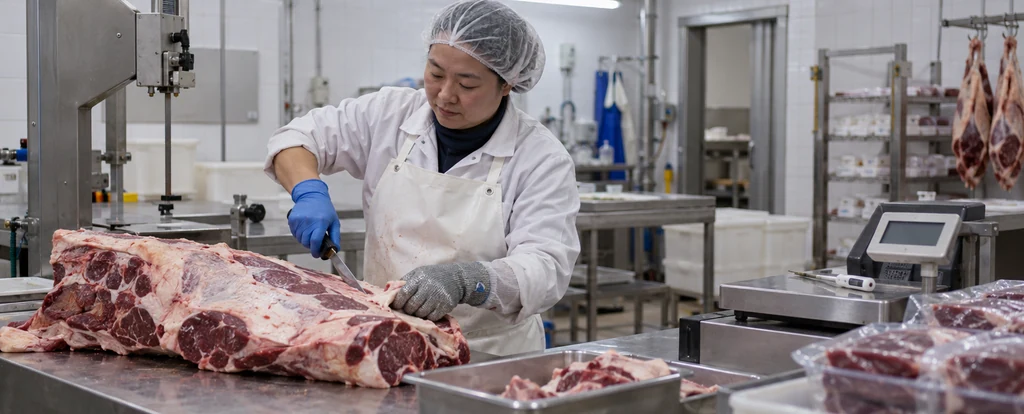
Meat process workers slaughter, bone, slice and pack meat in abattoirs and processing plants, supplying the red meat, poultry and smallgoods sold through supermarkets and butcher shops.
- Median salary
- $64,700
3.5%vs last year, before tax
- People employed
- 10,400
1.0%vs last year
- Projected growth
- −2%
to 2035
- AI exposure*
- Moderate
- automation risk
- Average hours
- 41/wk
+1h vs all jobs
- Shortage status*
- In shortage (regional)
national
Meat process workers work in abattoirs and processing plants, mostly on production lines in cold rooms kept low to slow spoilage. The work is divided into stations such as slaughtering, boning, slicing and packing, and most of it feeds wholesale cuts and packed meat for supermarkets, butcher shops and food service. It is different from butchery, which is a retail trade with its own apprenticeship, and from meat inspection, which is a separate regulatory role.
How much do meat process workers earn?
The median full-time salary for a meat process worker is $64,700 per annum, before tax, up $13,800 since 2018.
Pay is usually set by an enterprise agreement or the relevant award, so rates vary between plants and by classification. Shift and penalty loadings add to what you take home for afternoon, night and weekend work. A recognised qualification such as a Certificate III in Meat Processing can move you to a higher classification, and skilled boning and slaughtering stations generally sit above packing and cleaning roles.
What does a meat process worker do day to day?
The list below is what fills most weeks; the exact mix shifts with seniority and whatever stage the current work is at.
- Stunning and slaughtering animals to the welfare and hygiene standards set for the plant
- Boning, slicing and trimming carcasses into cuts for wholesale and retail
- Operating bandsaws, mincers, slicers and vacuum packing machines on a production line
- Packing, labelling and storing meat in cold rooms ready for dispatch
- Cleaning knives, benches and machinery at the end of a shift so the plant passes its hygiene checks
What skills do meat process workers need?
Employers look for food safety and hygiene, hand and power tool work, plant and equipment operation, backed by Meat bandsaw fluency and strong attention to detail.
Specialist skills
- Food safety and hygiene
- Hand and power tool work
- Plant and equipment operation
- Cleaning and grounds maintenance
Software and tools
- Meat bandsaw
- Knives and boning tools
- Meat mincer
- Vacuum packing machine
- Thermometer and scales
General skills
- Attention to detail
- Physical stamina and dexterity
- Safety and compliance awareness
Is the job growing?
About 10,400 people work as meat process workers in Australia, and employment is projected to decline 2% over the decade to 2035. That's a real decline, worth weighing carefully before training into the role.
How do you become a meat process worker?
Here's the path most meat process workers take, step by step.
- 1Apply for an entry level position
Plants and labour hire firms recruit for production, packing and cleaning roles without requiring a formal qualification. Applying directly to processors in your region as well as through labour hire helps, since many people start on a casual or seasonal basis.
- 2Complete the site induction
Before you go on the line you cover food safety and hygiene, animal welfare, and workplace health and safety. This is where you learn the specific rules the plant is audited against.
- 3Learn a station on the job
Training is paid and hands-on, and most people start with packing or cleaning before moving to knife work. Knife skills build over months, and a forklift licence or another licence the plant requires for its machinery is often picked up along the way.
- 4Add a qualification if you want to specialise
A Certificate II or III in Meat Processing covers boning, slaughtering and quality assurance, and is often delivered as a traineeship on site. It can lift your classification and pay, and is usually the step before more specialised work.
- 5Requalify for the trade or inspection route
Butchery needs an apprenticeship and meat inspection needs further study, so both are deliberate moves rather than promotions. They suit workers who want a trade qualification or a role off the chain.
Study routes we have checked
Qualifications that are a recognised way into this role, and what else you need.
- Certificate II in Meat Processing
A recognised route into this role
Work under the supervision described by the qualification and meet food-safety and workplace requirements.
- Certificate III in Meat Processing
A recognised route into this role
Skilled meat-processing operations; comply with food-safety and workplace requirements.
Ready to apply as a meat process worker?
Whether you're working toward becoming a meat process worker or already are one and want a hand with the next step (sharpening your resume for ATS screening, tightening your cover letter, or knowing what you'll actually be asked at interview), here are examples grounded in this specific role, not generic templates.
What jobs can a meat process worker move to?
Moving into Butcher typically comes with the biggest pay rise, worth $15,900 a year more on average.
| Move to | Typical pay change | Overlap | Retraining |
|---|---|---|---|
| Butcher A meat process worker brings meat cutting and handling experience to butchery, but needs an apprenticeship to qualify.Known move | +$15,900 | 47% | requalify |
| Meat Inspector A meat process worker brings practical meat handling and hygiene knowledge to inspection, with further study in meat inspection.Known move | +$12,300 | 8% | reskill |
| Slaughterer A meat process worker brings slaughtering and hygiene knowledge to dedicated slaughtering roles with minimal retraining.Known move | −$2,300 | 100% | minimal |
| Meat Boner and Slicer A meat process worker brings knife skills and meat handling to more specialised boning and slicing work.Known move | −$4,900 | 80% | minimal |
| Packaging Operator A meat process worker brings food safety and packing line experience to packaging operations, with further training in packaging.Known move | −$15,400 | 42% | reskill |
Moves are chosen from Jobs and Skills Australia's Data on Occupation Mobility, which follows income tax records between 2011-12 and 2020-21, together with entry requirements and skill overlap. A known move is one people were seen making in that data. Pay change compares median full-time pay for the two roles.
Who works as a meat process worker?
The typical meat process worker is 36 years old; 75% are men, 78% work full-time, and full-timers average 41 hours a week.
- 36
- Median age
- 25%
- Female share
- 78%
- Full-time
- +1h
- vs all-jobs avg
What's it like being a meat process worker?
The day is run by the line, with fixed breaks and a schedule that does not slow for anyone. Work happens in cold, wet rooms, standing for long stretches and repeating the same cuts or movements hundreds of times a shift. It suits someone who prefers a physical routine, an early start and a close team, and who can handle the cold and the pace.
What people like
- The shift ends when you clock off. Processing work stays on site, so there is no work to take home and shifts are rostered and predictable.
- You can see what you produced. By the end of a shift there is a pallet of packed cuts or a clean line ready for tomorrow, and that is the whole measure of the day.
- Skills that carry across the industry. Knife handling, hygiene practice and machinery experience are wanted in boning, slaughtering, butchery and seafood processing, so experience travels between plants.
- Close teamwork on the line. Each station depends on the person beside it, and crews tend to be tight-knit, particularly in regional plants where people have worked together for years.
What people find hard
- Cold, wet conditions. Rooms are kept cold to protect the meat and the floor is often wet, so you are dressed for it for the whole shift.
- Repetitive strain. Knife work and packing load the hands, wrists and shoulders, and repetitive strain injuries are a recognised risk in the industry.
- The pace is not yours to set. The chain sets the speed, and when it lifts or a station is short-staffed the pressure lands on everyone on the line.
- Early starts and shift work. Many plants start before dawn and run afternoon or night shifts, which shapes sleep and family routines.
Based on our synthesis of professional-body surveys and public accounts of the role, not first-person verified reviews.
Which industries employ meat process workers?
Manufacturing employs the largest share of meat process workers.
Top employing industries
- 1Manufacturing
Ranked by employment share; the source doesn't publish an exact percentage per industry.
| Year 12 or below | 61.4% | |
|---|---|---|
| Certificate III/IV | 14.6% | |
| Bachelor degree | 7.4% | |
| Diploma / Advanced Diploma | 5% | |
| Postgraduate | 2.2% |
Will AI replace meat process workers?
Automation reaches this job unevenly. Packing, labelling and grading are already handled by vision, X-ray and robotic systems in larger plants, while knife work on variable carcasses and the handling of live animals stay manual. That mix is what keeps the overall exposure moderate rather than high.
Share of typical working time by exposure level
- Boning, slicing and trimming with knivesRobotic cutters manage some standard primals, but following the seams of a carcass that varies in size and shape still needs a knife hand.30%moderate
- Slaughtering and animal handlingStunning and killing are regulated step by step and depend on reading a live animal, so a person stays at the head of the race.25%low
- Operating bandsaws, mincers and packing machineryProgrammable saws and automated packing lines now do much of the repetitive cutting, weighing and sealing, with operators supervising rather than feeding every piece.25%high
- Grading, labelling and quality checksCamera and X-ray systems grade cuts and print labels, and staff mainly check, correct and handle the exceptions.20%high
Common questions about becoming a meat process worker
Straight answers to the questions people ask most.
How much does a meat process worker earn?
A meat process worker earns $64,700 per year before tax, based on full-time median pay. Rates come from an enterprise agreement or the award, so shift loadings, weekend work and your classification change what you actually take home.
How do you become a meat process worker?
Most people start with no qualification at all by applying to a processing plant or a labour hire firm and learning on site. The induction covers food safety, hygiene and animal welfare, and knife skills build over the first months. A Certificate II or III in Meat Processing is the usual way to formalise it later.
Are meat process workers in demand?
Meat process workers are currently in shortage in regional areas, and employment is projected to decline 2% over the decade to 2035 over the decade to 2035. Vacancies cluster around regional plants, so being able to travel to or relocate near a processing town widens your options.
Will AI or automation replace meat process workers?
Automation has already taken over parts of the job, particularly packing, labelling and grading, where vision and X-ray systems sort and check cuts. Boning and slaughtering are harder to automate because carcasses vary and live animals need handling, so those stations stay largely hands-on.
What can a meat process worker move into?
Moving into meat boner and slicer work pays $4,900 less and uses much the same knife and hygiene skills. Butchery pays $15,900 more but needs an apprenticeship, and meat inspection pays $12,300 more with further study. A butchery qualification is also the route to running your own shop.
What are the hours like?
Full-time meat process workers average 41 hours a week, and most plants start early with shifts running across the day. Overtime and weekend work are common at export plants running near capacity.
Related roles
Not sure this is you? Take the career quiz and get a ranked shortlist of roles that fit how you like to work.