Reflexologist
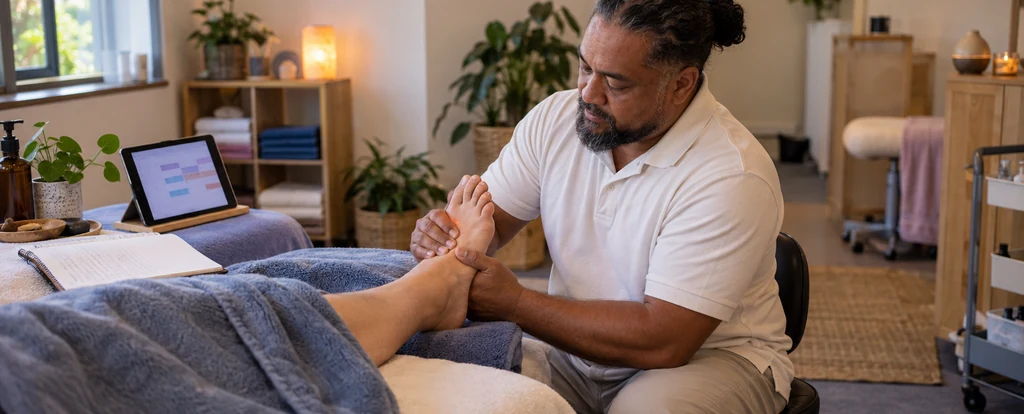
Reflexologists press and massage points on the feet and hands, working on the idea that these areas relate to other parts of the body.
- Median salary*
- $54,600
4.0%vs last year, before tax
- People employed*
- 2,800
3.7%vs last year
- Projected growth
- +21.4%
to 2035
- AI exposure*
- Low
- automation risk
- Average hours*
- 38/wk
−2h vs all jobs
- Shortage status
- Not in shortage
national
Reflexologists work one to one with clients in treatment rooms, usually in complementary health clinics, wellness centres or a home practice, and about 2,800 people work in the role. Sessions concentrate on the feet and hands rather than the whole body, which is what separates the work from massage therapy, and practitioners follow a set sequence of points instead of working through muscle groups. Appointments usually run for about an hour, and many clients come back on a regular schedule.
How much do reflexologists earn?
The median full-time salary for a reflexologist is $54,600 per annum, before tax, up $11,400 since 2018.
Pay in reflexology follows the booking diary, so someone working two days a week earns less across the year than someone booked five days. Practitioners employed in a clinic are usually paid an hourly rate or a share of each session fee, while those running their own practice set their own prices and cover the room, insurance and equipment themselves. Rates also vary between states and between established and newer practitioners.
What does a reflexologist do day to day?
The list below is what fills most weeks; the exact mix shifts with seniority and whatever stage the current work is at.
- Taking a health history and asking what the client wants from the session
- Working through a set sequence of pressure points on the feet and hands
- Adjusting pressure and pace as the client responds
- Writing treatment notes and tracking changes across repeat visits
- Managing bookings, reminders and payments between sessions
What skills do reflexologists need?
Employers look for health education and advice, personal care services, counselling and support work, backed by Cliniko fluency and strong client relationships and advisory.
Specialist skills
- Health education and advice
- Personal care services
- Counselling and support work
Software and tools
- Cliniko
- Mindbody
- Square Appointments
- Jane
General skills
- Client relationships and advisory
- Written communication
- Empathy and interpersonal care
- Attention to detail
Is the job growing?
About 2,800 people work as reflexologists in Australia, and employment is projected to grow 21.4% over the decade to 2035. That's very strong growth. Few roles in Australia are expanding this fast, and it points to solid demand for years to come.
How do you become a reflexologist?
Here's the path most reflexologists take, step by step.
- 1Complete a Certificate IV or diploma in reflexology
A nationally recognised qualification from a registered training organisation covers anatomy, the reflex maps used for the feet and hands, consultation skills and supervised practice on real clients. Full-time study usually takes about six months to a year, and some schools offer part-time or online theory with in-person clinic hours.
- 2Choose a course recognised by a professional association
Reflexology is not a registered health profession in Australia, so there is no national licence to obtain. Membership of a body such as the Reflexology Association of Australia or the Australian Traditional-Medicine Society generally requires a recognised qualification, and it gives clients a way to check your training.
- 3Arrange insurance and a place to work
Professional indemnity and public liability cover are standard for anyone treating clients, and some associations include it with membership. You can rent a room in a clinic, share space with other practitioners, or set up a treatment room at home where local council rules allow.
- 4Build a client list
Regular clients are what make the work financially viable, so many new practitioners start part time in an established clinic while their books fill. Referrals from nearby massage therapists, naturopaths, yoga teachers and allied health practices are a common source of new clients.
Ready to apply as a reflexologist?
Whether you're working toward becoming a reflexologist or already are one and want a hand with the next step (sharpening your resume for ATS screening, tightening your cover letter, or knowing what you'll actually be asked at interview), here are examples grounded in this specific role, not generic templates.
What jobs can a reflexologist move to?
Moving into Myotherapist typically comes with the biggest pay rise, worth $10,400 a year more on average.
| Move to | Typical pay change | Overlap | Retraining |
|---|---|---|---|
| Myotherapist Reflexologists bring hands-on pressure point and client care skills to myotherapy, but a clinical myotherapy degree is required.Known move | +$10,400 | 20% | requalify |
| Naturopath Reflexology's holistic assessment and wellbeing focus align with naturopathy, but a degree in naturopathy is required. | +$7,800 | 41% | requalify |
| Herbalist Reflexologists' holistic health knowledge and client consultation suit herbalism, but degree-level herbal medicine study is required.Known move | +$5,200 | 45% | requalify |
| Aromatherapist Reflexologists' knowledge of pressure points and holistic therapies transfers to aromatherapy with minimal additional training. | −$3,600 | 71% | minimal |
| Massage Therapist Reflexologists can apply their touch and relaxation skills to massage therapy, though formal massage qualifications are needed.Known move | −$5,300 | 13% | reskill |
Moves are chosen from Jobs and Skills Australia's Data on Occupation Mobility, which follows income tax records between 2011-12 and 2020-21, together with entry requirements and skill overlap. A known move is one people were seen making in that data. Pay change compares median full-time pay for the two roles.
Who works as a reflexologist?
The typical reflexologist is 45 years old; 85% are women, 42% work full-time, and full-timers average 38 hours a week.
- 45
- Median age
- 85%
- Female share
- 42%
- Full-time
- −2h
- vs all-jobs avg
What's it like being a reflexologist?
The work runs on a quiet, repetitive rhythm: a client arrives, you talk through how they have been, then most of the hour is spent on their feet and hands. It suits someone who likes unhurried one to one contact, is comfortable touching people, and can hold their focus through back to back appointments. The physical load sits in the thumbs, wrists and shoulders, so how many sessions you take in a day matters.
What people like
- Unhurried client contact. Sessions are long enough to talk properly with people, and regular clients often return for months or years.
- Low setup costs. A treatment room, a recliner, towels and a small kit of creams or powders cover most of what the work needs, which makes part-time practice realistic.
- Control over your hours. Practitioners who run their own practice decide how many clients to book, so the job can fit around study, family or another role.
- Watching people unwind. Clients often arrive tense and leave relaxed, and that shift across a single session is a clear part of the appeal.
What people find hard
- Income follows bookings. Cancellations, quiet weeks and unpaid holidays all show up in the pay, and building a full client list takes time.
- Repetitive strain on the hands. Applying sustained pressure with the thumbs and wrists through a full day leaves hands and shoulders sore, particularly in the early years.
- Scepticism about how it works. Some clients and other health practitioners question what reflexology does beyond relaxation, so practitioners often explain their approach carefully.
- Quiet days working alone. Many practitioners work by themselves, with no team around between appointments.
Based on our synthesis of professional-body surveys and public accounts of the role, not first-person verified reviews.
Which industries employ reflexologists?
Personal Care Services employs the largest share of reflexologists, followed by Allied Health Services.
Top employing industries
- 1Personal Care Services
- 2Allied Health Services
- 3Sports and Physical Recreation
Ranked by employment share; the source doesn't publish an exact percentage per industry.
| Certificate III/IV | 34% | |
|---|---|---|
| Diploma / Advanced Diploma | 26% | |
| Bachelor degree | 20% | |
| Year 12 or below | 20% |
Will AI replace reflexologists?
Reflexology is low exposure. The treatment itself is hands-on pressure applied in person, and nothing in the technology available to practitioners does that work. What AI and software do change is the administration around it, with booking platforms and note templates taking over scheduling, reminders and record keeping.
Share of typical working time by exposure level
- Pressure work on the feet and handsPractitioners work through a sequence of points by feel, adjusting pressure as the client responds, so the judgement comes from their hands rather than a screen.50%low
- Consultation and health historyOnline intake forms collect the basics before a visit, but reading how a client is actually going and what they want from the session is a conversation.20%moderate
- Bookings, reminders and paymentsPlatforms such as Cliniko, Mindbody and Square Appointments schedule appointments, send reminders and take payment automatically.15%high
- Treatment notes and record keepingNote templates and dictation tools cut the writing time, but the practitioner still decides what changed and what to try next.15%moderate
Common questions about becoming a reflexologist
Straight answers to the questions people ask most.
How much do reflexologists earn?
Reflexologists earn a median of $54,600 per year before tax. Take-home pay depends on how many clients you see and whether you work for a clinic or run your own practice, and part-time hours are common in the field.
How do you become a reflexologist?
Complete a nationally recognised Certificate IV or diploma in reflexology, then join a professional association and take out insurance. There is no national registration or licence for reflexologists in Australia, so your qualification and client base are what establish you.
Are reflexologists in demand?
Reflexologists are currently not in shortage, and employment is projected to grow 21.4% over the decade to 2035. The workforce is small, so the number of new positions behind that figure is smaller than it sounds, and clinics that already offer several complementary therapies are where much of the work sits.
Will AI replace reflexologists?
No. Reflexology is hands-on work in a treatment room, and AI reaches the administration around it rather than the treatment itself. Booking platforms such as Cliniko and Mindbody handle scheduling and reminders, and dictation tools speed up notes, but the pressure work and the client relationship stay with the practitioner.
What other careers can reflexologists move into?
Aromatherapy shares 71% of the skills reflexologists use, with median pay $3,600 less, while myotherapy pays $10,400 more and requires a clinical degree. Herbal medicine and naturopathy sit further again, both needing degree-level study. Many practitioners also stay in reflexology and build their own practice rather than change roles, which is often where earnings grow.
Can you work as a reflexologist part time?
Yes, and many practitioners do, particularly in the first few years while they build a client list or alongside another job. Because pay depends on the number of sessions you run, part-time work means a lower annual income rather than a lower hourly rate.
Related roles
Not sure this is you? Take the career quiz and get a ranked shortlist of roles that fit how you like to work.