Aromatherapist
Aromatherapists blend essential oils into massage and topical treatments that support relaxation, stress relief and skin care.
- Median salary*
- $51,000
3.9%vs last year, before tax
- People employed*
- 1,800
0.0%vs last year
- Projected growth*
- +4.2%
to 2035
- AI exposure*
- Low
- automation risk
- Average hours*
- 38/wk
−2h vs all jobs
- Shortage status*
- Not in shortage
national
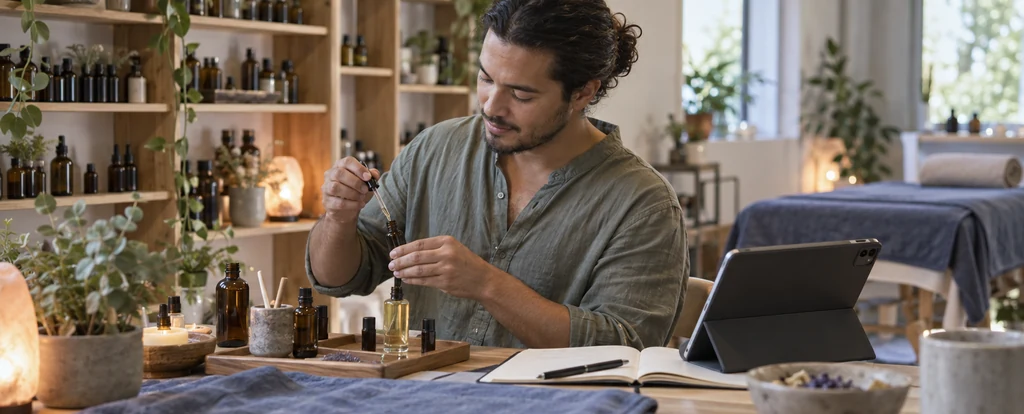
Aromatherapists mix essential oils with carrier oils for massage, inhalations and topical blends, and most work in wellness clinics, day spas or their own treatment room. What separates the role from massage therapy is the oils themselves: the consultation covers health history and scent preferences, and the blend is mixed for that client on the day. Many practitioners combine aromatherapy with massage or beauty therapy so they can fill a working week.
How much do aromatherapists earn?
The median full-time salary for an aromatherapist is $51,000 per annum, before tax, up $10,500 since 2018.
Pay depends on how you're engaged: an hourly or per-session rate in a spa or clinic, or a fee per treatment if you rent a room or run your own practice, where you also cover oils, insurance and room costs. Part-time hours are common, so annual earnings often reflect how many days you work as much as the rate itself. Retail blends and home-care products can add income without adding treatment hours, and a diploma plus a specialist area sometimes supports higher rates.
What does an aromatherapist do day to day?
The list below is what fills most weeks; the exact mix shifts with seniority and whatever stage the current work is at.
- Talking through health history, medications and scent preferences before a treatment
- Blending essential oils with carrier oils to a safe dilution for each client
- Giving aromatherapy massage and applying topical blends
- Mixing inhalation, bath and roller blends for clients to use at home
- Writing up treatment notes and rebooking clients, often in practice software such as Cliniko or Mindbody
What skills do aromatherapists need?
Employers look for personal care services, health education and advice, backed by Cliniko fluency and strong client relationships and advisory.
Specialist skills
- Personal care services
- Health education and advice
Software and tools
- Cliniko
- Mindbody
- Jane App
- Square Appointments
General skills
- Client relationships and advisory
- Written communication
- Empathy and interpersonal care
- Attention to detail
- Safety and compliance awareness
Is the job growing?
About 1,800 people work as aromatherapists in Australia, and employment is projected to grow 4.2% over the decade to 2035. That's modest growth: demand is steady rather than booming.
How do you become an aromatherapist?
Here's the path most aromatherapists take, step by step.
- 1Complete a Certificate IV or diploma in aromatherapy
A Certificate IV in Aromatherapy usually takes around six months to a year and covers essential oil chemistry, safe dilution, anatomy and massage, while a diploma goes further into clinical practice. Registered training organisations deliver both, often as online theory with practical workshop days.
- 2Add a massage qualification if you want to work hands-on
A Certificate IV in Massage Therapy (HLT42021) is a common companion qualification, and spas and clinics generally expect it because most treatments involve massage. Check that the course covers the units your professional association requires for membership.
- 3Join a professional association and take out insurance
Bodies such as the Australian Traditional Medicine Society and the International Aromatherapy and Aromatic Medicine Association offer membership, which usually includes access to professional indemnity and public liability cover. Employers and insurers often treat membership as evidence of training.
- 4Set up to practise
Working for yourself means an ABN, insurance, a space such as a rented room or clinic, and booking software like Cliniko, Mindbody or Jane App. Starting in an established clinic is a common way to learn client flow and paperwork while someone else handles the bookings.
- 5Build a client base
Repeat bookings are what make the work pay, so early effort goes into referrals, directory listings and relationships with nearby clinics rather than expecting a full book straight away.
Ready to apply as an aromatherapist?
Whether you're working toward becoming an aromatherapist or already are one and want a hand with the next step (sharpening your resume for ATS screening, tightening your cover letter, or knowing what you'll actually be asked at interview), here are examples grounded in this specific role, not generic templates.
What jobs can an aromatherapist move to?
Moving into Naturopath typically comes with the biggest pay rise, worth $11,400 a year more on average.
| Move to | Typical pay change | Overlap | Retraining |
|---|---|---|---|
| Naturopath Aromatherapists can requalify in naturopathy, building on plant knowledge and holistic care to offer clinical natural health consultations. | +$11,400 | 26% | requalify |
| Kinesiologist Aromatherapists can add kinesiology training to their bodywork and wellbeing skills for a broader complementary therapy practice. | +$10,400 | 29% | reskill |
| Beauty Therapist Aromatherapists can reskill in beauty therapy to use their essential oil and massage skills in broader salon and spa treatments. | +$10,300 | 47% | reskill |
| Reflexologist Aromatherapists bring massage and essential oil skills to reflexology, and both share diploma-level complementary health training. | +$3,600 | 71% | minimal |
| Homoeopath Aromatherapists share a holistic complementary health approach and can reskill in homoeopathy to offer remedy-based consultations. | +$1,000 | 30% | reskill |
Moves are chosen from Jobs and Skills Australia's Data on Occupation Mobility, which follows income tax records between 2011-12 and 2020-21, together with entry requirements and skill overlap. A known move is one people were seen making in that data. Pay change compares median full-time pay for the two roles.
Who works as an aromatherapist?
The typical aromatherapist is 42 years old; 88% are women, 36% work full-time, and full-timers average 38 hours a week.
- 42
- Median age
- 88%
- Female share
- 36%
- Full-time
- −2h
- vs all-jobs avg
What's it like being an aromatherapist?
The week runs on appointments, so it's a series of sessions with gaps for notes, cleaning and blending in between. Aromatherapists often work evenings and weekends to catch clients outside office hours, and much of the work is part time or self-employed. It suits people who enjoy one-to-one care, are comfortable working with touch and scent, and accept that income follows bookings.
What people like
- Clients who come back for the same blend. You often see the same people monthly, so you learn which oils suit them and what they're living with.
- You see the effect in the room. A client arriving wound up and leaving settled is the feedback loop of the job, and it happens within the hour.
- A craft with real depth. Essential oil chemistry, dilution and blending are subjects you can keep studying, and that study shows in what you can offer clients.
- Hours you can shape. Part-time work and room rental make it possible to fit the job around study, family or another role.
What people find hard
- Income follows bookings. Cancellations, quiet weeks and seasonal dips come straight out of your pay, particularly in private practice.
- It's physical work. Massage loads your hands, wrists and back, and plenty of practitioners reduce their treatment hours over time.
- The evidence doesn't always match the claims. Clients sometimes arrive expecting oils to treat a medical condition, and you have to explain what aromatherapy can and can't do without dismissing their experience.
- Anyone can use the title. Aromatherapy isn't a registered health profession in Australia, so qualifications and association membership are what separate trained practitioners from untrained ones.
Based on our synthesis of professional-body surveys and public accounts of the role, not first-person verified reviews.
Which industries employ aromatherapists?
Personal and other services employs the largest share of aromatherapists, followed by Health care and social assistance.
Top employing industries
- 1Personal and other services
- 2Health care and social assistance
- 3Accommodation and food services
- 4Retail trade
Ranked by employment share; the source doesn't publish an exact percentage per industry.
| Certificate III/IV | 34% | |
|---|---|---|
| Diploma / Advanced Diploma | 26% | |
| Bachelor degree | 20% | |
| Year 12 or below | 20% |
Will AI replace aromatherapists?
Aromatherapy carries low exposure because the core of the job is physical and personal: blending oils to a safe dilution and working on a client's body through massage. Software has already absorbed bookings, reminders and parts of record-keeping, and AI tools can suggest blend combinations from a database, but they can't judge how a client responds to touch or to a scent in the room. The advisory side, where you ask about health history and medications and decide what's safe for that person, still needs a qualified practitioner.
Share of typical working time by exposure level
- Blending oils and giving the massageMeasuring drops into a carrier oil and working through a full-body massage is hands-on work that no current tool performs.45%low
- Talking through health history, goals and scent preferencesIntake forms and summaries can be drafted by software, but discussing medications, pregnancy or skin conditions and adapting the treatment on the spot stays with you.20%moderate
- Mixing retail blends and explaining home useBlend apps can propose recipes for sleep or stress, but you still test how a blend smells and sits on the skin before recommending it.20%moderate
- Treatment notes, rebooking and remindersPractice software and AI note tools already draft session records from voice or shorthand, and automated reminders handle most rebooking follow-up.15%high
Common questions about becoming an aromatherapist
Straight answers to the questions people ask most.
How much do aromatherapists earn?
Full-time aromatherapists earn a median of $51,000 per year before tax. What you take home depends on whether you're paid by the hour or by the treatment, how many clients you see in a week, and whether you rent a room or run your own practice.
How do you become an aromatherapist?
The usual route is a Certificate IV in Aromatherapy, often alongside a massage qualification, then membership of a professional association for insurance and credibility. Aromatherapy isn't a registered profession in Australia, so the course you choose sets your standard of practice.
Are aromatherapists in demand?
Aromatherapists are currently not in shortage, and employment is projected to grow 4.2% over the decade to 2035. The occupation is small and much of the work is part time or self-employed, so your client list matters more than the number of advertised jobs.
Will AI replace aromatherapists?
The hands-on work keeps exposure low, and AI mostly changes the admin around it, including bookings, reminders, treatment notes and marketing. Blend databases can suggest combinations, but choosing oils for a person and applying them in a treatment is still done by hand.
Where can aromatherapists move next?
Running your own practice is a common progression and often where earnings grow, since income follows the clients you book. Reflexologists earn $3,600 more for a small amount of extra training, and beauty therapists earn $10,300 more after reskilling in salon treatments. Naturopathy and kinesiology take longer to qualify in and lead toward clinical or consultation-based practice.
Do aromatherapists need to be registered?
There's no registration or licence for aromatherapy in Australia because it isn't a registered health profession. Qualifying through a registered training organisation and joining a professional association is what shows clients and employers that you're trained.
Related roles
Not sure this is you? Take the career quiz and get a ranked shortlist of roles that fit how you like to work.