Respiratory Physician
Respiratory physicians are specialist doctors who diagnose and treat diseases of the lungs, airways and breathing during sleep, from asthma and COPD to lung cancer and sleep apnoea.
- Median salary*
- $203,800
4.4%vs last year, before tax
- People employed
- 350
16.7%vs last year
- Projected growth
- +32.8%
to 2035
- AI exposure*
- Low
- automation risk
- Average hours
- 49/wk
+9h vs all jobs
- Shortage status
- In shortage
national
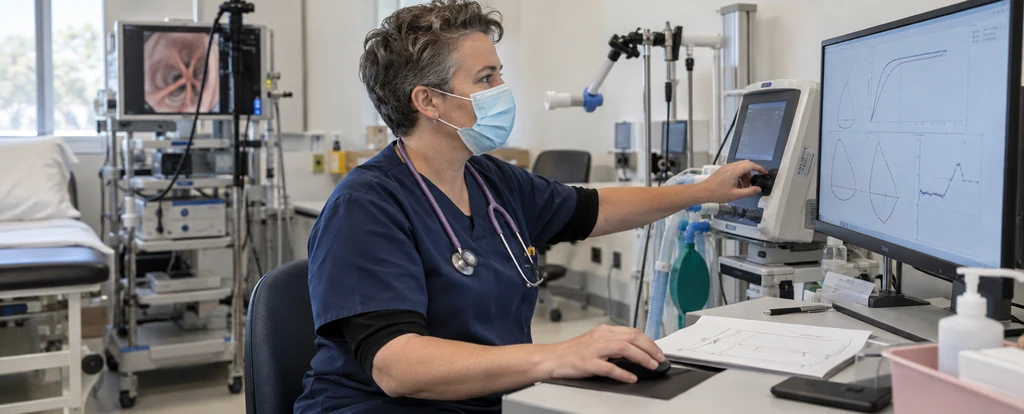
They work mainly in public and private hospitals and outpatient clinics, running lung function and sleep laboratories alongside ward, intensive care and consulting work. What sets the role apart from general medicine is the technical and procedural side: bronchoscopy, ventilator and non-invasive ventilation management, and the interpretation of spirometry and sleep studies. Most hold a hospital appointment, and many also see private patients, teach registrars or take part in clinical research.
How much do respiratory physicians earn?
The median full-time salary for a respiratory physician is $203,800 per annum, before tax, up $43,100 since 2018.
Specialists in public hospitals are paid on state enterprise agreement scales, so pay moves with your years of service and the state or territory you work in. Private consulting and procedural work can lift earnings above the public scale, but income there depends on how many patients you see and how much of your week you commit to private rooms. Respiratory physicians who combine public sessions with private practice, research or a university appointment usually draw income from more than one source.
What does a respiratory physician do day to day?
The list below is what fills most weeks; the exact mix shifts with seniority and whatever stage the current work is at.
- Assessing patients with breathlessness, chronic cough, lung masses and sleep disorders
- Running and interpreting lung function tests, bronchoscopy and sleep studies
- Prescribing and adjusting inhaled, oral and biologic therapies for airway disease
- Managing inpatients on ventilators, non-invasive ventilation and oxygen therapy
- Supervising registrars and running specialist respiratory and sleep clinics
What skills do respiratory physicians need?
Employers look for patient care and support, clinical assessment and treatment, medication management, backed by Electronic medical records (eMR) fluency and strong written communication.
Specialist skills
- Patient care and support
- Clinical assessment and treatment
- Medication management
- Care planning and coordination
- Health education and advice
Software and tools
- Electronic medical records (eMR)
- Spirometry and lung function systems
- Bronchoscopy equipment
- Ventilator and NIV devices
- Sleep study and polysomnography software
General skills
- Written communication
- Problem solving
- Empathy and interpersonal care
Is the job growing?
About 350 people work as respiratory physicians in Australia, and employment is projected to grow 32.8% over the decade to 2035. That's very strong growth. Few roles in Australia are expanding this fast, and it points to solid demand for years to come.
How do you become a respiratory physician?
Here's the path most respiratory physicians take, step by step.
- 1Complete a medical degree
Entry is through an undergraduate or graduate medical program of four to six years, and it is the qualification every later step depends on. Places are competitive, and the ATAR or GPA needed is high.
- 2Finish internship and gain general registration
A supervised intern year rotating through medicine, surgery and emergency leads to general registration with the Medical Board of Australia through AHPRA. You are paid as a hospital doctor from this point, which makes the remaining training years financially workable.
- 3Complete basic physician training
Three years of adult medicine through the Royal Australasian College of Physicians, including written and clinical examinations, is the standard entry point into any physician specialty.
- 4Complete advanced training in respiratory and sleep medicine
Three years of RACP advanced training in accredited respiratory and sleep posts, with procedural experience in bronchoscopy, lung function and sleep medicine, leads to fellowship. Training is done while working in hospital posts and studying, so the exam years are the heaviest stretch.
Ready to apply as a respiratory physician?
Whether you're working toward becoming a respiratory physician or already are one and want a hand with the next step (sharpening your resume for ATS screening, tightening your cover letter, or knowing what you'll actually be asked at interview), here are examples grounded in this specific role, not generic templates.
What jobs can a respiratory physician move to?
We don't list lateral moves for respiratory physicians: leaving means a full new qualification rather than a career move, and the realistic routes in are covered under how to become one.
Who works as a respiratory physician?
The typical respiratory physician is 44 years old; 58% are men, 77% work full-time, and full-timers average 49 hours a week.
- 44
- Median age
- 42%
- Female share
- 77%
- Full-time
- +9h
- vs all-jobs avg
What's it like being a respiratory physician?
The week runs on clinics, ward rounds, procedure lists and reporting sessions, so it alternates between seeing patients and reading the tests other doctors have ordered. Diagnostic uncertainty is built in: breathlessness and chronic cough have long lists of possible causes, and much of the skill is narrowing them down without missing something serious. Hours are long, usually past a standard working week, and on-call cover reaches into nights and weekends.
What people like
- Seeing the difference within days. Asthma and COPD flare-ups often improve quickly once the right treatment starts, so you get a clear sense of whether your plan is working.
- A practical as well as a thinking side. Bronchoscopy, lung function interpretation and sleep studies give the week a hands-on element that pure ward medicine does not have.
- Patients you get to know. People with chronic lung disease come back over years, so you build a picture of their baseline and notice small changes early.
- Teaching and research are part of the job. Most specialist posts sit in teaching hospitals, where registrars, medical students and clinical trials are a normal part of the week.
What people find hard
- The examination years. Advanced training is done while working full time in a hospital and studying for RACP assessments, which leaves little room for much else.
- Delivering bad news. Telling someone their lung cancer is inoperable or that their disease has progressed is a regular part of the role.
- Disease that keeps returning. Much of the caseload is smoking-related, and some patients keep smoking despite repeated advice, which can be frustrating to watch.
- Waiting lists shape the work. Lung function and sleep services often carry long waits, so part of the week goes on deciding who is seen first and who can wait.
Based on our synthesis of professional-body surveys and public accounts of the role, not first-person verified reviews.
Which industries employ respiratory physicians?
Health Care and Social Assistance employs the largest share of respiratory physicians.
Top employing industries
- 1Health Care and Social Assistance
Ranked by employment share; the source doesn't publish an exact percentage per industry.
| Bachelor degree | 50.6% | |
|---|---|---|
| Postgraduate | 46% | |
| Diploma / Advanced Diploma | 0.9% | |
| Certificate III/IV | 0% |
Will AI replace respiratory physicians?
Respiratory medicine rates low for AI exposure because the centre of the job is examining a patient, deciding what is causing their breathlessness and choosing a treatment, which happens in the consultation. The technology in the specialty, such as polysomnography scoring, spirometry analysis and AI-assisted reading of chest CTs, changes how quickly tests are measured and reported, not who decides what the numbers mean for this patient.
Share of typical working time by exposure level
- Clinic assessment and diagnosisTaking a history from someone with a chronic cough or unexplained breathlessness and working out which of several causes is most likely depends on the consultation itself.30%low
- Bronchoscopy and pleural proceduresPassing a scope to sample a lung mass or clear an airway is hands-on work in a live patient, and decisions during the procedure are made at the bedside.25%low
- Ward rounds, ventilation and ongoing careAdjusting non-invasive ventilation or oxygen, reviewing how a patient responded overnight and coordinating care with physiotherapists and nurses happens on the ward rather than in software.25%low
- Reading lung function and sleep studiesSpirometry and sleep software now flags patterns and scores sleep stages automatically, which shortens reporting but still needs a physician to interpret the result against the person's history.20%moderate
Common questions about becoming a respiratory physician
Straight answers to the questions people ask most.
How much do respiratory physicians earn?
Respiratory physicians earn a median of $203,800 per year before tax. Public hospital specialists are paid on state enterprise agreement scales that rise with years of service, while income from private consulting and procedures depends on how much of your week you commit to rooms.
How do you become a respiratory physician?
You complete a medical degree, a supervised intern year and general registration, then three years of basic physician training with the Royal Australasian College of Physicians. Advanced training in respiratory and sleep medicine takes a further three years of accredited hospital posts, ending in fellowship. You are paid as a hospital doctor throughout, though the training years are long and scheduled around exams.
Are respiratory physicians in demand in Australia?
Respiratory physicians are currently in shortage nationally, and employment is projected to grow 32.8% over the decade to 2035 over the decade. For anyone weighing up the specialty, that combination points to continuing need for respiratory and sleep services in hospitals and in private practice.
Will AI replace respiratory physicians?
No. The specialty rates low for AI exposure because the central work is examining a patient, taking a history and deciding what is wrong, which software cannot do. Tools such as automated sleep staging, spirometry analysis and AI-assisted reading of chest CTs are already in some services, and they speed up measurement and reporting while the physician decides what the results mean for that person.
What career moves are open to a respiratory physician?
The usual way in is from a resident medical officer role, since general hospital experience and basic physician training are the shared foundation, and median full-time pay is $99,800 more than at that level. From consultancy, many combine public hospital sessions with private consulting rooms, where earnings often grow, or move into research, education or hospital leadership.
How many hours do respiratory physicians work?
Full-time respiratory physicians average 49 hours a week, and 77% work full time. The load is spread across clinics, ward rounds, procedure lists and reporting, with on-call cover for nights and weekends.
Related roles
- Resident Medical Officer
- Medical Oncologist
- Paediatrician
- Diabetes Educator
- Geriatrician
- Clinical Immunologist and Allergist
Not sure this is you? Take the career quiz and get a ranked shortlist of roles that fit how you like to work.