Retail Assistant
Retail assistants serve customers on the shop floor, work the register and keep stock moving in stores from supermarkets to boutiques.
- Median salary
- $64,500
3.7%vs last year, before tax
- People employed
- 562,000
0.3%vs last year
- Projected growth
- +7%
to 2035
- AI exposure*
- High
- automation risk
- Average hours
- 41/wk
+1h vs all jobs
- Shortage status*
- Not in shortage
national
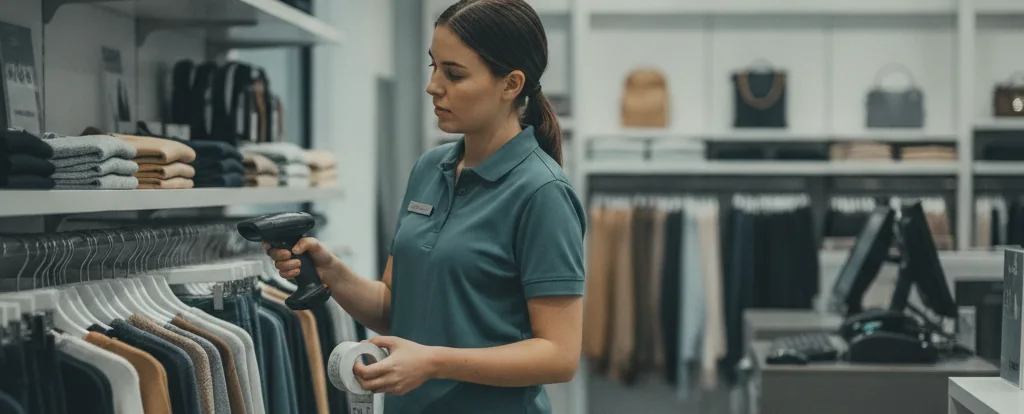
The work happens across the shop floor rather than at one station: serving customers, working the register, unpacking deliveries and resetting displays, usually as part of a team of assistants under a supervisor or store manager. It's a common first job, and most of the workforce holds no qualification beyond school, though the larger chains run their own paid training. What separates a retail assistant from a checkout operator is range: the operator stays on the register, while the assistant covers whatever the floor needs that shift, register included.
How much do retail assistants earn?
The median full-time salary for a retail assistant is $64,500 per annum, before tax, up $13,800 since 2018.
Most retail assistants are paid under the General Retail Industry Award, so the rate depends on your age, your classification and when you work: weekend and public holiday shifts attract penalty rates, and casuals get a loading instead of paid leave. The big supermarket and department store chains often pay above the award under enterprise agreements, while small independent shops usually pay the award minimum. Moving into supervision or a specialist department is what lifts the rate over time.
What does a retail assistant do day to day?
The list below is what fills most weeks; the exact mix shifts with seniority and whatever stage the current work is at.
- Serving customers at the register through the busy periods, handling cash, cards, refunds and returns
- Walking the floor to answer questions about sizes, stock and whether there's more of an item out the back
- Unpacking deliveries and getting stock onto shelves and racks before the store opens or after it closes
- Picking and packing online orders and click and collect pickups from the same shelves customers are browsing
- Resetting displays and promotional space when head office sends through a new layout
What skills do retail assistants need?
Employers look for selling and negotiation, merchandising and stock presentation, inventory management, backed by POS systems fluency and strong customer service.
Specialist skills
- Selling and negotiation
- Merchandising and stock presentation
- Inventory management
Software and tools
- POS systems
- Inventory scanners
General skills
- Customer service
- Attention to detail
Is the job growing?
About 562,000 people work as retail assistants in Australia, and employment is projected to grow 7% over the decade to 2035. That's modest growth: demand is steady rather than booming.
How do you become a retail assistant?
Here's the path most retail assistants take, step by step.
- 1Apply directly to stores, no qualification needed
Retail hiring happens store by store and rarely asks for a certificate. A short resume listing any customer contact, plus wide availability across weekends, is usually enough to get a first interview.
- 2Complete the in-store induction and register training
Most chains put new staff through a paid induction covering the point-of-sale system, refunds, safety and loss prevention, then roster you alongside an experienced assistant for your first shifts.
- 3Add a certificate if the store sells restricted goods
Selling alcohol requires a Responsible Service of Alcohol certificate, which is issued state by state, and handling fresh or packaged food usually requires a food safety handler certificate. Both are short courses you can do online.
- 4Take ownership of a department or product area
Looking after a section such as fresh food, footwear or electronics is how assistants become the person others ask for advice, and it's the experience supervisors are usually chosen from.
- 5Move into supervision, with a Certificate III in Retail behind you
A Certificate III in Retail (SIR30216) covers rostering, stock control and leading a team, and is often done online while working. It's the usual qualification behind a first supervisor or duty manager role.
Study routes we have checked
Qualifications that are a recognised way into this role, and what else you need.
- Certificate III in Retail
A recognised route into this role
Retail service training; meet any employer-specific product and workplace requirements.
Ready to apply as a retail assistant?
Whether you're working toward becoming a retail assistant or already are one and want a hand with the next step (sharpening your resume for ATS screening, tightening your cover letter, or knowing what you'll actually be asked at interview), here are examples grounded in this specific role, not generic templates.
What jobs can a retail assistant move to?
Moving into Technology Sales Representative typically comes with the biggest pay rise, worth $35,300 a year more on average.
| Move to | Typical pay change | Overlap | Retraining |
|---|---|---|---|
| Technology Sales Representative Retail assistants with sales experience can specialise in technology sales, learning technical product details and consultative selling. | +$35,300 | 16% | reskill |
| Sales Representative Retail assistants bring customer service and product knowledge to sales representative roles, adding structured training in business-to-business selling.Known move | +$23,500 | 22% | reskill |
| Store Manager Retail assistants can move into store management, using their floor experience and people skills to run daily operations.Known move | +$19,700 | 18% | reskill |
| Equipment Hire Manager Retail assistants with rental or sales experience can move into equipment hire management, learning fleet logistics and hire operations. | +$18,700 | 32% | reskill |
| Retail Supervisor Retail assistants advance to retail supervisor by coordinating teams and shifts, building on their product and customer service knowledge.Known move | +$1,400 | 25% | reskill |
Moves are chosen from Jobs and Skills Australia's Data on Occupation Mobility, which follows income tax records between 2011-12 and 2020-21, together with entry requirements and skill overlap. A known move is one people were seen making in that data. Pay change compares median full-time pay for the two roles.
Who works as a retail assistant?
The typical retail assistant is 23 years old; 65% are women, 25% work full-time, and full-timers average 41 hours a week.
- 23
- Median age
- 65%
- Female share
- 25%
- Full-time
- +1h
- vs all-jobs avg
What's it like being a retail assistant?
The rhythm of the job follows trading hours rather than a Monday to Friday week, so the busiest shifts fall on weekends, sale periods and the weeks before Christmas. The pressure is steady rather than intense: queues, restocking targets and the occasional difficult customer, with little say over how many hours you get. People who enjoy it tend to like the contact with customers, the clear finish time at the end of a shift and the fact that the work stays at work.
What people like
- You clock off and you're done. Shifts have a clear start and finish, and nothing follows you home the way it does in salaried office roles. For a lot of people that's the main appeal.
- The team is often people your own age. Retail draws a young workforce, so shifts come with a social side and you're usually learning alongside people at a similar stage.
- Hours can fit around study or family. Part-time and casual rosters are normal, and weekend and evening shifts let you work around a course or school run, provided you're reliable about the shifts you accept.
- Product knowledge builds quickly. Within a few weeks you know the range better than most customers, and that knowledge carries over to the next store or into a sales job in a related field.
What people find hard
- Weekends and public holidays are peak trading. Shops are busiest when everyone else is off, so Saturday afternoons, Boxing Day and the Christmas period are exactly when you'll be asked to work.
- Rosters shift at short notice. Quiet trading periods bring hours cuts, while extra shifts can appear the day before, which makes planning anything else difficult.
- Complaints about decisions you didn't make. Refund policies, out-of-stock items and prices set elsewhere all land on whoever is standing at the counter.
- It's physical and repetitive. You're on your feet for the whole shift, lifting cartons and running the same transactions again and again, and a busy Saturday shows by the end of it.
Based on our synthesis of professional-body surveys and public accounts of the role, not first-person verified reviews.
Which industries employ retail assistants?
Retail Trade employs the largest share of retail assistants, followed by Accommodation and Food Services.
Top employing industries
- 1Retail Trade
- 2Accommodation and Food Services
Ranked by employment share; the source doesn't publish an exact percentage per industry.
| Year 12 or below | 65.1% | |
|---|---|---|
| Certificate III/IV | 11.4% | |
| Bachelor degree | 9.4% | |
| Diploma / Advanced Diploma | 7.2% | |
| Postgraduate | 3% |
Will AI replace retail assistants?
Retail assistant work is highly exposed to automation, because self-checkouts, automated ordering and electronic shelf labelling now handle much of the register and reordering that used to sit with staff. What stays human is the part customers still ask for in person: finding the right item, sorting out a return, and knowing the stock well enough to make a recommendation. Expect the job to keep moving toward service and floor work rather than standing at a till.
Share of typical working time by exposure level
- Serving customers at the registerSelf-checkouts and tap-and-go terminals already take most routine transactions in supermarkets and large chains.25%high
- Answering questions about stock, sizes and returnsOnline chat and product recommendation tools handle simple queries, but checking whether something is out the back still happens on your feet.25%moderate
- Replenishing shelves and processing deliveriesOrdering systems decide what to reorder, but someone still unpacks the pallet, prices it and gets it onto the shelf during trading hours.25%low
- Resetting promotions and displays to a new layoutPlanograms and price changes now arrive as a digital instruction from head office, so the setup is largely following the system rather than deciding the layout yourself.25%high
Common questions about becoming a retail assistant
Straight answers to the questions people ask most.
How much do retail assistants get paid?
Retail assistants earn a median of $64,500 per annum, before tax. That figure covers full-time work, so casual and part-time rates are usually lower per week, and junior rates under the award apply until you turn 21.
Do you need experience or a qualification to become a retail assistant?
No. Employers hire on availability, reliability and how you deal with people, and most run their own induction once you start. The exceptions are stores selling alcohol or handling fresh food, where you'll need an RSA or food safety certificate first.
Are retail assistant jobs in demand?
Retail assistants are currently not in shortage. Employment is projected to grow 7% over the decade to 2035, and the size of the workforce means stores are hiring somewhere in most shopping centres most weeks. Finding hours that suit you is usually harder than finding a job.
Will AI and self-checkouts replace retail assistants?
Automation has already taken over much of the register work, which is why the role's exposure to AI is high. What remains in person is finding stock, sorting out a return and working out what a customer actually needs, and the job is shifting further toward that floor and service work.
What can a retail assistant move into?
The usual next step is retail supervisor, coordinating shifts and cash while still on the floor, where pay is $1,400 more. From there, store manager $19,700 more adds responsibility for rosters, budgets and sales targets across a whole site. If you prefer the selling side to the shop floor, sales representative pays $23,500 more, though it takes training in business-to-business selling.
What hours do retail assistants work?
Full-time retail assistants average about 41 hours a week, and most rosters include weekend or evening shifts because that's when shops are busiest. Part-time and casual work is common, which suits students and people with other commitments, but it also means your hours can change from week to week.
Related roles
- Sales Representative
- Store Manager
- Retail Supervisor
- Technology Sales Representative
- Equipment Hire Manager
- Checkout Operator
Not sure this is you? Take the career quiz and get a ranked shortlist of roles that fit how you like to work.