Home Manufacturing & Production
Sewing Machinist
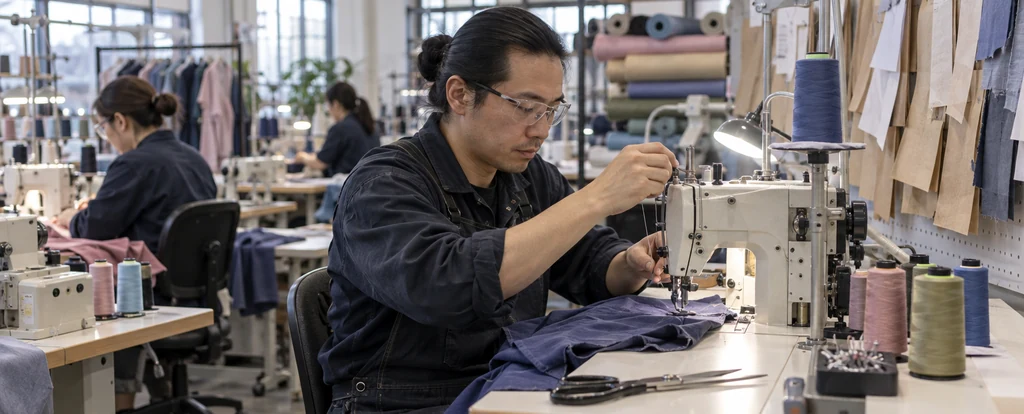
Sewing machinists run industrial machines that stitch fabric into clothing, furnishings and other textile products.
- Median salary
- $55,500
3.5%vs last year, before tax
- People employed
- 6,500
0.0%vs last year
- Projected growth
- +7.5%
to 2035
- AI exposure*
- High
- automation risk
- Average hours
- 40/wk
matches all-jobs average
- Shortage status
- Not in shortage
national
Most sewing machinists work on a factory floor or in an alterations and repair business, stitching the same type of item in runs rather than one garment from start to finish. The job sits at the machine: cutters, pressers and finishers handle the steps either side, and a supervisor sets the order and the rate. It is different from tailoring, which involves fitting garments to an individual customer and more hand finishing.
How much do sewing machinists earn?
The median full-time salary for a sewing machinist is $55,500 per annum, before tax, up $11,800 since 2018.
Pay is usually set by the Textile, Clothing, Footwear and Associated Industries Award, which classifies machinists by the level of work they do, so your rate depends on the difficulty of the stitching as much as on experience. Shift and weekend work attracts penalty rates, and factories covered by enterprise agreements often pay above the award minimum. Small alterations businesses can pay differently from larger manufacturers, and some factory roles include piece rates tied to output.
What does a sewing machinist do day to day?
The list below is what fills most weeks; the exact mix shifts with seniority and whatever stage the current work is at.
- Setting up machines with the right needle, thread and tension for each fabric
- Stitching seams, hems, zips and trims to a pattern or sample
- Checking seams and finished items against the specification and unpicking faulty work
- Cleaning, oiling and adjusting machines, and swapping needles or feet between runs
- Keeping pace with the line rate on a run of identical items
What skills do sewing machinists need?
Employers look for craft and handmade production, process improvement, backed by Industrial sewing machine fluency and strong attention to detail.
Specialist skills
- Craft and handmade production
- Process improvement
Software and tools
- Industrial sewing machine
- Overlocker
- Coverstitch machine
- Bartack machine
- Fabric shears
General skills
- Attention to detail
- Time and deadline management
- Safety and compliance awareness
- Problem solving
- Written communication
- Physical stamina and dexterity
Is the job growing?
About 6,500 people work as sewing machinists in Australia, and employment is projected to grow 7.5% over the decade to 2035. That's modest growth: demand is steady rather than booming.
How do you become a sewing machinist?
Here's the path most sewing machinists take, step by step.
- 1Start with a short course or a traineeship
A Certificate II or III in Clothing and Textile Production, or a textile fabrication traineeship, covers machine setup, garment construction and safe work practices. Many employers will also train a reliable beginner on the job, so prior experience helps but is not always required.
- 2Get time on the machines you will actually use
An industrial machine behaves differently from a domestic one. Practise on an overlocker, coverstitch and bartack machine, and learn to thread and set tension quickly, because that is what a supervisor will expect in your first week.
- 3Build a sample book
Keep a folder of seams, hems, zips, buttonholes and finished items. Employers in alterations and sample rooms ask to see examples, and it shows what you can do without a formal qualification on paper.
- 4Specialise if you want to move up
Courses in patternmaking, upholstery or tailoring open work in sample rooms and made-to-measure, and shorten the move into patternmaking that otherwise needs a drafting and grading course.
Ready to apply as a sewing machinist?
Whether you're working toward becoming a sewing machinist or already are one and want a hand with the next step (sharpening your resume for ATS screening, tightening your cover letter, or knowing what you'll actually be asked at interview), here are examples grounded in this specific role, not generic templates.
What jobs can a sewing machinist move to?
Moving into Process Worker typically comes with the biggest pay rise, worth $23,500 a year more on average.
| Move to | Typical pay change | Overlap | Retraining |
|---|---|---|---|
| Process Worker Factory production work absorbs sewing machinists, who bring machine minding and steady hand skills to other lines.Known move | +$23,500 | 33% | reskill |
| Clothing Patternmaker Machinists who understand garment construction can move into patternmaking after a short course in drafting and grading.Known move | +$9,500 | 50% | short course |
| Canvas Goods Maker Work with heavy fabrics transfers to canvas goods making, though entry to the trade needs an apprenticeship.Known move | +$6,900 | 23% | requalify |
| Tailor Industrial stitching and fabric handling carry directly into made-to-measure tailoring work.Known move | −$900 | 44% | reskill |
| Milliner Millinery builds on the same machine stitching and fabric skills, adding training in blocking and trimming hats.Known move | −$900 | 44% | reskill |
Moves are chosen from Jobs and Skills Australia's Data on Occupation Mobility, which follows income tax records between 2011-12 and 2020-21, together with entry requirements and skill overlap. A known move is one people were seen making in that data. Pay change compares median full-time pay for the two roles.
Who works as a sewing machinist?
The typical sewing machinist is 53 years old; 84% are women, 54% work full-time, and full-timers average 40 hours a week.
- 53
- Median age
- 84%
- Female share
- 54%
- Full-time
- +0h
- vs all-jobs avg
What's it like being a sewing machinist?
The job has a rhythm: a run of the same seam, piece after piece, with the machine set and your hands doing the rest. That suits people who like visible progress and can hold concentration through repetition, and it is hard going for anyone who needs variety or dislikes sitting at a machine for a whole shift. Output is measured, so pace matters, but accuracy comes first, because a dropped stitch means unpicking or a rejected batch.
What people like
- Finishing a stack of work you can see. The results are physical and immediate, whether that is a bundle of completed items at the end of a run or a repaired jacket that fits its owner again.
- You can learn it on the job. Most people start without a formal qualification and pick up the trade on the factory floor while being paid, which keeps the cost of entry low.
- Clear standards. A seam is either straight and secure or it is not, so you know what good work looks like and can judge your own output without waiting for feedback.
- Room to specialise. Sample rooms, upholstery, outdoor and canvas goods and made-to-measure tailoring all need the same base skills with extra technique on top.
What people find hard
- Repetition and strain. The same motion thousands of times a shift can tighten your neck, shoulders and wrists, and the work rarely gives you a reason to move around.
- Pace set by the line. The rate is decided by production targets rather than by how a particular fabric is behaving, and stopping to fix a problem puts you behind.
- Pay is set by classification. Rates come from the award or an enterprise agreement, so there is little room to negotiate individually on the factory floor.
- Noise and long hours at the machine. Production rooms are loud, lighting is bright, and much of the work is done seated or standing in one spot for most of the day.
Based on our synthesis of professional-body surveys and public accounts of the role, not first-person verified reviews.
Which industries employ sewing machinists?
Manufacturing employs the largest share of sewing machinists, followed by Retail Trade.
Top employing industries
- 1Manufacturing
- 2Retail Trade
Ranked by employment share; the source doesn't publish an exact percentage per industry.
| Year 12 or below | 61.2% | |
|---|---|---|
| Certificate III/IV | 12.7% | |
| Diploma / Advanced Diploma | 8.6% | |
| Bachelor degree | 7.3% | |
| Postgraduate | 1.7% |
Will AI replace sewing machinists?
Sewing machining sits at the high end of automation exposure, because much of the work is stitching the same seam repeatedly to a fixed pattern. Automated cutting tables, programmable sewing machines and computer-guided stitching already do a large share of that in mass production. What holds up is sample making, alterations and short production runs, where fabric has to be handled, checked and adjusted piece by piece.
Share of typical working time by exposure level
- Long production runs of straight seamsOnce a run is set up, programmable and automated machines stitch standard items such as workwear panels and simple hems with little hand guidance.35%high
- Sample making, alterations and short runsOne-off and made-to-measure work means handling unfamiliar fabric and solving problems as they appear, which no machine does unattended.25%low
- Machine setup and tension adjustmentChoosing the needle, thread and tension for a new fabric still comes down to feel and a test seam, though machines increasingly suggest settings and store them for next time.20%moderate
- Checking seams and finished itemsCamera-based inspection can flag a dropped stitch or a wavy hem in a run, but someone still has to judge whether a garment is good enough to send.20%moderate
Moves least exposed to AI
These career moves from sewing machinist work are rated low for AI exposure:
- Milliner
Solid skill overlap (44%), reskill to get there, and a low automation-risk profile.
Common questions about becoming a sewing machinist
Straight answers to the questions people ask most.
How much does a sewing machinist earn?
A sewing machinist earns $55,500 per year before tax. The rate depends on the award classification for the work you do, whether you are on day or shift hours, and whether you are in factory production or a small alterations business.
How do you become a sewing machinist?
Most people start with a Certificate II or III in Clothing and Textile Production, a traineeship, or straight into a factory role where the employer trains them. Being able to thread a machine, set tension and show a sample book of seams is often enough to get a start.
Are sewing machinist jobs in demand?
Sewing machinists are currently not in shortage, and employment is projected to grow 7.5% over the decade to 2035. Openings are concentrated in manufacturing and retail trade, the two industries that employ most sewing machinists, so it pays to look at workwear, uniform and textile manufacturers as well as alterations businesses.
Will AI replace sewing machinists?
Sewing machining is highly exposed to automation. Automated cutting tables, programmable machines and computer-guided stitching already handle long runs of standard items, which is a large share of factory sewing. Short runs, sample making, alterations and anything needing fabric handled and judged piece by piece stay manual.
What jobs can a sewing machinist move into?
Clothing patternmaking is a common move, because machinists already understand how a garment is constructed and a short course in drafting and grading covers the rest, with pay of $9,500 more. Process work in another factory is also common, since machine minding and line discipline transfer directly, at $23,500 more. Tailoring uses the same stitching and fabric skills, though pay is $900 less.
What are the working conditions like?
Sewing machinists work about 40 hours a week on average, and 54% work full time. Shifts are mostly spent at a machine in a production room, which is noisy and can strain your neck, shoulders and wrists over time. Regular breaks and rotating between tasks help, and employers are required to manage those risks.
Related roles
Not sure this is you? Take the career quiz and get a ranked shortlist of roles that fit how you like to work.