Veterinary Technologist
Veterinary technologists run the diagnostic tests, anaesthesia and patient monitoring that keep animals stable through treatment.
- Median salary*
- $65,000
3.7%vs last year, before tax
- People employed
- 650
8.3%vs last year
- Projected growth*
- +9%
to 2035
- AI exposure*
- Moderate
- automation risk
- Average hours*
- 38/wk
−2h vs all jobs
- Shortage status*
- Not in shortage
national
Veterinary technologists work in veterinary clinics, diagnostic laboratories, livestock operations and research facilities, usually as part of a small team led by a veterinarian. The role sits between the veterinarian and the veterinary nurse: technologists carry more of the technical work, such as running in-house pathology, taking radiographs and managing anaesthesia, while nurses focus on day-to-day patient care and client contact. Much of the day is spent on your feet, handling animals that are frightened, sore or unwell.
How much do veterinary technologists earn?
The median full-time salary for a veterinary technologist is $65,000 per annum, before tax, up $13,900 since 2018.
Where you work moves the figure more than anything else: corporate groups and emergency or specialist hospitals usually pay above small country clinics, and overnight and weekend rosters add penalty rates. Research institutions, government and agricultural employers often apply their own enterprise agreements or public sector scales. Part-time and rostered hours are common, so a full-time annual figure does not always match what people take home.
What does a veterinary technologist do day to day?
The list below is what fills most weeks; the exact mix shifts with seniority and whatever stage the current work is at.
- Running blood, urine and tissue samples through in-house analysers and preparing slides for the veterinarian to review
- Inducing and monitoring anaesthesia during desexing, dental and orthopaedic procedures
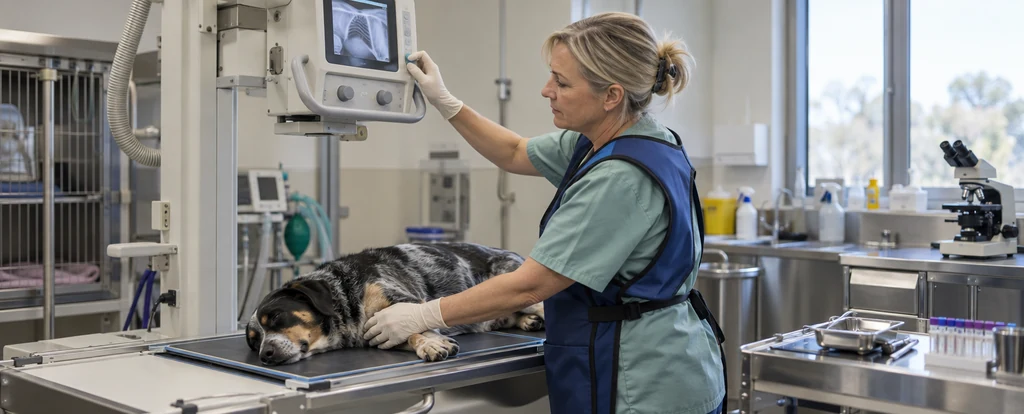
- Taking radiographs and positioning animals so the image is clear enough to read
- Placing intravenous catheters and giving medications, fluids and vaccines under veterinary direction
- Sterilising instruments, writing up patient notes and handing over care at the end of a shift
What skills do veterinary technologists need?
Employers look for animal care and handling, laboratory analysis, clinical assessment and treatment, backed by ezyVet fluency and strong attention to detail.
Specialist skills
- Animal care and handling
- Laboratory analysis
- Clinical assessment and treatment
- Medication management
- Infection control and hygiene
Software and tools
- ezyVet
- IDEXX VetLab Station
- Provet Cloud
- Digital radiography (DR) systems
General skills
- Attention to detail
- Written communication
- Problem solving
Is the job growing?
About 650 people work as veterinary technologists in Australia, and employment is projected to grow 9% over the decade to 2035. That's modest growth: demand is steady rather than booming.
How do you become a veterinary technologist?
Here's the path most veterinary technologists take, step by step.
- 1Finish Year 12 with biology and chemistry
Biology and chemistry are the subjects most courses assume, and they give you the background for the anatomy, pharmacology and pathology covered in first year.
- 2Complete a qualification in veterinary technology or animal technology
The most direct route is a Bachelor of Veterinary Technology, offered at a small number of universities. A Diploma of Animal Technology (ACM50119) or a Certificate IV in Veterinary Nursing (ACM40418) followed by clinical experience can also lead into technician-level work, though research employers and larger hospitals generally prefer the degree.
- 3Build hands-on animal handling experience
Volunteering at a shelter, working at a boarding kennel or taking a placement in a clinic teaches the calm, confident handling that no course fully covers, and it is often what separates applicants for a first job.
- 4Check what your qualification allows in your state
Veterinary practice is regulated by state and territory veterinary boards, and the tasks a technologist may perform without direct supervision vary between them, so confirm the rules where you plan to work.
- 5Add further study for a specialist area
Short courses in anaesthesia, diagnostic imaging or laboratory science help if you want to move into a referral hospital, a university or a research facility, where the technical work is more concentrated.
Ready to apply as a veterinary technologist?
Whether you're working toward becoming a veterinary technologist or already are one and want a hand with the next step (sharpening your resume for ATS screening, tightening your cover letter, or knowing what you'll actually be asked at interview), here are examples grounded in this specific role, not generic templates.
What jobs can a veterinary technologist move to?
Moving into Veterinary Nurse typically comes with the biggest pay rise, worth $21,700 a year more on average.
| Move to | Typical pay change | Overlap | Retraining |
|---|---|---|---|
| Veterinary Nurse A veterinary technologist brings clinical monitoring, anaesthesia and patient care skills to veterinary nursing, with a short course covering registration requirements. | +$21,700 | 55% | short course |
| Animal Health Officer A veterinary technologist can move into animal health inspection, applying disease and animal welfare knowledge, though further study in regulatory practice is needed. | +$13,000 | 30% | reskill |
Moves are chosen from Jobs and Skills Australia's Data on Occupation Mobility, which follows income tax records between 2011-12 and 2020-21, together with entry requirements and skill overlap. A known move is one people were seen making in that data. Pay change compares median full-time pay for the two roles.
Who works as a veterinary technologist?
The typical veterinary technologist is 31 years old; 76% are women, 67% work full-time, and full-timers average 38 hours a week.
- 31
- Median age
- 76%
- Female share
- 67%
- Full-time
- −2h
- vs all-jobs avg
What's it like being a veterinary technologist?
The day is shaped by the procedure list: health checks and vaccinations in the morning, surgery through the middle of the day, then monitoring recovery and cleaning down. It suits people who like animals but also like procedure, because the value of a technologist lies in doing technical tasks the same careful way every time. Emergency and after-hours work brings the pressure, and the job carries real sadness when a patient does not recover.
What people like
- You see results quickly. A blood panel you run or an anaesthetic you monitor tells you within minutes whether the animal is stable, so the feedback on your work is immediate.
- Genuine clinical depth. Reading radiographs, managing anaesthesia and running laboratory work gives the role more technical substance than most animal care jobs.
- Variety across species and settings. A mixed practice can have you handling a cat, a cattle herd and a reptile in the same week, and laboratory, zoo or research work takes that further.
- A small, familiar team. Clinics are usually close-knit, so you work with the same vets and nurses each day and get to know the patients and their owners.
What people find hard
- Euthanasia is part of the job. Assisting with euthanasia is routine in clinical practice, and it stays difficult even after years of doing it.
- Physically hard on the body. Lifting large dogs, restraining frightened animals and standing through long surgery lists takes a toll on backs, wrists and shoulders.
- Weekends and unpredictable finishes. Most clinics run a weekend roster, and emergency cases mean shifts often run past their scheduled finish.
- Talking to worried owners. Clients are sometimes anxious, grieving or unable to afford treatment, and those conversations fall to whoever is free at the time.
Based on our synthesis of professional-body surveys and public accounts of the role, not first-person verified reviews.
Which industries employ veterinary technologists?
Veterinary services employs the largest share of veterinary technologists, followed by Agriculture and livestock production.
Top employing industries
- 1Veterinary services
- 2Agriculture and livestock production
- 3Animal welfare and zoos
- 4Scientific research and development
- 5Pet care and retail
Ranked by employment share; the source doesn't publish an exact percentage per industry.
| Certificate III/IV | 34% | |
|---|---|---|
| Diploma / Advanced Diploma | 26% | |
| Bachelor degree | 20% | |
| Year 12 or below | 20% |
Will AI replace veterinary technologists?
AI and automation reach into parts of this job, but they change the tools more than the role. Diagnostic analysers already interpret blood panels and imaging software suggests findings, and practice software drafts notes and client messages, which shifts time towards sample quality, positioning and follow-up. The physical, in-the-moment work of handling, anaesthetising and monitoring an animal is far less exposed.
Share of typical working time by exposure level
- Monitoring anaesthesia and recoveryAnaesthetic depth is judged from colour, reflexes and breathing, and a monitor can chart the numbers without deciding that a patient is going too light.30%low
- Running diagnostic testsIn-house analysers read blood panels and flag abnormal values, so less time goes on interpreting numbers and more on sample quality and acting on the results.25%moderate
- Records, client updates and stock controlPractice software drafts clinical notes, discharge instructions and vaccination reminders, and reordering of consumables is largely automated.25%high
- Taking and processing diagnostic imagesSoftware sharpens images and drafts measurements, but positioning a fractious dog so the view is diagnostic is still done by hand.20%moderate
Moves least exposed to AI
These career moves from veterinary technologist work are rated low for AI exposure:
- Veterinary Nurse
Solid skill overlap (55%), short course to get there, and a low automation-risk profile.
- Animal Health Officer
Some skill overlap (30%), reskill to get there, and a low automation-risk profile.
Common questions about becoming a veterinary technologist
Straight answers to the questions people ask most.
How much do veterinary technologists earn?
The median full-time pay is $65,000 per annum, before tax. What you actually earn depends on the practice, your qualifications and how much emergency or after-hours work you take on.
How do you become a veterinary technologist?
Most people complete a diploma or degree in veterinary technology or animal technology, then build clinical experience in a practice. Hands-on animal handling from volunteering or paid work matters almost as much as the qualification when you are applying for a first role.
Are veterinary technologists in demand?
Veterinary technologists are currently not in shortage, and employment is projected to grow 9% over the decade to 2035. The occupation is small, so openings tend to come up where clinics expand or replace staff, and employers look for experience with the species they treat.
Will AI replace veterinary technologists?
Not the core of the job, though parts of it are changing. Analysers now flag abnormal blood results, imaging software suggests findings and practice software drafts clinical notes and client reminders, while restraining, anaesthetising and monitoring an animal remains hands-on work that depends on reading an animal's condition in the moment.
What can a veterinary technologist move into?
Veterinary nursing is a common move, because the clinical monitoring, anaesthesia and patient care skills carry across and a short course covers registration requirements. Animal health inspection and livestock husbandry work are further options, though both need additional study since the regulatory and production sides differ from clinical practice.
What is the difference between a veterinary technologist and a veterinary nurse?
Both work alongside veterinarians, but technologists typically take on the more technical side, such as anaesthesia, diagnostic imaging and laboratory testing, and often hold a degree. Veterinary nurses focus on patient care, hospital hygiene and client communication, and usually enter through a certificate IV or diploma.
Related roles
- Veterinary Nurse
- Animal Health Officer
- Veterinary Nurse
- Animal Attendant
- Animal Husbandry Technician
- Neuroscientist
Not sure this is you? Take the career quiz and get a ranked shortlist of roles that fit how you like to work.