Home Manufacturing & Production
Wood Machinist
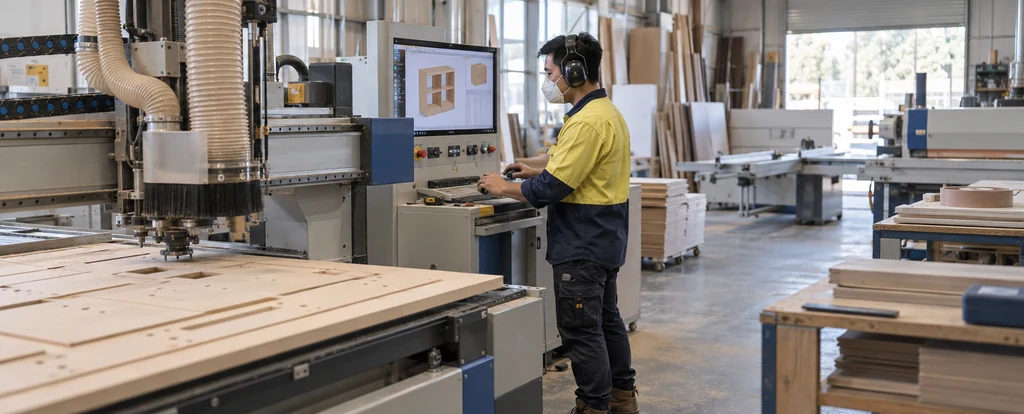
Wood machinists set up and run the machines that cut, shape and finish timber into parts for furniture, joinery and building products.
- Median salary*
- $70,200
3.5%vs last year, before tax
- People employed
- 940
4.4%vs last year
- Projected growth
- +6.1%
to 2035
- AI exposure*
- Moderate
- automation risk
- Average hours
- 41/wk
+1h vs all jobs
- Shortage status
- Not in shortage
national
Wood machinists work in timber processing workshops and manufacturing plants, where the job centres on the machine rather than on the finished piece being installed. Where a cabinet maker builds and assembles a whole unit, a wood machinist produces the accurately cut and shaped components that feed that work. Manufacturing employs most of them, with smaller numbers in construction and wholesale timber supply.
How much do wood machinists earn?
The median full-time salary for a wood machinist is $70,200 per annum, before tax, up $14,900 since 2018.
Pay follows the classification level in the timber or manufacturing award, so a trade qualification and the ability to set up and program more complex machines moves you up the scale. Shift work and overtime add allowances that lift weekly earnings above the base rate. Employers range from small joinery shops to large panel processing plants, and the award covering the work has as much to do with the rate as the job does.
What does a wood machinist do day to day?
The list below is what fills most weeks; the exact mix shifts with seniority and whatever stage the current work is at.
- Setting up and operating woodworking machines such as saws, planers, moulders and CNC routers
- Reading drawings and cutting lists to work out the sequence of cuts, shapes and finishes
- Selecting and preparing timber and sheet materials, allowing for grain, defects and movement
- Sharpening, adjusting and replacing cutting tools, and keeping machines aligned and running true
- Checking finished parts against tolerances and grade standards before they go to assembly or to a customer
What skills do wood machinists need?
Employers look for hand and power tool work, plant and equipment operation, reading plans and specifications, backed by CNC machining centres fluency and strong attention to detail.
Specialist skills
- Hand and power tool work
- Plant and equipment operation
- Reading plans and specifications
- Worksite safety management
- Craft and handmade production
- Installation and maintenance
Software and tools
- CNC machining centres
- Panel saws
- Edge banding machines
- AutoCAD
- Cabinet Vision
General skills
- Attention to detail
Is the job growing?
About 940 people work as wood machinists in Australia, and employment is projected to grow 6.1% over the decade to 2035. That's modest growth: demand is steady rather than booming.
How do you become a wood machinist?
Here's the path most wood machinists take, step by step.
- 1Start with a Certificate III in timber and wood products processing
TAFE and some private providers offer the wood machining stream, which covers machine setup, tool maintenance, reading drawings and safe operation. It is the qualification most employers recognise when they advertise a machining role.
- 2Take on an apprenticeship
Most wood machinists train through a three to four year apprenticeship with a joinery, furniture or timber processing employer. You are paid while you learn and finish with a trade qualification, which is what opens the better set-up and programming roles.
- 3Consider workshop work first if you are unsure
Around 29% of people in the role list Year 12 or below as their highest qualification, so some start as a workshop hand or labourer and move onto the machines. It is a way in, but without the trade qualification your pay stays on the lower classifications.
- 4Add the licences for the equipment you use
A forklift licence is common and useful in a timber yard, and high risk work licences are needed for some lifting equipment. Employers usually pay for these once you are on staff.
- 5Specialise in CNC setup or tool maintenance
Operators who learn to program machining centres and panel saws, or who take on the tool room and cutter grinding, become harder to replace. Short courses in Cabinet Vision or similar software are a practical way to build that side of the job.
Ready to apply as a wood machinist?
Whether you're working toward becoming a wood machinist or already are one and want a hand with the next step (sharpening your resume for ATS screening, tightening your cover letter, or knowing what you'll actually be asked at interview), here are examples grounded in this specific role, not generic templates.
What jobs can a wood machinist move to?
Moving into Carpenter typically comes with the biggest pay rise, worth $21,300 a year more on average.
| Move to | Typical pay change | Overlap | Retraining |
|---|---|---|---|
| Carpenter Carpenters build on wood machining and construction knowledge, though the move requires trade training to work on building frames and structures.Known move | +$21,300 | 36% | reskill |
| Sawmill Operator Sawmill operators share timber processing and machine operation, and the move builds on existing wood machining experience with a short course.Known move | +$5,300 | 57% | short course |
| Cabinet Maker Cabinet makers use the same timber machining and joinery skills, and wood machinists often move into this trade with further training.Known move | +$2,600 | 38% | reskill |
| Joiner Joiners use the same timber cutting, fitting and assembly skills, and wood machinists can move across with trade training. | +$2,600 | 73% | reskill |
Moves are chosen from Jobs and Skills Australia's Data on Occupation Mobility, which follows income tax records between 2011-12 and 2020-21, together with entry requirements and skill overlap. A known move is one people were seen making in that data. Pay change compares median full-time pay for the two roles.
Who works as a wood machinist?
The typical wood machinist is 45 years old; 98% are men, 88% work full-time, and full-timers average 41 hours a week.
- 45
- Median age
- 2%
- Female share
- 88%
- Full-time
- +1h
- vs all-jobs avg
What's it like being a wood machinist?
The work is paced by the machine and the job sheet. A machinist may set up one machine and run a batch for hours, then break it down and set up the next run to a different profile, which suits someone who likes a task finished to a measured standard. The pressure comes from cutting lists that have to be right the first time, because timber is expensive and a wrong cut is scrap.
What people like
- Finished parts you can measure. Tolerance work gives you a clear answer on whether you got it right, because the component either fits or it doesn't.
- Machines that reward good setup. A well-set moulder or machining centre runs cleanly all day, and the difference between a rushed setup and a careful one shows up immediately in the finish.
- Room to specialise. Machinists who take on CNC programming, cutter grinding or panel optimisation software become the people a workshop relies on when a job is difficult.
- Skills that move with you. Timber machining is used in furniture and joinery workshops, flooring plants and building product manufacturers, so the trade is recognised across the country.
What people find hard
- Timber is unforgiving. A misread drawing or a wrong setting wastes an expensive piece of stock, and the loss lands on the day's output.
- Long production runs. Batch work can mean hundreds of identical parts, with the same setup and the same checks repeated each shift.
- Noise, dust and standing. Most workshops are loud, and hearing protection, dust extraction and safety glasses are part of every shift. You are on your feet for the whole day.
- Workflow follows construction. Orders for joinery and building products rise and fall with building and renovation activity, so a quiet period in construction can mean shorter hours.
Based on our synthesis of professional-body surveys and public accounts of the role, not first-person verified reviews.
Which industries employ wood machinists?
Manufacturing employs the largest share of wood machinists, followed by Construction.
Top employing industries
- 1Manufacturing
- 2Construction
- 3Wholesale Trade
Ranked by employment share; the source doesn't publish an exact percentage per industry.
| Certificate III/IV | 62.9% | |
|---|---|---|
| Year 12 or below | 28.9% | |
| Diploma / Advanced Diploma | 2.9% | |
| Bachelor degree | 1.7% | |
| Postgraduate | 1.2% |
Will AI replace wood machinists?
Wood machining sits in the middle range. Software already handles the arithmetic of the job, with optimising programs working out cutting layouts on panel saws and CAD feeding dimensions straight into CNC machines, so less time goes into manual marking out. What it does not change is the physical side: setting and feeding machines, reading the timber, sharpening tooling and judging the finish by hand and eye.
Share of typical working time by exposure level
- Setting up and running CNC machines and panel sawsThe program runs the cut sequence once the setup is right, but clamps, tooling, offsets and feed rates still need a machinist to set and adjust them.30%moderate
- Machining and shaping components on manual machinesRunning a moulder, spindle or thicknesser to a profile depends on feel for the timber and the machine, and the cut is corrected as it happens.25%low
- Tool sharpening, machine maintenance and quality checksGrinding cutters to the right angle and picking up tear-out, grain defects or a part running out of dimension is still done by hand and eye.25%low
- Reading drawings and working out cutting listsNesting and optimising software produces the layout and the cutting list for panel work, though someone still has to check the drawing against the actual job.20%moderate
Moves least exposed to AI
These career moves from wood machinist work are rated low for AI exposure:
- Cabinet Maker
Some skill overlap (38%), reskill to get there, and a low automation-risk profile.
- Carpenter
Some skill overlap (36%), reskill to get there, and a low automation-risk profile.
- Joiner
High skill overlap (73%), reskill to get there, and a low automation-risk profile.
Common questions about becoming a wood machinist
Straight answers to the questions people ask most.
How much do wood machinists earn?
$70,200 per year before tax for full-time work. The award classification, shift allowances and overtime all move that figure, and machinists who can program and set up CNC machines usually sit on the higher classifications.
How do you become a wood machinist?
Most people start with a Certificate III in timber and wood products processing, usually through an apprenticeship, then build machine time on saws, planers, moulders and CNC routers. A trade qualification is what employers look for when they are filling set-up roles rather than labouring jobs.
Are wood machinists in demand?
Wood machinists are currently not in shortage, and employment is projected to grow 6.1% over the decade to 2035. Because the workforce is small, it helps to approach joinery, furniture and timber processing employers directly rather than waiting for advertised vacancies.
Will AI replace wood machinists?
Not the job itself, but parts of it are changing. CNC machines, optimising software for panel saws and design tools such as Cabinet Vision already work out cutting layouts and run patterns, so less time goes into manual marking out. Setting up the machine, reading timber defects, sharpening tooling and checking the finished surface still need hands and eyes on the job.
What can wood machinists move into?
Cabinet making and joinery are the closest moves, using the same timber cutting and assembly skills, and a machinist who takes on trade training can cross over. Sawmill operating builds on machine operation and usually needs only a short course, while carpentry needs fuller trade training and carpenters earn $21,300 more.
Do wood machinists work shifts?
Some do, particularly in large panel processing plants and timber mills that run multiple shifts, while small joinery shops usually keep standard weekday hours. Average full-time hours are 41 a week, and 88% of wood machinists work full time.
Related roles
Not sure this is you? Take the career quiz and get a ranked shortlist of roles that fit how you like to work.