Wool Classer
Wool classers sort and grade fleeces into saleable lines, and the lines they build largely decide what a grower's clip is worth at auction.
- Median salary*
- $72,800
3.9%vs last year, before tax
- People employed
- 460
8.0%vs last year
- Projected growth
- +13.9%
to 2035
- AI exposure*
- Moderate
- automation risk
- Average hours
- 41/wk
+1h vs all jobs
- Shortage status
- Not in shortage
national
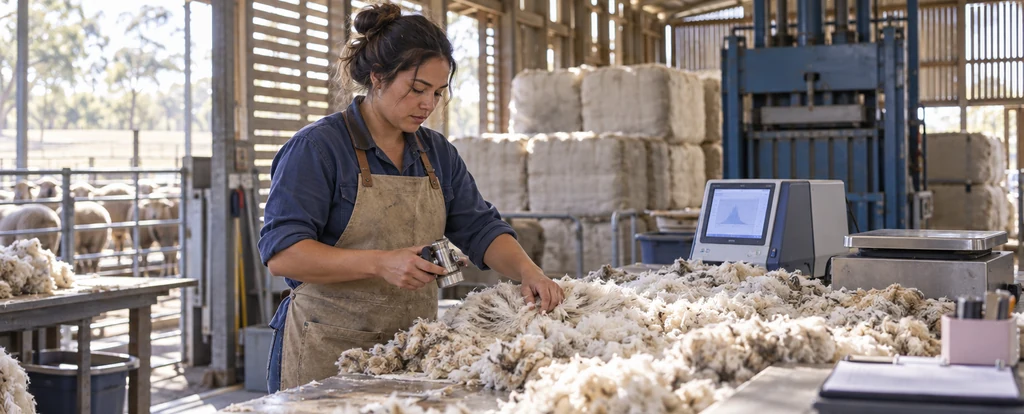
Wool classers work in shearing sheds, inspecting each fleece as it comes off the board and sorting it into lines by breed, fibre diameter, staple length, strength, colour and contamination. Many work as contractors who follow the season from property to property rather than for one farm, and registration with AWEX is the industry norm because the classer's stamp on a bale records who prepared the line. The job sits between wool handling, which is about picking up, skirting and pressing fleece, and wool buying, which values the classed lines for sale.
How much do wool classers earn?
The median full-time salary for a wool classer is $72,800 per annum, before tax, up $15,100 since 2018.
Wool classers are usually paid per bale or on a daily rate for the days a shed is running, so a year's earnings depend on how many clips you can fit into the season. Pay rises with registration level, since a professional classer who stamps their own lines can take on larger clips and more of them than someone still classing under supervision. Rates also move with clip size and state, because the shearing season reaches different regions at different times of year, and contractors who cover their own travel and equipment set their rates accordingly.
What does a wool classer do day to day?
The list below is what fills most weeks; the exact mix shifts with seniority and whatever stage the current work is at.
- Assessing fleece quality by breed, crimp, colour, staple length and strength
- Classing fleeces into sale lines that meet AWEX standards and the specifications buyers ask for
- Removing stained, burry, seedy or otherwise contaminated pieces before they reach a line
- Recording fleece weights, yields and test results in classing records that travel with the clip
- Preparing, branding and pressing bales so each line can be traced back to its property
What skills do wool classers need?
Employers look for craft and handmade production, animal care and handling, inventory management, backed by OFDA 2000 fibre diameter analyser fluency and strong attention to detail.
Specialist skills
- Craft and handmade production
- Animal care and handling
- Inventory management
Software and tools
- OFDA 2000 fibre diameter analyser
- AWEX staple length and strength testing equipment
- Wool press
- Electronic fleece weighing scales
- AgriWebb
General skills
- Attention to detail
- Physical stamina and dexterity
- Written communication
- Problem solving
Is the job growing?
About 460 people work as wool classers in Australia, and employment is projected to grow 13.9% over the decade to 2035. That's healthy, above-average growth, and the role should stay in solid demand.
How do you become a wool classer?
Here's the path most wool classers take, step by step.
- 1Start in a shed as a wool handler
Picking up fleeces, skirting and pressing bales teaches you how wool behaves before you have to judge it, and sheds will often take on someone with no experience for the season. The work is paid, and it is the practical foundation most classers train on.
- 2Complete the Certificate III in Wool Clip Preparation
TAFE and agricultural colleges deliver this qualification, often as a traineeship where you learn in a shed across a season and study between clips. It covers fleece assessment, building lines, contamination, pressing and the record keeping that goes with a clip.
- 3Register with AWEX as a trainee classer
Registration allows you to class under supervision and stamp the bales you prepare, and it is the point where sheds start booking you as a classer rather than a shed hand. You then build the seasons and bales needed to move up.
- 4Progress to professional registration
Professional registration lets you take responsibility for a clip and stamp it on your own. Many classers then work across several properties each season, either through a wool broker or as an independent contractor.
Ready to apply as a wool classer?
Whether you're working toward becoming a wool classer or already are one and want a hand with the next step (sharpening your resume for ATS screening, tightening your cover letter, or knowing what you'll actually be asked at interview), here are examples grounded in this specific role, not generic templates.
What jobs can a wool classer move to?
Moving into Wool Buyer typically comes with the biggest pay rise, worth $13,000 a year more on average.
| Move to | Typical pay change | Overlap | Retraining |
|---|---|---|---|
| Wool Buyer Wool classers can move into wool buying by applying their fleece grading knowledge, though they need training in valuation and market negotiation. | +$13,000 | 8% | reskill |
| Sheep Farmer Wool classers bring fleece assessment and sheep handling knowledge to running a farm, though they need further study in farm business management. | +$2,600 | 32% | reskill |
| Shearer Wool classers understand fleece and sheep handling, which helps them move into shearing, but they must learn the physical shearing trade.Known move | −$8,300 | 30% | reskill |
Moves are chosen from Jobs and Skills Australia's Data on Occupation Mobility, which follows income tax records between 2011-12 and 2020-21, together with entry requirements and skill overlap. A known move is one people were seen making in that data. Pay change compares median full-time pay for the two roles.
Who works as a wool classer?
The typical wool classer is 48 years old; 51% are women, 64% work full-time, and full-timers average 41 hours a week.
- 48
- Median age
- 51%
- Female share
- 64%
- Full-time
- +1h
- vs all-jobs avg
What's it like being a wool classer?
The job has a strong seasonal rhythm: sheds run hard for weeks at a time, then the season moves on and you travel to the next property. Days start early, you stand for most of them, and a working shed is hot, dusty and noisy. People who enjoy wool classing tend to like judging a fleece by feel, working with a small crew, and seeing a clip leave the shed properly prepared.
What people like
- Your judgement shows up in the price. Clean, even lines attract buyer attention at auction, and the classer's stamp ties the result to the person who prepared it.
- Work that moves with the season. You see different country, properties and shearing teams through the year rather than the same shed every week.
- A skill you build by hand. Fleece assessment is learned over seasons, and experienced classers are trusted to make calls that instruments cannot.
- Contracting suits the work. Many classers take bookings across several properties and arrange their own season, which gives them more control than a standard farm job.
What people find hard
- Long days on your feet. Shearing crews start early and keep going, so classing days are physical and largely spent standing on hard shed floors.
- Travel and time away from home. Following the season means weeks on the road and staying on properties, which suits some people and not others.
- Income arrives in blocks. Paid per bale or per day, earnings bunch into the season, and wet weather or a delayed shearing can push work back.
- Dust, noise and repetition. Handling fleece all day is hard on the hands, back and shoulders, and the shed environment is not for everyone.
Based on our synthesis of professional-body surveys and public accounts of the role, not first-person verified reviews.
Which industries employ wool classers?
Agriculture, Forestry and Fishing employs the largest share of wool classers, followed by Wholesale Trade.
Top employing industries
- 1Agriculture, Forestry and Fishing
- 2Wholesale Trade
Ranked by employment share; the source doesn't publish an exact percentage per industry.
| Certificate III/IV | 51.9% | |
|---|---|---|
| Year 12 or below | 22.1% | |
| Diploma / Advanced Diploma | 9.7% | |
| Bachelor degree | 3.7% | |
| Postgraduate | 1.3% |
Will AI replace wool classers?
Wool classing sits in the middle range for AI and automation. Instruments such as the OFDA 2000 already measure fibre diameter objectively and classing software keeps the records, so the measurement and bookkeeping side of the job has changed a lot. The sorting itself has not: deciding which fleece belongs in which line still means handling it, and colour and contamination are judged by eye rather than by a sensor.
Share of typical working time by exposure level
- Classing fleeces on the boardJudging breed, crimp, colour and contamination by hand and eye is the core call, and no shed instrument makes it for you.35%low
- Removing stained, burry and seedy piecesPulling off-types out of a fleece is manual work, and how much to remove is a judgement about the line you are building.25%low
- Recording fleece weights, yields and test resultsElectronic scales and objective test results feed straight into classing software, which has taken most of the manual record keeping out of the job.20%high
- Pressing, branding and preparing bales for saleMechanical presses and printed brands cut the labour, but a bale still has to be built, weighed and labelled correctly before it leaves the shed.20%moderate
Moves least exposed to AI
These career moves from wool classer work are rated low for AI exposure:
- Sheep Farmer
Some skill overlap (32%), reskill to get there, and a low automation-risk profile.
- Shearer
Some skill overlap (30%), reskill to get there, and a low automation-risk profile.
Common questions about becoming a wool classer
Straight answers to the questions people ask most.
How much do wool classers earn?
Wool classers earn a median of $72,800 per year before tax. Because most are paid per bale or on a day rate, a full season across several clips can pay more than that and a short season less, and registered professional classers generally earn more than trainees.
How do you become a wool classer?
The usual path is shed experience as a wool handler, the Certificate III in Wool Clip Preparation (AHC33025), then registration with AWEX, first as a trainee and later as a professional classer. You can start with no experience, but you need time in sheds before you can judge fleeces reliably.
Are wool classers in demand?
Wool classers are currently not in shortage, and employment is projected to grow 13.9% over the decade to 2035, from a workforce of about 460 people. With those numbers, your chances depend more on how many sheds are running in your region and whether you can travel to them than on the national figure.
Will AI replace wool classers?
Not on its own. Objective measurement tools such as the OFDA 2000 already test fibre diameter and classing software stores the results, but the sorting decision still comes from handling each fleece and judging colour, contamination and staple strength by hand. What has changed most is the record keeping around the clip.
What can wool classers move on to?
Some move into wool buying, where their fleece knowledge helps them value lines, though valuation and market negotiation take extra training, and the move typically pays $13,000 more. Others move into farming or share farming, drawing on their knowledge of sheep and wool, though farm business management needs further study. Many classers instead stay in the industry by running their own classing business, and that is often where earnings grow.
Is wool classing seasonal?
Yes. Shearing runs in different regions at different times of year, so classers usually work intensively through their local season and then either travel to follow the season or take other work until it starts again.
Related roles
Not sure this is you? Take the career quiz and get a ranked shortlist of roles that fit how you like to work.