Wool Buyer
Wool buyers value fleece and buy it from woolgrowers on behalf of exporters, brokers and processors.
- Median salary*
- $85,800
3.7%vs last year, before tax
- People employed
- 190
5.0%vs last year
- Projected growth
- +4.1%
to 2035
- AI exposure*
- Moderate
- automation risk
- Average hours
- 42/wk
+2h vs all jobs
- Shortage status
- Not in shortage
national
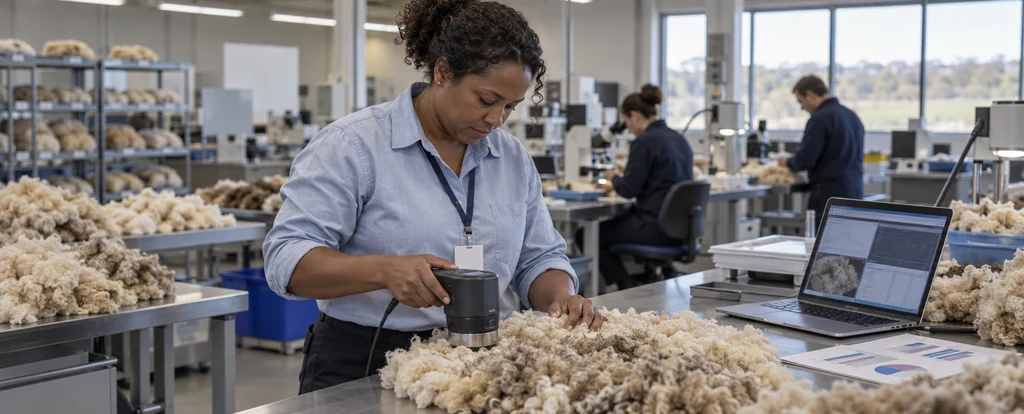
Wool buyers work where the wool is: wool stores, saleyards, auction rooms and growers' sheds across the wool-growing regions, with desk time spent reading test results and market reports. Most are employed by wool brokers and exporters, and they sit between the wool classer who grades a clip and the processor who turns it into yarn. Where a classer prepares and describes the fleece, the buyer puts a price on it and commits to the purchase.
How much do wool buyers earn?
The median full-time salary for a wool buyer is $85,800 per annum, before tax, up $17,700 since 2018.
Pay varies with who you buy for and how the package is built: exporters and larger brokers often pay a base salary plus a bonus tied to volumes or margin, while smaller firms pay a flat rate. Experience, a network of growers and a record of reading fleece well are what lift a buyer's pay over time. The season matters too, because a poor wool year flows straight into bonuses.
What does a wool buyer do day to day?
The list below is what fills most weeks; the exact mix shifts with seniority and whatever stage the current work is at.
- Inspecting fleece for micron, crimp, yield and contamination before it goes to auction
- Bidding at AWEX wool auctions on behalf of an exporter, broker or processor
- Negotiating prices with woolgrowers and brokers, including private treaty sales
- Tracking daily market indicators and working out what a clip is worth
- Arranging testing, lotting, shipping and payment paperwork so bought wool reaches the mill
What skills do wool buyers need?
Employers look for selling and negotiation, data analysis, operations management, backed by AWEX Wool Auction System fluency and strong attention to detail.
Specialist skills
- Selling and negotiation
- Data analysis
- Operations management
- Supply chain planning
Software and tools
- AWEX Wool Auction System
- WoolQ
- Microsoft Excel
- OFDA wool testing equipment
- Market reporting platforms
General skills
- Attention to detail
- Written communication
- Client relationships and advisory
Is the job growing?
About 190 people work as wool buyers in Australia, and employment is projected to grow 4.1% over the decade to 2035. That's modest growth: demand is steady rather than booming.
How do you become a wool buyer?
Here's the path most wool buyers take, step by step.
- 1Get hands-on wool experience
Many buyers start in a wool shed, a wool store or as a wool handler, which teaches how fleece comes off the sheep, how it is pressed into bales and what affects its value.
- 2Learn to class wool
A Certificate III or IV in wool classing, delivered through TAFE or AWEX-accredited training, covers micron, crimp, yield and contamination assessment, and classing work pays while you learn.
- 3Take a junior buying or auction room role
Brokers and exporters hire junior buyers, auction room assistants and wool store staff, and most of the training happens on the job under an experienced buyer.
- 4Learn the auction system and the market
Buyers need to work the AWEX auction system and WoolQ, read the Micron Price Guides and interpret OFDA test results, because the price of a lot turns on all of it.
- 5Build a grower network
Repeat business comes from growers who trust your valuation, and that network is what makes an experienced buyer valuable to an employer.
Ready to apply as a wool buyer?
Whether you're working toward becoming a wool buyer or already are one and want a hand with the next step (sharpening your resume for ATS screening, tightening your cover letter, or knowing what you'll actually be asked at interview), here are examples grounded in this specific role, not generic templates.
What jobs can a wool buyer move to?
Moving into Importer and Exporter typically comes with the biggest pay rise, worth $4,200 a year more on average.
| Move to | Typical pay change | Overlap | Retraining |
|---|---|---|---|
| Importer and Exporter Wool buyer brings export market knowledge and commodity trading skills to international trade, needing import and export compliance. | +$4,200 | 45% | short course |
| Stock and Station Agent Wool buyer brings rural commodity buying and grower relationships to stock and station agency work, needing agency licensing or study. | −$10,400 | 43% | reskill |
| Grain Inspector Wool buyer brings inspection and quality evaluation skills to grain inspection, needing grain standards training. | −$15,600 | 20% | reskill |
| Product Grader Wool buyer brings fleece quality assessment and grading discipline to product grading, needing broader commodity standards. | −$26,000 | 20% | reskill |
| Logistics Coordinator Wool buyer brings export and wool flow knowledge to logistics coordination, needing transport and supply chain systems. | −$31,500 | 55% | short course |
Moves are chosen from Jobs and Skills Australia's Data on Occupation Mobility, which follows income tax records between 2011-12 and 2020-21, together with entry requirements and skill overlap. A known move is one people were seen making in that data. Pay change compares median full-time pay for the two roles.
Who works as a wool buyer?
The typical wool buyer is 56 years old; 92% are men, 73% work full-time, and full-timers average 42 hours a week.
- 56
- Median age
- 8%
- Female share
- 73%
- Full-time
- +2h
- vs all-jobs avg
What's it like being a wool buyer?
The job runs on the auction calendar and the shearing season, so the weeks are uneven: quiet stretches valuing samples and talking to growers, then sale days where lots pass in seconds and you have to decide quickly. Most wool buyers work full time, averaging 42 hours a week, with travel to wool stores, farms and auction rooms mixed in. It suits someone who likes a commodity with a visible daily price and is comfortable backing their own judgement on the spot.
What people like
- Reading a fleece by hand. Before the test results come back you have a view on micron, crimp and contamination, and the auction quickly confirms or corrects it.
- A price everyone can see. The daily market indicators are published, so arguments about value come down to the wool itself rather than to who has better information.
- Relationships that last decades. Growers remember which buyers paid fairly in a tough year, and repeat business follows from that.
- Work that moves between farm, store and screen. A single week can include a farm visit, a wool store inspection and a morning in the auction room.
What people find hard
- Your income follows the market. When global demand softens, prices and volumes fall, and bonuses fall with them.
- Auction days are unforgiving. Lots come up in seconds, and a bid made on a quick look at a sample cannot be taken back.
- Contamination claims come back to you. If a bale carries polypropylene or dark fibre, the buyer deals with the mill, the grower and the broker to sort it out.
- A small trade with few employers. Buying is concentrated among brokers and exporters, so changing jobs often means moving to a wool-growing region or a city with a broker's office.
Based on our synthesis of professional-body surveys and public accounts of the role, not first-person verified reviews.
Which industries employ wool buyers?
Wholesale Trade employs the largest share of wool buyers, followed by Agriculture, Forestry and Fishing.
Top employing industries
- 1Wholesale Trade
- 2Agriculture, Forestry and Fishing
Ranked by employment share; the source doesn't publish an exact percentage per industry.
| Year 12 or below | 39.9% | |
|---|---|---|
| Certificate III/IV | 31.6% | |
| Diploma / Advanced Diploma | 11.9% | |
| Bachelor degree | 8.3% | |
| Postgraduate | 0% |
Will AI replace wool buyers?
AI reaches the analytical half of this job and leaves most of the rest alone. Price modelling, market reporting and the paperwork behind a purchase can be automated or sped up, and software that suggests a value for a lot from its test data is already plausible. Judging fleece by hand, bidding in a live auction and holding a grower's trust are not things the current technology does, so the role changes more than it disappears.
Share of typical working time by exposure level
- Inspecting and valuing fleeceMicron, crimp, staple strength and contamination are still judged by hand and eye in the wool store, often before any test result is available.32%low
- Negotiating with growers and brokersPrice, delivery and payment terms are settled in conversation, and software can prepare the numbers but not the deal.25%moderate
- Tracking market prices and preparing valuationsDaily market indicators, test data and past lot results can be pulled into a valuation automatically rather than assembled by hand each morning.25%high
- Contracts, testing and shipping paperworkSale contracts, test requests and export documents follow fixed formats that software handles well, though the exceptions still need a person.18%moderate
Common questions about becoming a wool buyer
Straight answers to the questions people ask most.
How much do wool buyers earn?
Wool buyers earn $85,800 per year before tax at the median for full-time work, and the package often includes a bonus tied to volumes or margin. How that package is built varies with the employer, and experience in the trade is what shifts it over time.
How do you become a wool buyer?
Most buyers come up through wool handling, wool classing or a junior role with a broker or exporter rather than through a degree. Learning to class wool and then working the auction system under an experienced buyer is the usual path.
Are wool buyers in demand?
Wool buyers are currently not in shortage, and employment is projected to grow 4.1% over the decade to 2035. The occupation is small, so openings tend to come from buyers retiring or leaving the trade rather than from expansion, which makes hands-on fleece experience worth more than a qualification on its own.
Will AI replace wool buyers?
The analytical half of the job is the exposed half: tracking daily prices, building valuations from test data and preparing sale paperwork can be automated or heavily assisted. Inspecting fleece by hand, bidding live and holding a grower's trust are not, and those are the parts employers hire buyers for.
What can a wool buyer move into?
Buyers with export market knowledge often move into importing and exporting ($4,200 more), where the compliance side is new but the commodity trading is familiar. Logistics coordination is another move ($31,500 less), since wool flow, shipping and storage are already part of the buying job. Some go into stock and station agency ($10,400 less), which uses the same rural client base but needs an agency licence.
What is the difference between a wool buyer and a wool classer?
A wool classer grades and describes a clip as it is pressed, while a wool buyer values those lines and commits to buying them. People do move from classing into buying, which is why the two roles are often mentioned together.
Related roles
- Importer and Exporter
- Stock and Station Agent
- Product Grader
- Grain Inspector
- Logistics Coordinator
- Wool Classer
Not sure this is you? Take the career quiz and get a ranked shortlist of roles that fit how you like to work.