HomeCoursesHorticultureCertificate III
Certificate III · national qualification
Certificate III in Arboriculture
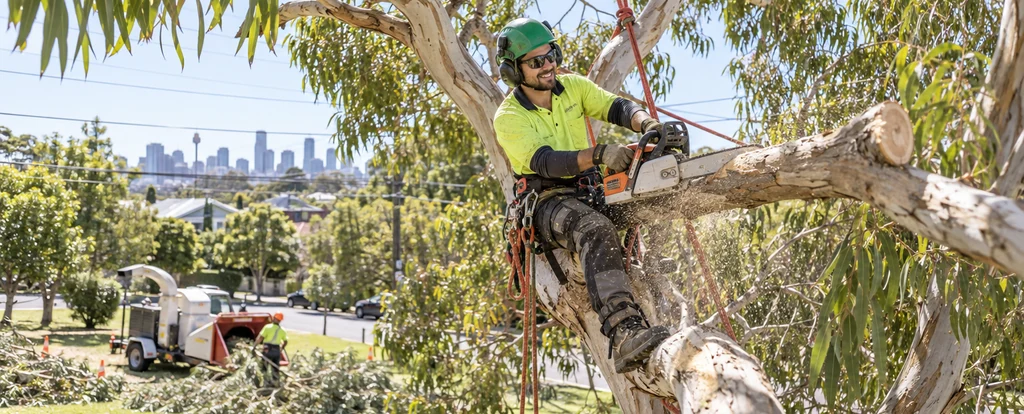
This qualification prepares you for trade-level work in arboriculture, the practical side of looking after trees in parks, streets, backyards and bushland.
- How long it takes
- 2 years
- full time at TAFE NSW
- What it costs
- From $2,190
- Subsidised at TAFE NSW, full fee up to $24,000
- How you can study
- On campus
- Main job
- Arborist
- $72,800 (estimate) median pay, In demand
- Taught by
- 7 providers
- 5 states and territories
Is this course right for you?
What the Certificate III in Arboriculture asks of you, and what you might want to check first.
It helps to have
- a genuine interest in trees and how they grow
- a careful approach to safety at heights and below
- good hand skills for using and maintaining chainsaws
- an eye for detail when inspecting trees and branches
Before you start
There are no entry requirements for this qualification.
Certificate III or Diploma?
The Diploma of Arboriculture is the higher level. This Certificate III prepares you for trade-level work, with activities like shaping and canopy management, tree health and remediation, and tree dismantling and removal.
See the courseWhere this course can take you
Jobs this qualification is a recognised route into, and the study that can follow it.
Jobs you can do with it
Arborist
Arborists assess, prune and remove trees, keeping them healthy and safe around the people, buildings and powerlines below them.
What else you need
Complete trade-level arboriculture training and meet applicable tree-work rules and high-risk activity requirements; the award alone does not authorise every operation.
Median pay$72,800 (estimate)
In demand
If you study further
Diploma of Arboriculture
Leads to work as an, median pay $72,800 (estimate).
Pay is the median for everyone in the job, and “In demand” means the job is on the national shortage list. Pay marked as an estimate is our own analysis, not a published figure.
What it costs
Subsidised place
From $2,190
at TAFE NSW. Whether you get a subsidised place depends on your state, residency, age and earlier study.
Paying the full fee
$24,000
across the TAFEs listed below. Private providers set their own fees.
| TAFE | State | Subsidised | Concession | Full fee | How long |
|---|---|---|---|---|---|
| TAFE NSW | NSW | $2,190 | $240 | $24,000 | 2 years |
TAFE NSWNSW
- Subsidised
- $2,190
- Concession
- $240
- Full fee
- $24,000
- How long
- 2 years
Fees as each TAFE shows them on its website, read 20 September 2026. Private providers set their own fees.
Where you can study this course
There are 7 places you can study this course. When you compare them, check they teach it the way you want to study, how far you'd be from a campus, what it will cost you and what past students say about the teaching and support. They're listed by how often people search for them, and none of them pays to be here or to move up.
- Website for Melbourne Polytechnic (opens in a new tab)
Melbourne Polytechnic
13 campuses, VIC
3.7from 485 Google reviews
What students like
- Some teachers are supportive and go out of their way
- Student services offer understanding and compassion
What to weigh up
- Messages to staff can go unanswered
- Enrolment mistakes can take time to fix
- Course page for TAFE NSW (opens in a new tab)

TAFE NSW
3 campuses, NSW
4.0from 2,410 Google reviews
- How you study
- On campus
- How long
- 2 years
- Fee
- From $2,190 subsidised
What students like
- Teachers are supportive and ready to help
- Staff are helpful and friendly
- Course content is practical and industry relevant
What to weigh up
- Enrolment and admin can be slow
- Some find front desk staff less helpful
- Website for TAFE SA (opens in a new tab)

TAFE SA
26 campuses, SA
4.4from 1,339 Google reviews
What students like
- Lecturers are nice and helpful
What to weigh up
- Enrolment and admin can be slow
- Course information can be unclear
- Website for TasTAFE (opens in a new tab)
TasTAFE
12 campuses, TAS
4.3from 167 Google reviews
- Website for South Metropolitan TAFE (opens in a new tab)
South Metropolitan TAFE
14 campuses, WA
3.9from 617 Google reviews
What students like
- Lecturers are friendly and genuinely care about students
- Courses help students learn new skills
What to weigh up
- Phone calls and enquiries can go unanswered
- Course page for South Regional TAFE (opens in a new tab)
South Regional TAFE
Albany, WA
5.0from 1 Google reviews
- How you study
- On campus
- Website for Wodonga Institute of TAFE (opens in a new tab)

Wodonga Institute of TAFE
4 campuses, VIC
4.3from 68 Google reviews
What you’ll learn
18 units: 9 that everyone takes and 9 you choose.
- Identifying tree species
- Pruning and canopy work
- Felling trees safely
- Tree inspection and risk
- Chainsaw care and use
- Ground rigging and ropes
See all 9 core units
Core units
Everyone completes these. Select a unit to see what it covers.
Loading the details for AHCARB213…
Loading the details for AHCARB213…
Questions to ask before you enrol
Providers run this course differently, so the answers change from one to the next.
- When is the next intake, and how many are there each year?
- What is the total cost, including materials, checks and any placement costs?
- Can I study part time or online, and how does that change the length?
- Do the units count towards a higher qualification if I go on to study further?
Questions people ask
Who is this qualification for?
It prepares you for trade-level work in arboriculture, looking after trees in parks, streets, backyards and bushland. You learn pruning, tree inspection, felling, rigging and chainsaw safety, with safety procedures throughout. The work involves high-risk operations at heights or supporting those above ground. It leads to roles such as climbing arborist, EWP arborist, crane specialist, environmental arborist and arborist works coordinator.
Do I need experience or other qualifications first?
There are no entry requirements for this qualification. Individual providers can set their own conditions, so check with the provider you choose.
How is it different from Diploma of Arboriculture?
The Diploma of Arboriculture is the higher level. This Certificate III prepares you for trade-level work, with activities like shaping and canopy management, tree health and remediation, and tree dismantling and removal.