Arborist
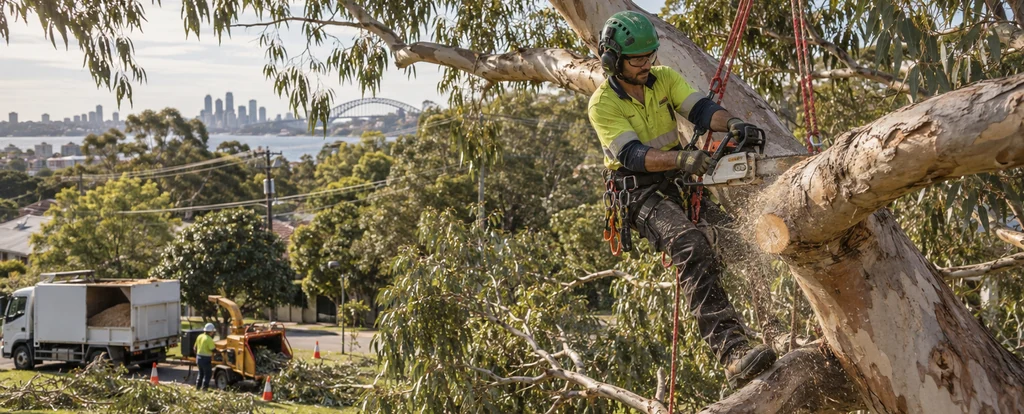
Arborists assess, prune and remove trees, keeping them healthy and safe around the people, buildings and powerlines below them.
- Median salary*
- $72,800
3.6%vs last year, before tax
- People employed
- 5,600
0.0%vs last year
- Projected growth*
- +6%
to 2035
- AI exposure*
- Low
- automation risk
- Average hours*
- 40/wk
matches all-jobs average
- Shortage status*
- In shortage (regional)
national
Arborists work outdoors for councils, utilities, tree care companies or as sole traders, in street trees, parks, backyards and bushland. The work sits closer to climbing and rigging than to gardening: a gardener maintains plants generally, while an arborist is trained to judge the structure and risk of a whole tree and take it apart safely. Most hold a Certificate III in Arboriculture and climb with ropes, a harness and a chainsaw.
How much do arborists earn?
The median full-time salary for an arborist is $72,800 per annum, before tax, up $15,500 since 2018.
Pay follows the award or enterprise agreement you work under, so a council or utility arborist on a graded scale usually earns more than someone doing domestic tree work for a small contractor. Qualifications shift it as well: a Certificate III is the entry point, while a Diploma in Arboriculture or a higher-duties role brings supervisory work and a higher classification. Storm response, on-call rosters and travel loading are where the extra money usually sits.
What does an arborist do day to day?
The list below is what fills most weeks; the exact mix shifts with seniority and whatever stage the current work is at.
- Climbing trees on ropes and a harness to reach canopies an elevated work platform cannot get to
- Pruning branches to clear powerlines, buildings and paths, and to shape a tree's long-term structure
- Inspecting trees for deadwood, disease, root damage and cracks, then writing up the risk for the owner or council
- Cutting felled timber into lengths, feeding it through a wood chipper and grinding out the stump
- Answering storm callouts, where a tree has come down on a road, roof or fence and has to be made safe the same day
What skills do arborists need?
Employers look for hand and power tool work, worksite safety management, plant and equipment operation, backed by Chainsaw fluency and strong physical stamina and dexterity.
Specialist skills
- Hand and power tool work
- Worksite safety management
- Plant and equipment operation
- Field inspection and testing
- Environmental assessment
Software and tools
- Chainsaw
- Wood chipper
- Stump grinder
- Climbing harness and ropes
- Elevated work platform (EWP)
General skills
- Physical stamina and dexterity
- Customer service
- Problem solving
Is the job growing?
About 5,600 people work as arborists in Australia, and employment is projected to grow 6% over the decade to 2035. That's modest growth: demand is steady rather than booming.
How do you become an arborist?
Here's the path most arborists take, step by step.
- 1Start with a Certificate III in Arboriculture
This is the standard entry qualification and takes about two to three years through a traineeship or apprenticeship, covering climbing, rigging, pruning and tree identification. Many people do it while working for a tree care company, so the training is paid and the hours count.
- 2Pick up the licences and qualifications the work runs on
A White Card is needed for construction sites, an elevated work platform licence for bucket work, and a medium rigid or heavy vehicle licence for driving trucks and chippers. Employers look for these alongside the certificate because they decide which jobs you can be sent to.
- 3Move into assessment and reporting
A Diploma of Arboriculture (AHC50524) shifts you from climbing into tree assessment, consulting and council tree management. The work becomes more technical: risk assessment, tree protection plans and reports that hold up when a removal decision is challenged.
- 4Join the industry body if you want the recognition
Arboriculture Australia is the professional body for the trade, and it runs recognition for arborists who want their competency assessed and advertised. Membership isn't required to work, but some councils and larger contractors take it as evidence of experience.
- 5Cross over from horticulture or forestry if you're already working
Gardeners, forestry workers and tree fallers often move into arboriculture through a short course in climbing and safe tree removal rather than a full traineeship. The certificate still matters for higher-duties roles, so most complete it part-time while they work.
Study routes we have checked
Qualifications that are a recognised way into this role, and what else you need.
- Certificate III in Arboriculture
A recognised route into this role
Complete trade-level arboriculture training and meet applicable tree-work rules and high-risk activity requirements; the award alone does not authorise every operation.
- Diploma of Arboriculture
A recognised route into this role
Consulting arborist and tree-assessment training; meet prerequisite units and applicable tree-work rules. The diploma does not by itself establish practical climbing competence. Entry requirements: To commence this qualification an individual must have achieved the following units of competency or their equivalent: AHCARB314 Implement a tree maintenance program AHCARB316 Perform pruning operations AHCARB323 Identify trees.
Ready to apply as an arborist?
Whether you're working toward becoming an arborist or already are one and want a hand with the next step (sharpening your resume for ATS screening, tightening your cover letter, or knowing what you'll actually be asked at interview), here are examples grounded in this specific role, not generic templates.
What jobs can an arborist move to?
Moving into Tree Faller typically comes with the biggest pay rise, worth $4,200 a year more on average.
| Move to | Typical pay change | Overlap | Retraining |
|---|---|---|---|
| Tree Faller Arborists move into tree falling with their rigging and chainsaw expertise, needing only a short course for felling large timber. | +$4,200 | 55% | short course |
| Greenkeeper Arborists can become greenkeepers through an apprenticeship, building on their tree care and plant maintenance skills. | +$3,500 | 44% | requalify |
| Irrigation Technician Arborists move into irrigation technician roles with a reskilling course, using their understanding of tree water needs and site conditions. | +$2,600 | 44% | reskill |
| Forestry Worker Arborists bring tree climbing, pruning and chainsaw skills to forestry work, with a short course covering forest-specific practices. | −$7,800 | 84% | short course |
| Gardener Arborists bring specialised tree care knowledge to gardening roles, with a short course adapting them to general horticulture. | −$13,000 | 55% | short course |
Moves are chosen from Jobs and Skills Australia's Data on Occupation Mobility, which follows income tax records between 2011-12 and 2020-21, together with entry requirements and skill overlap. A known move is one people were seen making in that data. Pay change compares median full-time pay for the two roles.
Who works as an arborist?
The typical arborist is 36 years old; 97% are men, 80% work full-time, and full-timers average 40 hours a week.
- 36
- Median age
- 3%
- Female share
- 80%
- Full-time
- +0h
- vs all-jobs avg
What's it like being an arborist?
The day has a physical rhythm: a job is planned on the ground, climbed, cut and cleared, usually within the day. Weather, traffic and the tree itself set the pace, and you rarely know exactly how a removal will go until you're in the canopy. It suits people who like working outdoors with their hands, aren't bothered by heights, and stay methodical about safety because the consequences of a bad cut land immediately.
What people like
- Working outdoors with your hands. Days are spent in trees and open air rather than at a desk, and no two sites look the same.
- A clear result by the end of the day. You can see what you've done: a canopy thinned out, a dangerous limb down, a driveway clear again.
- A skill that takes years to build. Climbing and rigging are learned slowly, which is why experienced arborists get trusted to make calls on site without supervision.
- Variety across sites and clients. A week can move between street tree audits, a backyard removal and an emergency callout, so the job doesn't settle into a routine.
What people find hard
- The physical toll adds up. Chainsaws, chippers and climbing are heavy work, and shoulders, knees and backs carry the strain over a long career.
- Weather decides the day. High winds, wet canopies and lightning stop climbing work, which can push jobs and the pay attached to them into the following week.
- Storm season arrives all at once. Emergency callouts come in bursts and often mean long days clearing trees off roads and roofs in bad conditions.
- Judgement calls attract complaints. Removing a tree, or refusing to remove one, can upset a homeowner or a neighbour, and council tree protection rules mean some jobs need approval before anything is cut.
Based on our synthesis of professional-body surveys and public accounts of the role, not first-person verified reviews.
Which industries employ arborists?
Administrative and Support Services employs the largest share of arborists, followed by Agriculture, Forestry and Fishing.
Top employing industries
- 1Administrative and Support Services
- 2Agriculture, Forestry and Fishing
- 3Public Administration and Safety
- 4Construction
- 5Electricity, Gas, Water and Waste Services
Ranked by employment share; the source doesn't publish an exact percentage per industry.
| Certificate III/IV | 34% | |
|---|---|---|
| Diploma / Advanced Diploma | 26% | |
| Bachelor degree | 20% | |
| Year 12 or below | 20% |
Will AI replace arborists?
AI exposure is low, because the core of the job happens in a tree or on a site that changes with every job. Software reaches the office side, with tree inventory systems, GIS mapping of council trees and drone or LiDAR surveys that measure canopy structure, but it changes how trees are recorded rather than how they are cut down.
Share of typical working time by exposure level
- Tree climbing and riggingGetting into a canopy and controlling how a limb falls comes down to balance, rope work and reading the tree in front of you, which nothing currently automates.40%low
- Pruning, felling and chainsaw workCuts are made by hand in tight spots near houses, powerlines and people, where the tree's lean and internal decay decide the sequence.30%low
- Tree health and risk assessmentDrone and LiDAR surveys can map canopy height and structure, and council databases track inspection history, but a call on a cracked fork or a fungal bracket at the base still comes from a physical inspection.20%moderate
- Client advice, quotes and reportsTemplates and quoting software speed up the paperwork, though the recommendation on whether a tree can stay depends on what you saw on site.10%moderate
Common questions about becoming an arborist
Straight answers to the questions people ask most.
How much do arborists earn?
$72,800 per year before tax. That's the median for full-time arborists, and what you're actually paid depends on your award or enterprise agreement, with council and utility roles typically sitting above small domestic tree work. Storm response, on-call rosters and supervisory classifications push it higher again.
How do you become an arborist?
The usual route is a traineeship or apprenticeship in a Certificate III in Arboriculture (AHC30824), which takes about two to three years and is often done while working for a tree care company. You'll also need a White Card for construction sites and an elevated work platform licence for bucket work, and many employers ask for a medium rigid licence.
Are arborists in demand?
Arborists are currently in shortage in regional areas, and employment is projected to grow 6% over the decade to 2035. Tree maintenance continues regardless of new construction, so the work is spread across councils, utilities and private tree care rather than resting on one industry.
Will AI or automation replace arborists?
Not in any direct way: the job is physical, on site and different every time. Software already helps with the office side, including tree inventory databases, GIS mapping of council trees and drone or LiDAR surveys that measure canopy structure, but someone still has to climb, cut and read how a particular tree will behave. Chainsaw and rigging work has no realistic automated substitute.
How many hours do arborists work?
Full-time arborists average about 40 hours a week, and 80% of people in the job work full time. Storm season stretches that, with early starts and overtime common when a tree is blocking a road.
What else can arborists move into?
Forestry work uses the same climbing, pruning and chainsaw skills, and the move usually needs only a short course in forest-specific practices. Tree falling pays $4,200 more and leans on the same rigging and chainsaw experience, while a shift into greenkeeping or irrigation work involves more retraining because the plant knowledge and site conditions are different. Many arborists end up running their own tree care business, which is often where earnings grow because the equipment, quoting and client relationships sit with the owner.
Related roles
Not sure this is you? Take the career quiz and get a ranked shortlist of roles that fit how you like to work.