HomeCoursesHorticultureDiploma
Diploma · national qualification
Diploma of Arboriculture
This diploma suits people who already work with trees and want to move into the assessing and reporting side of the job: inspecting trees for defects and disease, judging risk, and writing the reports that councils, developers, insurers and landowners rely on.
- How long it takes
- 1 to 2 years
- typical for this level
- Main job
- Arborist
- $72,800 (estimate) median pay, In demand
- Taught by
- 4 providers
- NSW, VIC, SA
Is this course right for you?
What the Diploma of Arboriculture asks of you, and what you might want to check first.
It helps to have
- an interest in the health and wellbeing of trees
- close attention to detail when inspecting trees
- clear writing skills for reports others rely on
- an attitude of care and responsibility for tree safety
Before you start
To commence this qualification an individual must have achieved the following units of competency or their equivalent: AHCARB314 Implement a tree maintenance program AHCARB316 Perform pruning operations AHCARB323 Identify trees.
Diploma or Certificate III?
The Diploma of Arboriculture is the higher level. It covers assessing trees and producing reports, diagnosing disorders and defects, and interpreting legislation, regulations and by-laws, while the Certificate III in Arboriculture is at a lower level.
See the courseWhere this course can take you
Jobs this qualification is a recognised route into, and the study that can follow it.
Jobs you can do with it
Arborist
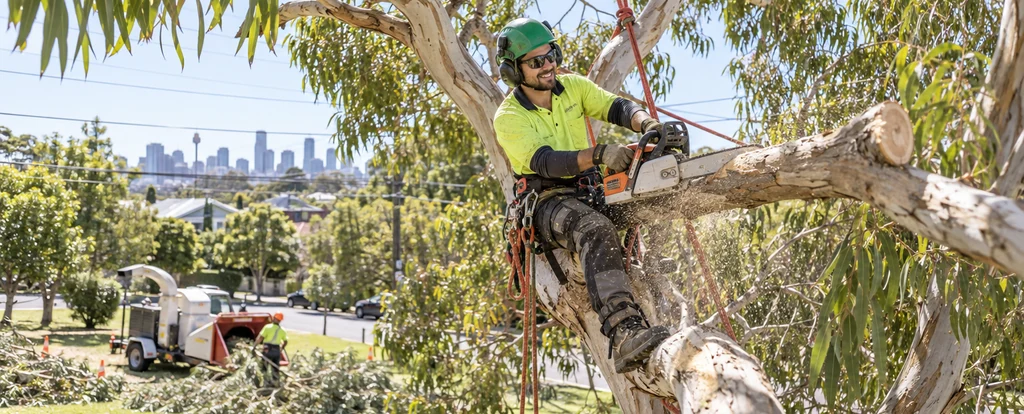
Arborists assess, prune and remove trees, keeping them healthy and safe around the people, buildings and powerlines below them.
What else you need
Consulting arborist and tree-assessment training; meet prerequisite units and applicable tree-work rules. The diploma does not by itself establish practical climbing competence. Entry requirements: To commence this qualification an individual must have achieved the following units of competency or their equivalent: AHCARB314 Implement a tree maintenance program AHCARB316 Perform pruning operations AHCARB323 Identify trees.
Median pay$72,800 (estimate)
In demand
Pay is the median for everyone in the job, and “In demand” means the job is on the national shortage list. Pay marked as an estimate is our own analysis, not a published figure.
Where you can study this course
There are 4 places you can study this course. When you compare them, check they teach it the way you want to study, how far you'd be from a campus, what it will cost you and what past students say about the teaching and support. They're listed by how often people search for them, and none of them pays to be here or to move up.
- Website for Melbourne Polytechnic (opens in a new tab)
Melbourne Polytechnic
13 campuses, VIC
3.7from 485 Google reviews
What students like
- Some teachers are supportive and go out of their way
- Student services offer understanding and compassion
What to weigh up
- Messages to staff can go unanswered
- Enrolment mistakes can take time to fix
What students like
- Teachers are supportive and ready to help
- Staff are helpful and friendly
- Course content is practical and industry relevant
What to weigh up
- Enrolment and admin can be slow
- Some find front desk staff less helpful
- Website for TAFE SA (opens in a new tab)

TAFE SA
26 campuses, SA
4.4from 1,339 Google reviews
What students like
- Lecturers are nice and helpful
What to weigh up
- Enrolment and admin can be slow
- Course information can be unclear
- Website for Wodonga Institute of TAFE (opens in a new tab)

Wodonga Institute of TAFE
4 campuses, VIC
4.3from 68 Google reviews

What you’ll learn
10 units: 8 that everyone takes and 2 you choose.
- tree defect inspection
- tree identification and selection
- arboricultural impact reports
- diagnosing tree diseases
- specifying and auditing tree work
- tree legislation and by-laws
See all 8 core units
Core units
Everyone completes these. Select a unit to see what it covers.
Loading the details for AHCARB408…
Loading the details for AHCARB408…
Questions to ask before you enrol
Providers run this course differently, so the answers change from one to the next.
- When is the next intake, and how many are there each year?
- What is the total cost, including materials, checks and any placement costs?
- Can I study part time or online, and how does that change the length?
- Do the units count towards a higher qualification if I go on to study further?
Questions people ask
Who is this qualification for?
It suits people who already work with trees and want to move into assessing and reporting. You will learn to inspect trees for defects and disease, judge risk, write reports, and interpret tree protection laws. It leads to roles such as arborist.
Do I need experience or other qualifications first?
Yes. To commence this qualification you must have achieved the units AHCARB314 Implement a tree maintenance program, AHCARB316 Perform pruning operations, and AHCARB323 Identify trees, or their equivalent. Providers can set their own conditions, so check with the one you choose.
How is it different from Certificate III in Arboriculture?
The Diploma of Arboriculture is the higher level. It covers assessing trees and producing reports, diagnosing disorders and defects, and interpreting legislation, regulations and by-laws, while the Certificate III in Arboriculture is at a lower level.