HomeCoursesElectrical and electronicsCertificate III
Certificate III · national qualification
Certificate III in Electrical Fitting
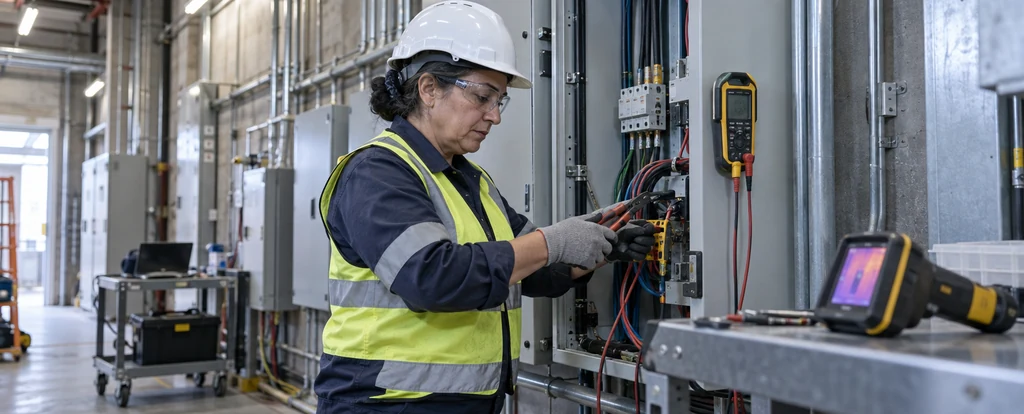
Electrical fitters build, assemble, test and repair the electrical equipment and machinery used inside plants, workshops and factories.
- How long it takes
- 4 years
- full time at TAFE NSW
- How you can study
- On campus
- Main job
- Electrical Fitter
- $91,000 (estimate) median pay, In demand
- Taught by
- 10 providers
- 5 states and territories
Is this course right for you?
What the Certificate III in Electrical Fitting asks of you, and what you might want to check first.
It helps to have
- an interest in how electrical equipment and machinery works
- careful, methodical work habits around live circuits
- an ability to read drawings and follow standards
- problem solving skills for tracking down faults
Before you start
There are no entry requirements for this qualification.
Where this course can take you
Jobs this qualification is a recognised route into, and the study that can follow it.
Jobs you can do with it
Electrical Fitter
Electrical fitters install, test and maintain the electrical machinery and control systems that keep factories, utilities and mine sites running.
What else you need
Usually completed as an apprenticeship. In NSW a restricted electrical licence is mandatory for disconnect and reconnect work, and the award alone does not confer a licence. Check licensing rules with your state regulator. This catalogue groups awards: verify the chosen provider, programme and intake; the family-level link is not confirmation that every offering is approved.
Median pay$91,000 (estimate)
In demand
If you study further
Diploma of Electrical Engineering
Leads to work as an, median pay $91,500 (estimate).
Bachelor of Engineering (Honours) (Electrical Engineering)
Pay is the median for everyone in the job, and “In demand” means the job is on the national shortage list. Pay marked as an estimate is our own analysis, not a published figure.
Where you can study this course
There are 10 places you can study this course. When you compare them, check they teach it the way you want to study, how far you'd be from a campus, what it will cost you and what past students say about the teaching and support. They're listed by how often people search for them, and none of them pays to be here or to move up.
What students like
- Teachers are supportive and ready to help
- Staff are helpful and friendly
- Course content is practical and industry relevant
What to weigh up
- Enrolment and admin can be slow
- Some find front desk staff less helpful
- Website for Charles Darwin University (opens in a new tab)

Charles Darwin University
12 campuses, NSW, NT
4.2from 619 Google reviews
What students like
- Admin and support staff are helpful
What to weigh up
- Units vary depending on the lecturer
- Feedback on assessments can vary
- Course page for TAFE Queensland (opens in a new tab)

TAFE Queensland
7 campuses, QLD
4.1from 2,040 Google reviews
What students like
- Teachers are helpful and supportive
What to weigh up
- Poor communication from admin
- Website for Box Hill Institute (opens in a new tab)

Box Hill Institute
4 campuses, VIC
3.0from 372 Google reviews
What students like
- Teachers are friendly and supportive
- Course content is practical and relevant
What to weigh up
- Admin replies can be slow
- Course organisation can be inconsistent
- Course page for Holmesglen Institute (opens in a new tab)

Holmesglen Institute
Moorabbin, VIC
3.6from 650 Google reviews
- How you study
- On campus
What students like
- Staff are friendly and supportive
What to weigh up
- Enrolment and admin can be slow
- Placement information can be unclear
- Some teachers are less engaged
- Website for Australian Trade Training College (opens in a new tab)
Australian Trade Training College
3 campuses, QLD
4.6from 52 Google reviews
What students like
- Trainers are great and supportive
- Learning practical trade skills
- Course page for North Metropolitan TAFE (opens in a new tab)
North Metropolitan TAFE
Midland, WA
4.1from 903 Google reviews
What students like
- Lecturers are helpful and knowledgeable
- Courses provide strong practical skills
- Website for Chisholm Institute (opens in a new tab)

Chisholm Institute
7 campuses, VIC
3.6from 676 Google reviews

What you’ll learn
The main topics covered in the Certificate III in Electrical Fitting.
- Work health and safety
- Reading wiring diagrams
- Low voltage circuits
- Fault finding and testing
- Electrical control circuits
- Transformers and electric motors
See all 21 core units
Core units
Everyone completes these. Select a unit to see what it covers.
Loading the details for HLTAID009…
Loading the details for HLTAID009…
Questions to ask before you enrol
Providers run this course differently, so the answers change from one to the next.
- When is the next intake, and how many are there each year?
- What is the total cost, including materials, checks and any placement costs?
- Can I study part time or online, and how does that change the length?
- Do the units count towards a higher qualification if I go on to study further?
Questions people ask
Who is this qualification for?
It prepares you to build, assemble, test and repair electrical equipment and machinery inside plants, workshops and factories. You learn to read drawings, wire and terminate low voltage circuits, connect control circuits, transformers and rotating machines, and find faults.
Do I need experience or other qualifications first?
There are no entry requirements for this qualification. Individual providers can set their own conditions, so check with the provider you choose.
Is a licence, registration or check required to work in this area?
A licence or permit may be required where work is on electrical installations operating above 50 volt alternating current or 120 volt direct current. Without a licence or permit, a contract of training through an Australian Apprenticeship may be required. Licensing rules also vary between states and territories.