Electrical Fitter
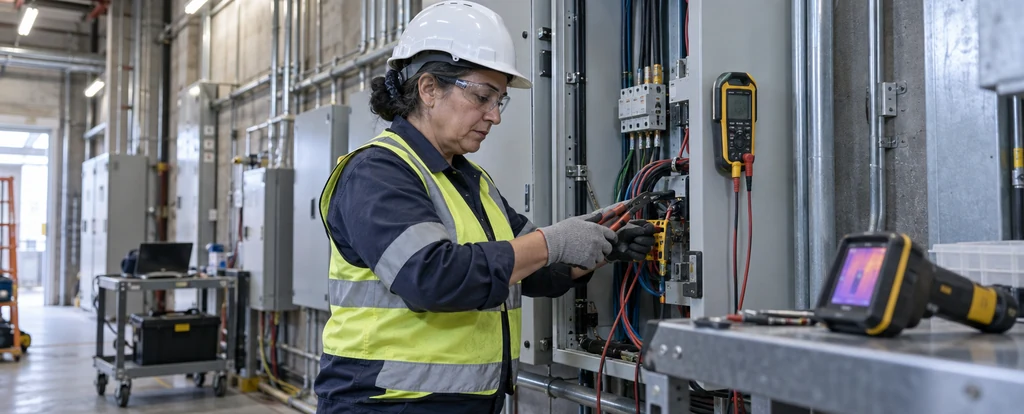
Electrical fitters install, test and maintain the electrical machinery and control systems that keep factories, utilities and mine sites running.
- Median salary*
- $91,000
4.5%vs last year, before tax
- People employed
- 5,700
1.8%vs last year
- Projected growth*
- +6%
to 2035
- AI exposure*
- Low
- automation risk
- Average hours*
- 40/wk
matches all-jobs average
- Shortage status*
- In shortage
national
Electrical fitters work in factories, processing plants, substations, workshops and mine sites, looking after the motors, switchboards and control gear that drive production. They are often confused with electricians, but an electrical fitter's work is machinery and plant rather than the fixed wiring of buildings, and where that line falls varies by state. The main employers are manufacturers, mining and utility operators, transport and logistics businesses, and electrical contracting firms.
How much do electrical fitters earn?
The median full-time salary for an electrical fitter is $91,000 per annum, before tax, up $19,300 since 2018.
Pay moves most with the sector and the roster: mining, utilities and heavy manufacturing typically sit above the middle, while workshop roles with smaller contractors sit below it. Site allowances, shift loadings and overtime add to the base rate, and enterprise agreements set the rates on many large sites. Remote and fly-in fly-out work pays more to compensate for the travel and the time away.
What does an electrical fitter do day to day?
The list below is what fills most weeks; the exact mix shifts with seniority and whatever stage the current work is at.
- Installing and wiring motors, switchboards and control panels from drawings and specifications
- Testing insulation resistance, continuity and function, then tracing faults with a multimeter or insulation tester
- Servicing and repairing motors, generators, switchgear and variable speed drives
- Reading electrical drawings, schematics and wiring diagrams, and marking up changes for the next job
- Following wiring rules, isolation procedures and permit systems, including locking out plant before work starts
What skills do electrical fitters need?
Employers look for installation and maintenance, reading plans and specifications, worksite safety management, backed by Fluke digital multimeter fluency and strong problem solving.
Specialist skills
- Installation and maintenance
- Reading plans and specifications
- Worksite safety management
- Hand and power tool work
- Regulatory compliance
- Plant and equipment operation
Software and tools
- Fluke digital multimeter
- Megger insulation resistance tester
- Thermal imaging camera
- Siemens TIA Portal
- Cable crimping tools
General skills
- Problem solving
- Attention to detail
Is the job growing?
About 5,700 people work as electrical fitters in Australia, and employment is projected to grow 6% over the decade to 2035. That's modest growth: demand is steady rather than booming.
How do you become an electrical fitter?
Here's the path most electrical fitters take, step by step.
- 1Finish Year 10 or Year 12
Electrical fitting is entered through an apprenticeship, and employers generally look for Year 10 or Year 12 with passes in maths and a science or technology subject. Competition for places is strongest for school leavers who can show they are reliable and interested in how machines work.
- 2Start a Certificate III in Electrical Fitting apprenticeship
The apprenticeship usually runs four years full time and is paid from the first day, combining study with a registered training organisation and supervised work on site. You need an employer willing to take you on, and group training organisations can place apprentices who haven't found one.
- 3Get licensed or registered in your state
Electrical work is licensed or registered state by state, and the requirements, including any extra assessment or supervised hours, differ across jurisdictions. Check the rules with your state or territory regulator rather than assuming the qualification is enough on its own.
- 4Add the competencies your sector needs
High voltage switching, confined space entry, working at heights and instrumentation are common extras in mining and heavy industry, and employers often arrange and pay for them once you are on site.
- 5Retrain for the electrician's licence if you want it
If you want to do fixed wiring in buildings, you'll need the electrician qualification or gap training plus that licence. It is a common move after a few years in industrial maintenance.
Ready to apply as an electrical fitter?
Whether you're working toward becoming an electrical fitter or already are one and want a hand with the next step (sharpening your resume for ATS screening, tightening your cover letter, or knowing what you'll actually be asked at interview), here are examples grounded in this specific role, not generic templates.
What jobs can an electrical fitter move to?
Moving into Powerline Worker typically comes with the biggest pay rise, worth $51,000 a year more on average.
| Move to | Typical pay change | Overlap | Retraining |
|---|---|---|---|
| Powerline Worker An electrical fitter brings electrical maintenance skills to powerline work, though a linework apprenticeship or gap training is needed. | +$51,000 | 100% | reskill |
| Electrician An electrical fitter brings industrial wiring and control knowledge to general electrical work, though gap training is needed for the electrician licence. | +$22,900 | 74% | reskill |
| Air Conditioning Technician An electrical fitter brings electrical and mechanical skills to air conditioning installation and servicing, with further training in refrigeration required. | +$18,200 | 74% | reskill |
| Lift Mechanic An electrical fitter brings motor control and fault-finding skills to lift installation and repair, with extra training in lift systems needed. | +$13,000 | 85% | reskill |
| Cable Jointer An electrical fitter brings cable handling and termination skills to jointing work, with additional training in high-voltage cable jointing required. | +$10,400 | 81% | reskill |
Moves are chosen from Jobs and Skills Australia's Data on Occupation Mobility, which follows income tax records between 2011-12 and 2020-21, together with entry requirements and skill overlap. A known move is one people were seen making in that data. Pay change compares median full-time pay for the two roles.
Who works as an electrical fitter?
The typical electrical fitter is 38 years old; 96% are men, 90% work full-time, and full-timers average 40 hours a week.
- 38
- Median age
- 4%
- Female share
- 90%
- Full-time
- +0h
- vs all-jobs avg
What's it like being an electrical fitter?
Electrical fitting has two rhythms: planned servicing and inspection rounds, and the breakdowns that interrupt them. When a line stops, the pressure is immediate, and much of the work happens on plant that is hot, noisy or awkward to reach. It suits people who like working with instruments and their hands, and who get satisfaction from tracing a fault back to its cause.
What people like
- Faults you can chase down. An intermittent fault in a control circuit can take real detective work, and the moment a machine runs again is the clearest feedback you get in a trade.
- Hands-on work with proper instruments. Most of the day is spent with tools and test gear rather than at a desk, and the readings from a multimeter or insulation tester tell you whether your diagnosis was right.
- Skills that travel across industries. The same qualification opens work in manufacturing, mining, utilities and transport, so you can follow the pay or the lifestyle without starting again.
- Maintenance work that doesn't stop. Machinery needs servicing whether or not new projects are starting, so industrial maintenance keeps a steadier workload than construction alone.
What people find hard
- Breakdowns don't wait for business hours. Unscheduled failures mean call-outs, overtime and sometimes night shifts, and the pressure is highest when a line is down and production is losing money.
- Hot, noisy and cramped conditions. Plant rooms, substations and mine sites are rarely comfortable, and some jobs are in confined spaces or at heights.
- Shift rosters on large sites. Many mines and processing plants run around the clock, so nights and weekends on a roster are common, and fly-in fly-out arrangements suit some people and not others.
- A licence that stops short of the wiring. The trade covers machinery and plant rather than the fixed wiring of buildings, and because the rules differ by state, some jobs need an electrician on the crew.
Based on our synthesis of professional-body surveys and public accounts of the role, not first-person verified reviews.
Which industries employ electrical fitters?
Construction employs the largest share of electrical fitters, followed by Manufacturing.
Top employing industries
- 1Construction
- 2Manufacturing
- 3Mining
- 4Transport, Postal and Warehousing
- 5Public Administration and Safety
Ranked by employment share; the source doesn't publish an exact percentage per industry.
| Certificate III/IV | 34% | |
|---|---|---|
| Diploma / Advanced Diploma | 26% | |
| Bachelor degree | 20% | |
| Year 12 or below | 20% |
Will AI replace electrical fitters?
This is a hands-on trade with low exposure to AI overall. Condition monitoring, thermal imaging and computerised maintenance systems can predict a failing motor and schedule the work, but the diagnosis and repair still happen at the machine. The physical installation, testing and isolation that fill the week are not something software can perform.
Share of typical working time by exposure level
- Installing and wiring motors, panels and switchgearTerminations, cable runs and panel wiring have to be done by hand to the drawing, and the real layout on site rarely matches the ideal one on paper.30%low
- Fault-finding and testingSoftware can point to a suspect drive or circuit, but confirming it means isolating the plant and testing with a multimeter or insulation tester.25%low
- Servicing and repairing plantPulling a motor, replacing bearings or rebuilding a contactor is manual work that condition monitoring can schedule but not carry out.25%low
- Reading drawings, permits and test recordsDigital drawings, maintenance systems and reporting tools cut the paperwork, and some records are generated automatically from test results.20%moderate
Common questions about becoming an electrical fitter
Straight answers to the questions people ask most.
How much does an electrical fitter earn?
Electrical fitters earn $91,000 per annum, before tax, at the median for full-time work. Pay moves most with the sector and the roster, with mining, utilities and heavy manufacturing paying above the median and adding site or shift loadings. Enterprise agreements set the rates on many large sites.
How do you become an electrical fitter?
The usual route is a Certificate III in Electrical Fitting (UEE33020) apprenticeship, which takes about four years and is paid from the start. You'll need an employer to take you on, and the qualification is then licensed or registered through your state or territory regulator. Working as an electrical trades assistant first is another way to build the hands-on experience employers look for.
Are electrical fitters in demand?
Electrical fitters are currently in shortage nationally, and employment is projected to grow 6% over the decade to 2035. For someone planning an apprenticeship, vacancies that employers are struggling to fill now are a more immediate signal than the long-run projection, and the qualification is portable across several industries.
Will AI replace electrical fitters?
AI reaches the edges of this job rather than the middle of it. Condition monitoring software and thermal imaging can flag a motor that is starting to fail, and maintenance systems schedule the servicing, but isolating the fault and repairing the machine is still done by hand. The trade's low exposure reflects how much of the work happens at the equipment itself.
What can an electrical fitter move into later?
The most direct move is into the electrician's trade, which pays $22,900 more and draws on the same electrical knowledge, although the licence needs gap training. Lift mechanic ($13,000 more) and air conditioning technician ($18,200 more) also build on the same electrical and mechanical skills with extra training. Some experienced tradespeople go on to run their own contracting or maintenance business, which is often where earnings grow.
Can you start an electrical fitting apprenticeship as an adult?
Yes, and many people do, because electrical apprenticeships are open to applicants well past school leaving age. Employers tend to value reliability and previous hands-on work over the year you finished school. Starting as an electrical trades assistant is one way to prove that before you apply.
Related roles
- Electrician
- Air Conditioning Technician
- Lift Mechanic
- Cable Jointer
- Powerline Worker
- Electrical Trades Assistant
Not sure this is you? Take the career quiz and get a ranked shortlist of roles that fit how you like to work.