HomeCoursesElectrical and electronicsCertificate III in Electrotechnology Electrician
Certificate III in Electrotechnology Electrician
This qualification trains you to do electrical work in buildings: running wiring, fitting switchgear and appliances, and setting up the circuits that supply lighting and power.
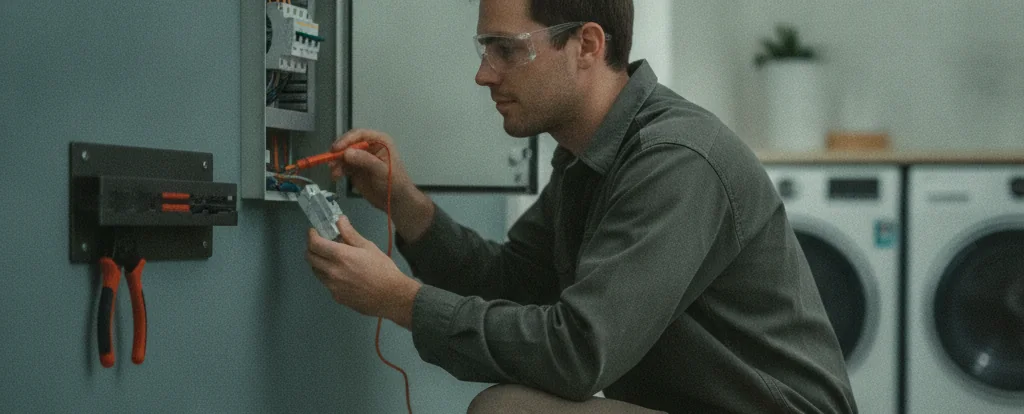
- Duration: 4 years
- Study mode: On campus and workplace based
- Course code: UEE30820
Where you can study this course
- Visit provider website → (opens in a new tab)

Melbourne Polytechnic
- Campuses
- 13 campuses
- Duration
- Not yet checked
- Study mode
- Not yet checked
- Full fee
- Not yet checked
What students say
A number of students find the organisation and admin frustrating, and opinions are mixed on the trainers and teaching, while some rate the facilities and campus highly.
- Campuses
- 33 campuses
- Duration
- 4 years
- Study mode
- Varies by campus
- Full fee
- $25,090
- Eligible students: subsidised from $3,300, concession $240
What students say
Many students speak well of the facilities and campus, and some rate the trainers and teaching highly, though opinions are mixed on the trainers and teaching and student support, and some found the organisation and admin frustrating.
- Visit provider website → (opens in a new tab)

Victoria University
- Campuses
- 11 campuses
- Duration
- Not yet checked
- Study mode
- Not yet checked
- Full fee
- Not yet checked
What students say
Most students praise the student support, while others find it frustrating. Many rate the facilities and campus well, and some criticise the organisation and admin.
- Visit provider website → (opens in a new tab)

Charles Darwin University
- Campuses
- 12 campuses
- Duration
- Not yet checked
- Study mode
- Not yet checked
- Full fee
- Not yet checked
What students say
Students often praise the facilities and campus, while some value student support and course content. Some found organisation and admin frustrating, and opinions are mixed on trainers and teaching, with communication also a concern.
- Visit provider website → (opens in a new tab)

Swinburne University of Technology
- Campuses
- 8 campuses
- Duration
- Not yet checked
- Study mode
- Not yet checked
- Full fee
- Not yet checked
What students say
Some students praise the facilities and campus, while some criticise organisation and admin for being frustrating, and opinions are mixed on course content. A number also mention student support and teaching positively or negatively.
- Visit provider website → (opens in a new tab)

TAFE Gippsland
- Campuses
- 11 campuses
- Duration
- Not yet checked
- Study mode
- Not yet checked
- Full fee
- Not yet checked
- Visit provider website → (opens in a new tab)

RMIT University
- Campuses
- 15 campuses
- Duration
- Not yet checked
- Study mode
- Not yet checked
- Full fee
- Not yet checked
What students say
Students often find organisation and admin frustrating, and opinions are mixed on the trainers and teaching, while some praise the facilities and campus and student support.
- Visit course page → (opens in a new tab)

TAFE Queensland
- Campuses
- 14 campuses
- Duration
- Not stated by provider
- Study mode
- Not stated by provider
- Full fee
- Not stated by provider
What students say
Many students rate the facilities and campus highly. Some found course content and organisation and admin frustrating, while opinions are mixed on the trainers and teaching.

Last reviewed 20 September 2026.
Is this course right for you?
Entry requirements
There are no entry requirements for this qualification.
- Providers can set their own conditions, such as a minimum age or a current job in the industry, and practical training may need a workplace placement. Check each provider above.
- Yes. The skills and knowledge in this qualification require a licence or permit to practise where work is carried out on electrical installations designed to operate at voltages greater than 50 volt (V) alternating current (a.c.) or 120 V direct current (d.c.). Without a licence or permit, a relevant contract of training through an Australian Apprenticeship may be required.
Entry recommendations
To be prepared for this course, it helps to have:
- an interest in how electrical systems work
- a careful attitude to safety and risk
- good hand skills for wiring and fitting
- problem solving skills for fault finding
What will you learn?
You learn to read drawings, standards and codes, choose the right cables and wiring systems, then isolate, test and fault find circuits when something fails. Safety runs through the whole thing, from controlling risks on site to resuscitation and the regulations that govern electrical work. In most states and territories the unrestricted electrician's licence you are aiming for requires the qualification to be completed as an apprenticeship, so it is usually studied while you are employed and earning.
- Reading electrical drawings and standards
- Wiring and cable selection
- Switchboard and circuit protection
- Testing and fault finding
- Low voltage lighting and power circuits
- Work health and safety
Units of competency (27 core)
Everyone completes these core units. Select a unit to see what it covers.
Loading the details for HLTAID009…
Loading the details for HLTAID009…
Career pathways
Roles this qualification is a recognised route into, and what else you need.
A recognised route into Electrician
Electrician
Electricians install, maintain and repair the wiring, switchboards and equipment that power homes, businesses and worksites.
Explore this career →- Weekly pay
- $2,191
- Full-time share
- 94%
- Employment size
- 197,300 workers
- Average age
- 33 years
- Average full-time hours
- 45 hours
- Gender share
- 2% female
- Future growth
- +12%
- Job market
- In shortage (national)
Complete the apprenticeship or recognised TRA pathway required by the licensing authority, then obtain the electrical licence or permit. The award alone is not permission to perform regulated electrical work. This catalogue groups awards: verify the chosen provider, programme and intake; the family-level link is not confirmation that every offering is approved.
Data from training.gov.au and the Australian Bureau of Statistics (CC BY 4.0).