HomeCoursesBuilding and constructionCertificate III
Certificate III · national qualification
Certificate III in Rigging
This qualification trains you to work as a rigger or dogger on building and construction sites, using cranes, hoists and slings to move and position loads safely.

- How long it takes
- 1 to 2 years
- typical for this level
- Main job
- Rigger
- $93,600 (estimate) median pay, In demand
- Taught by
- 5 providers
- Every state and territory
Is this course right for you?
What the Certificate III in Rigging asks of you, and what you might want to check first.
It helps to have
- a strong focus on safety
- an interest in working at heights
- good communication skills
- an ability to read plans and measurements
Before you start
There are no entry requirements for this qualification.
Where this course can take you
Jobs this qualification is a recognised route into, and the study that can follow it.
Jobs you can do with it
Dogger
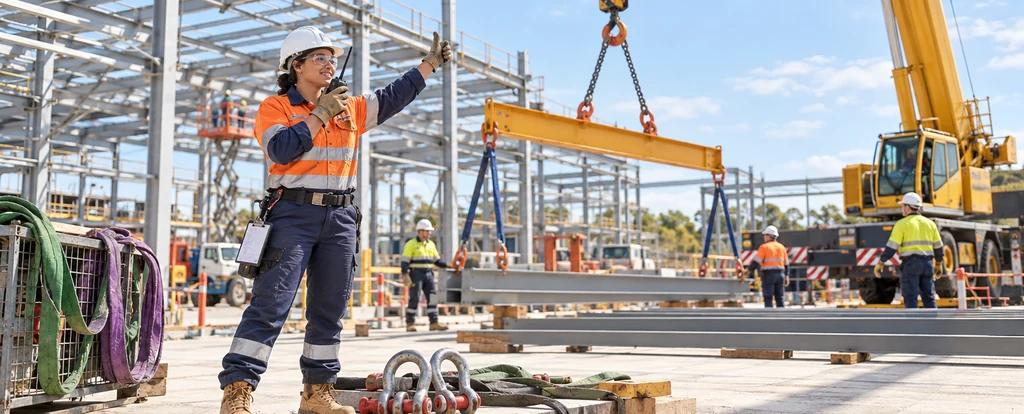
A dogger directs crane operators through a lift, attaching and balancing the load and using hand, whistle or radio signals to bring it down safely.
What else you need
Rigging and dogging need high risk work licences, assessed separately from the award. The award alone does not confer a licence, so check the licensing authority in your state.
Median pay$75,400 (estimate)
Rigger
Riggers set up and secure the lifting gear that lets cranes and hoists move heavy loads safely on construction, mining and industrial sites.
What else you need
Rigging and dogging need high risk work licences, assessed separately from the award. The award alone does not confer a licence, so check the licensing authority in your state.
Median pay$93,600 (estimate)
In demand
If you study further
Diploma of Building and Construction (Building)
Leads to work as a, median pay $195,100.
Bachelor of Construction Management
Pay is the median for everyone in the job, and “In demand” means the job is on the national shortage list. Pay marked as an estimate is our own analysis, not a published figure.
Where you can study this course
There are 5 places you can study this course. When you compare them, check they teach it the way you want to study, how far you'd be from a campus, what it will cost you and what past students say about the teaching and support. They're listed by how often people search for them, and none of them pays to be here or to move up.
What students like
- Teachers are supportive and ready to help
- Staff are helpful and friendly
- Course content is practical and industry relevant
What to weigh up
- Enrolment and admin can be slow
- Some find front desk staff less helpful
- Website for Australian Training Management (opens in a new tab)

Australian Training Management
- Website for Civil Safety (opens in a new tab)

Civil Safety
12 campuses, QLD
4.9from 3,368 Google reviews
What students like
- Trainers are knowledgeable and explain things clearly
- Training is engaging, interactive, and fun
- Training is practical and relates to real site work
What to weigh up
- Course content can feel rushed
- Scheduling can be disorganised
- Website for Major Training Group (opens in a new tab)
Major Training Group
- Website for Halo Nation Training Pty Ltd (opens in a new tab)

Halo Nation Training Pty Ltd

What you’ll learn
19 units: 12 that everyone takes and 7 you choose.
- Working safely at heights
- Dogging and directing lifts
- Basic and intermediate rigging
- Boom-type elevating work platforms
- Reading plans and specifications
- Measurements and load calculations
See all 12 core units
Core units
Everyone completes these. Select a unit to see what it covers.
Loading the details for CPCCCM2012…
Loading the details for CPCCCM2012…
Questions to ask before you enrol
Providers run this course differently, so the answers change from one to the next.
- When is the next intake, and how many are there each year?
- What is the total cost, including materials, checks and any placement costs?
- Can I study part time or online, and how does that change the length?
- Do the units count towards a higher qualification if I go on to study further?
Questions people ask
Who is this qualification for?
It trains you to work as a rigger or dogger on building and construction sites, using cranes, hoists and slings to move and position loads safely. It prepares you for roles including rigger, scaffolder, steel erector and steel fixer. The work is high risk and the qualification has a strong focus on safety.
Do I need experience or other qualifications first?
There are no entry requirements for this qualification itself. Individual providers can set their own conditions, so check with the provider you choose. Note that general construction induction training (the White Card) is required for construction work.
Is a licence, registration or check required to work in this area?
Yes, this is a licensed occupation. The rigging and dogging units are licensed, and you complete the assessments your state or territory licensing authority requires. Check the specific requirements with your relevant licensing authority.