Rigger
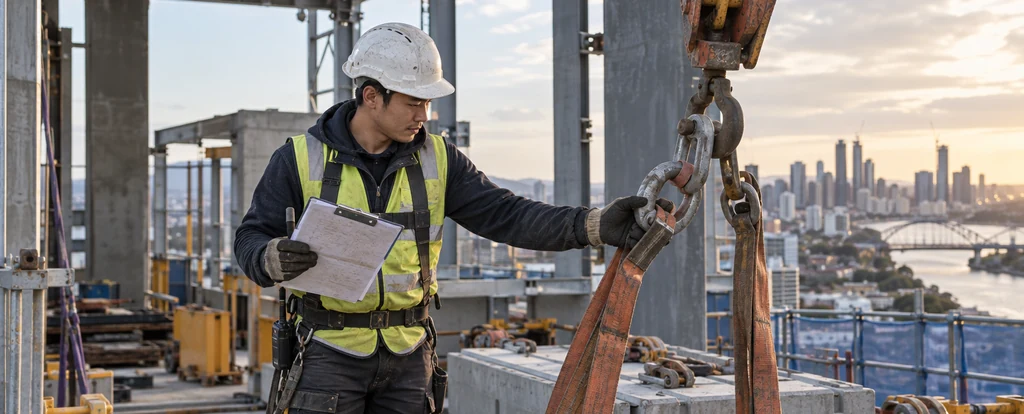
Riggers set up and secure the lifting gear that lets cranes and hoists move heavy loads safely on construction, mining and industrial sites.
- Median salary*
- $93,600
4.2%vs last year, before tax
- People employed
- 7,400
0.0%vs last year
- Projected growth
- +4.6%
to 2035
- AI exposure*
- Low
- automation risk
- Average hours
- 52/wk
+12h vs all jobs
- Shortage status
- In shortage
national
Riggers work on construction sites, mine sites, ports and industrial plants, attaching and balancing loads, erecting structural steel and checking that every lift sits within its safe working load. The job overlaps with dogging, which covers slinging loads and directing cranes, but riggers also assemble and brace the structures themselves. Most hold a high risk work licence issued by their state regulator, and many arrive through a traineeship or from a dogging background.
How much do riggers earn?
The median full-time salary for a rigger is $93,600 per annum, before tax, up $19,700 since 2018.
Pay follows the level of high risk work licence you hold, so advanced rigging and crane-related licences earn more than basic rigging. Mining, oil and gas and remote construction projects pay above metropolitan building work, though they usually mean long swings away from home. Overtime and enterprise agreements matter as well, because rigging crews are often pushing a project toward a deadline.
What does a rigger do day to day?
The list below is what fills most weeks; the exact mix shifts with seniority and whatever stage the current work is at.
- Inspecting slings, shackles and chains before each lift and tagging anything worn or damaged
- Slinging loads to crane hooks with the right hitch and sling angle for the weight
- Directing crane operators by hand signal, whistle or two-way radio
- Bolting and bracing structural steel and precast panels into position at height
- Reading load charts and lift plans to work out safe working loads before the crane moves
What skills do riggers need?
Employers look for plant and equipment operation, worksite safety management, hand and power tool work, backed by Crane load charts fluency and strong attention to detail.
Specialist skills
- Plant and equipment operation
- Worksite safety management
- Hand and power tool work
- Reading plans and specifications
Software and tools
- Crane load charts
- Sling angle calculators
- Two-way radios
- Chain hoists
- Shackles and slings
General skills
- Attention to detail
- Problem solving
- Written communication
Is the job growing?
About 7,400 people work as riggers in Australia, and employment is projected to grow 4.6% over the decade to 2035. That's modest growth: demand is steady rather than booming.
How do you become a rigger?
Here's the path most riggers take, step by step.
- 1Get a White Card
The general construction induction card is required before you set foot on a construction site in any state, and the course takes about a day.
- 2Complete a Certificate III in Rigging
The CPC30720 qualification covers slinging, load estimation, rigging systems and structural steel erection. TAFE and private RTOs deliver it, often as a traineeship so you earn while you learn.
- 3Apply for a high risk work licence
You are assessed by a registered training organisation, then apply to your state or territory regulator, such as SafeWork NSW or WorkSafe Victoria. Licences step up from basic to intermediate to advanced rigging, and the requirements differ by state.
- 4Consider dogging first
A dogging licence lets you sling loads and direct cranes, and plenty of riggers work that way for a year or two while building site hours toward a rigging licence.
- 5Work up to advanced rigging
Advanced rigging covers the complex lifts, and it is what opens supervisory roles and the move into crane operation.
Ready to apply as a rigger?
Whether you're working toward becoming a rigger or already are one and want a hand with the next step (sharpening your resume for ATS screening, tightening your cover letter, or knowing what you'll actually be asked at interview), here are examples grounded in this specific role, not generic templates.
What jobs can a rigger move to?
Moving into Crane Operator typically comes with the biggest pay rise, worth $83,800 a year more on average.
| Move to | Typical pay change | Overlap | Retraining |
|---|---|---|---|
| Crane Operator Riggers bring load slinging, lifting signals and site safety, moving into crane operation with minimal extra training.Known move | +$83,800 | 75% | minimal |
| Miner Riggers bring heavy lifting and site safety experience, moving into mining operations with a short course for underground or surface work.Known move | +$57,600 | 52% | short course |
| Earthmoving Plant Operator Riggers bring plant awareness and site coordination, transferring to earthmoving machinery with minimal training for the operator ticket.Known move | +$9,400 | 65% | minimal |
| Scaffolder Riggers use height work, structural awareness and safety tickets, stepping into scaffolding with a short course for the scaffolder licence.Known move | −$2,600 | 59% | short course |
Moves are chosen from Jobs and Skills Australia's Data on Occupation Mobility, which follows income tax records between 2011-12 and 2020-21, together with entry requirements and skill overlap. A known move is one people were seen making in that data. Pay change compares median full-time pay for the two roles.
Who works as a rigger?
The typical rigger is 39 years old; 98% are men, 88% work full-time, and full-timers average 52 hours a week.
- 39
- Median age
- 2%
- Female share
- 88%
- Full-time
- +12h
- vs all-jobs avg
What's it like being a rigger?
Rigging is a site job with a steady rhythm: plan the lift, set it up, watch it land, then reset for the next one. The pressure comes from doing that safely every time, in weather that does not always cooperate and alongside trades waiting on your lift. Full-time hours average 52 a week, and the people who stay in the trade tend to like working outdoors in a small, close-knit crew.
What people like
- Every load is a small problem to solve. Choosing the hitch, the sling angle and the right gear for an awkward load takes judgement, and you find out quickly whether you got it right.
- You can see what you built. Steel you rigged in the morning is standing by the afternoon, which suits people who like a clear result at the end of a shift.
- Crews are small and close. Most rigging teams are a handful of people working the same site for months, so you learn fast from the experienced hands around you.
- There are defined steps up in skill and pay. Rigging licences build from basic to intermediate to advanced, so there is a clear route to harder lifts and better money.
What people find hard
- Weather can stop the lift. Wind limits what cranes can safely lift, so a breezy day can mean waiting around or switching to ground-level work.
- Long days and early starts. Site start times often mean being on the ground before 6am, and a deadline can stretch the day well past eight hours.
- It is hard on the body. Hauling slings and shackles, climbing and working at height add up over a career, and backs, shoulders and knees carry the strain.
- Mistakes are serious. A dropped load or a failed sling can injure someone, so the work asks for a level of care that does not switch off.
Based on our synthesis of professional-body surveys and public accounts of the role, not first-person verified reviews.
Which industries employ riggers?
Construction employs the largest share of riggers, followed by Mining.
Top employing industries
- 1Construction
- 2Mining
Ranked by employment share; the source doesn't publish an exact percentage per industry.
| Year 12 or below | 43% | |
|---|---|---|
| Certificate III/IV | 41.9% | |
| Diploma / Advanced Diploma | 4.9% | |
| Bachelor degree | 4.1% | |
| Postgraduate | 0.6% |
Will AI replace riggers?
Rigging sits at the low end of AI exposure because the work is physical and happens in conditions that change by the hour. Lift planning software and building models can calculate sling angles and load limits before the crane arrives, but a person still attaches the gear, reads the ground and stands under the load. Automation reaches the paperwork around a lift, not the steel itself.
Share of typical working time by exposure level
- Slinging and attaching loadsChoosing the hitch and seating a shackle on a precast panel is hands-on work that sensors and robots do not manage on a live site.35%low
- Erecting and bracing structural steelBolting, aligning and bracing steel at height depends on feel and balance, and every structure presents a different problem to solve.30%low
- Directing crane operatorsRadios, cameras and some remote-controlled cranes assist, but the person reading the load and calling the move is still standing on the ground.20%moderate
- Reading load charts and planning liftsSoftware can work out sling angles and centres of gravity, but the rigger still checks the chart against the actual load and the ground it sits on.15%moderate
Common questions about becoming a rigger
Straight answers to the questions people ask most.
How much does a rigger earn?
Median full-time pay for riggers is $93,600 per year before tax. That is a median rather than a starting rate, and it moves with the licence level you hold, the sector you work in and the overtime a project offers.
How do you become a rigger?
You start with a White Card, complete a Certificate III in Rigging (CPC30720), then get a high risk work licence from your state regulator. Many people enter through a dogging licence first and step up to rigging once they have site hours behind them.
Are riggers in demand?
Riggers are currently in shortage nationally, and employment is projected to grow 4.6% over the decade to 2035. Work follows cranes, so riggers are needed wherever major construction, resources or infrastructure projects are running.
Will AI replace riggers?
Not in any direct sense, because the job is physical work in conditions that change hour to hour. Lift planning software and building models can work out sling angles and load limits before the crane arrives, but someone still attaches the gear, judges the ground and stands under the load.
What jobs can a rigger move into?
Crane operation is a common move, since slinging and signalling experience carries over and pay is $83,800 more a year. Mine site work is another route, paying $57,600 more, and earthmoving plant operating pays $9,400 more. Experienced riggers also start their own rigging crews or contracting businesses, which is often where earnings grow.
Is rigging a physically demanding job?
Yes. A shift involves carrying lifting gear, climbing, working at height and standing for long stretches, often in heat or wind. Fitness matters more than size, and good technique with slings and steel saves wear on your body over the years.
Related roles
Not sure this is you? Take the career quiz and get a ranked shortlist of roles that fit how you like to work.