Dogger
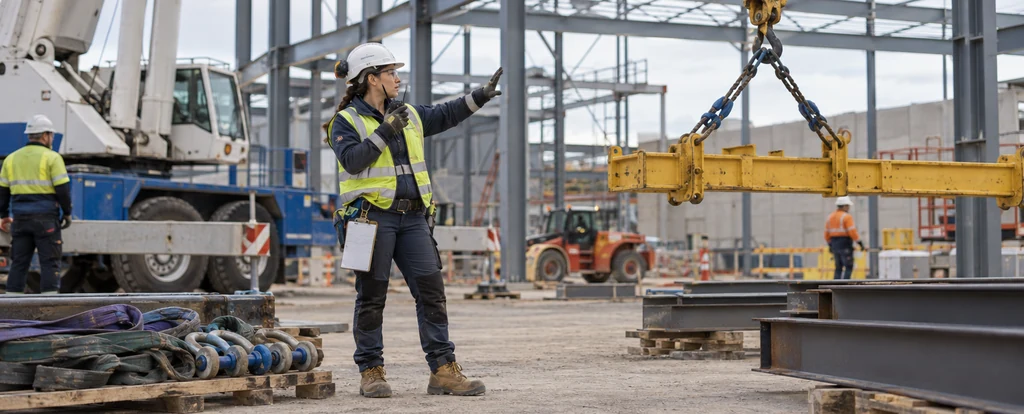
A dogger directs crane operators through a lift, attaching and balancing the load and using hand, whistle or radio signals to bring it down safely.
- Median salary*
- $75,400
3.9%vs last year, before tax
- People employed
- 830
3.8%vs last year
- Projected growth
- +1%
to 2035
- AI exposure*
- Low
- automation risk
- Average hours
- 48/wk
+8h vs all jobs
- Shortage status
- Not in shortage
national
Doggers work beside crane operators on construction, civil, mining and port sites, planning each lift before the hook takes the weight and controlling the load with tag lines as it moves. The job overlaps with rigging, and plenty of people hold both licences, but a dogger concentrates on the lift itself while a rigger also assembles and secures the structure it lands on. It is licensed work: you need a high risk work licence for dogging before you can direct a lift on a site.
How much do doggers earn?
The median full-time salary for a dogger is $75,400 per annum, before tax, up $15,600 since 2018.
Pay comes from the construction or mining award, or from an enterprise agreement covering the site, and the base rate is only part of it. Site allowances, overtime and penalty rates on night work and shutdowns often make up a good share of a week's earnings, remote and fly-in fly-out projects generally pay more than city building work, and adding a rigging or crane licence opens higher-paid roles.
What does a dogger do day to day?
The list below is what fills most weeks; the exact mix shifts with seniority and whatever stage the current work is at.
- Directing crane operators with hand, whistle and radio signals
- Slinging and securing loads with chains, slings, shackles and spreader bars
- Working out load weights, centres of gravity and safe working loads from load charts, so the crane stays inside its limits
- Controlling loads with tag lines and guiding them into position
- Inspecting lifting gear before each lift and setting up exclusion zones around the crane
What skills do doggers need?
Employers look for worksite safety management, plant and equipment operation, reading plans and specifications, backed by Two-way radios fluency and strong written communication.
Specialist skills
- Worksite safety management
- Plant and equipment operation
- Reading plans and specifications
- Operations management
Software and tools
- Two-way radios
- Rigging slings and shackles
- Spreader bars and lifting beams
- Tag lines
- Load charts
General skills
- Written communication
- Attention to detail
- Physical stamina and dexterity
Is the job growing?
About 830 people work as doggers in Australia, and employment is projected to grow 1% over the decade to 2035. That's modest growth: demand is steady rather than booming.
How do you become a dogger?
Here's the path most doggers take, step by step.
- 1Get a White Card
General construction induction training is required before you set foot on a construction site in any state or territory, and most dogging courses assume you already hold it.
- 2Complete the dogging course
The qualification is CPCCLDG3001 Licence to perform dogging, delivered by a registered training organisation over a few days with practical and written assessment. You need to be 18 to hold the licence.
- 3Apply for a high risk work licence
The dogging class (DG) licence is issued by the WHS regulator in your state or territory, such as SafeWork NSW, WorkSafe Victoria or WorkSafe Queensland, and is usually lodged within a set period after your assessment, so check the deadline with your regulator.
- 4Build hours on site
Start on straightforward lifts and learn from experienced operators and riggers, because reading a load and judging the wind and the ground comes with repetition rather than from the course.
- 5Add licences or renew
Many doggers go on to rigging or crane classes, which take further courses and assessments, and a high risk work licence runs for five years before it needs renewing.
Ready to apply as a dogger?
Whether you're working toward becoming a dogger or already are one and want a hand with the next step (sharpening your resume for ATS screening, tightening your cover letter, or knowing what you'll actually be asked at interview), here are examples grounded in this specific role, not generic templates.
What jobs can a dogger move to?
Moving into Crane Operator typically comes with the biggest pay rise, worth $102,000 a year more on average.
| Move to | Typical pay change | Overlap | Retraining |
|---|---|---|---|
| Crane Operator Dogging skills in directing lifts and reading load charts carry into crane operation, but a crane licence and further study are needed.Known move | +$102,000 | 40% | reskill |
| Rigger Securing loads and slinging experience transfer to rigging work, with a short course required for the rigging ticket.Known move | +$18,200 | 58% | short course |
Moves are chosen from Jobs and Skills Australia's Data on Occupation Mobility, which follows income tax records between 2011-12 and 2020-21, together with entry requirements and skill overlap. A known move is one people were seen making in that data. Pay change compares median full-time pay for the two roles.
Who works as a dogger?
The typical dogger is 37 years old; 96% are men, 80% work full-time, and full-timers average 48 hours a week.
- 37
- Median age
- 4%
- Female share
- 80%
- Full-time
- +8h
- vs all-jobs avg
What's it like being a dogger?
The job has a short cycle: plan the lift, sling it, signal it down, then do it again somewhere else on the site. It suits people who like working outdoors with a small crew, are comfortable being the person the operator listens to, and don't mind that the work stops when the weather turns. Full-time doggers average 48 hours a week, so the days are long even when the lifts are routine.
What people like
- You see every lift land. A lift is finished when the load is down and the crew is clear, so the day gives you a run of visible results rather than one long project.
- Working as a pair with the operator. Reading each other well through signals makes a lift faster and smoother, and that working relationship is most of the job.
- The settings change. Doggers turn up on building, civil, mining and port jobs, so the site, the loads and the crew change with the contract.
- Solving a lift that won't sit right. When a load is awkward or the access is tight, working out a different sling configuration or approach is the part of the job that uses your head.
What people find hard
- Weather stops the crane. Lifts come off in high wind, and a crane can sit idle for hours while the crew waits or gets moved to other work.
- On your feet, carrying gear. You spend most of the shift standing, walking the site and carrying slings, shackles and tag lines, which takes physical stamina.
- The buck stops at your signal. The operator moves when you say so, and a misread weight or a bad sling choice can damage the load, the crane or a person.
- Long weeks and time away. Project work can mean travel or fly-in fly-out rosters, and the average full-time week runs to 48 hours.
Based on our synthesis of professional-body surveys and public accounts of the role, not first-person verified reviews.
Which industries employ doggers?
Construction employs the largest share of doggers.
Top employing industries
- 1Construction
Ranked by employment share; the source doesn't publish an exact percentage per industry.
| Year 12 or below | 44.5% | |
|---|---|---|
| Certificate III/IV | 39.9% | |
| Diploma / Advanced Diploma | 3.5% | |
| Bachelor degree | 2.8% | |
| Postgraduate | 0.4% |
Will AI replace doggers?
Dogging is a low-exposure job. The work happens at the hook, where a person has to judge the load, the ground and the wind and stay responsible for what happens next, and the licence itself keeps a human in the chain. Lift planning software, load chart apps and crane zone-limiting systems handle some of the planning and paperwork, but none of them sling a load or give the signal.
Share of typical working time by exposure level
- Slinging and securing loadsPicking the right slings, shackles and spreader bars and getting a load balanced is done by hand, on the load, and changes with every item.30%low
- Signalling the crane operatorHand, whistle and radio signals depend on watching the load and the operator and adjusting mid-lift when something shifts.30%low
- Working out load weights and safe working loadsLoad chart apps and lift planning software speed up the arithmetic, though you still confirm the figures against the chart and the crane's configuration.20%moderate
- Inspecting gear and setting up the liftGear registers and tagging systems are increasingly digital, but the inspection is still a physical check of slings, shackles and the exclusion zone.20%moderate
Common questions about becoming a dogger
Straight answers to the questions people ask most.
How much does a dogger earn?
A dogger earns a median of $75,400 per year before tax in full-time work. Site allowances, overtime, penalty rates and the type of project move that figure more than experience does, and a rigging or crane licence usually lifts it further.
How do I become a dogger?
You get a White Card, complete the dogging course CPCCLDG3001 with a registered training organisation, then apply to your state or territory WHS regulator for a high risk work licence in the dogging class. You must be 18 to hold the licence, and no prior trade qualification is needed.
Are doggers in demand?
Doggers are currently not in shortage, and employment is projected to grow 1% over the decade to 2035. Demand follows construction and mining activity rather than the wider economy, so it pays to watch which projects are starting in your area before you commit to the course.
Will AI or automation replace doggers?
Not much of it, because the job happens at the hook, where someone has to read the load, the ground and the weather and take responsibility for the lift. Lift planning software, load chart apps and crane zone-limiting systems help with paperwork and the crane's working envelope, but they don't sling a load or give the signal.
What can a dogger move on to?
Crane operator is the usual step up, using the load chart and lift direction skills you already have, though it needs a crane licence and further study, and crane operators earn $102,000 more. Rigging is the shorter move, since slinging and load control transfer directly and only a short course is needed, and riggers earn $18,200 more.
What is the difference between a dogger and a rigger?
A dogger directs the crane and controls the load while it is in the air, and a rigger assembles and secures the structure once it is on the ground. The two roles work together closely and many people hold both licences, which gives employers more reason to keep you on the crew.
Related roles
Not sure this is you? Take the career quiz and get a ranked shortlist of roles that fit how you like to work.